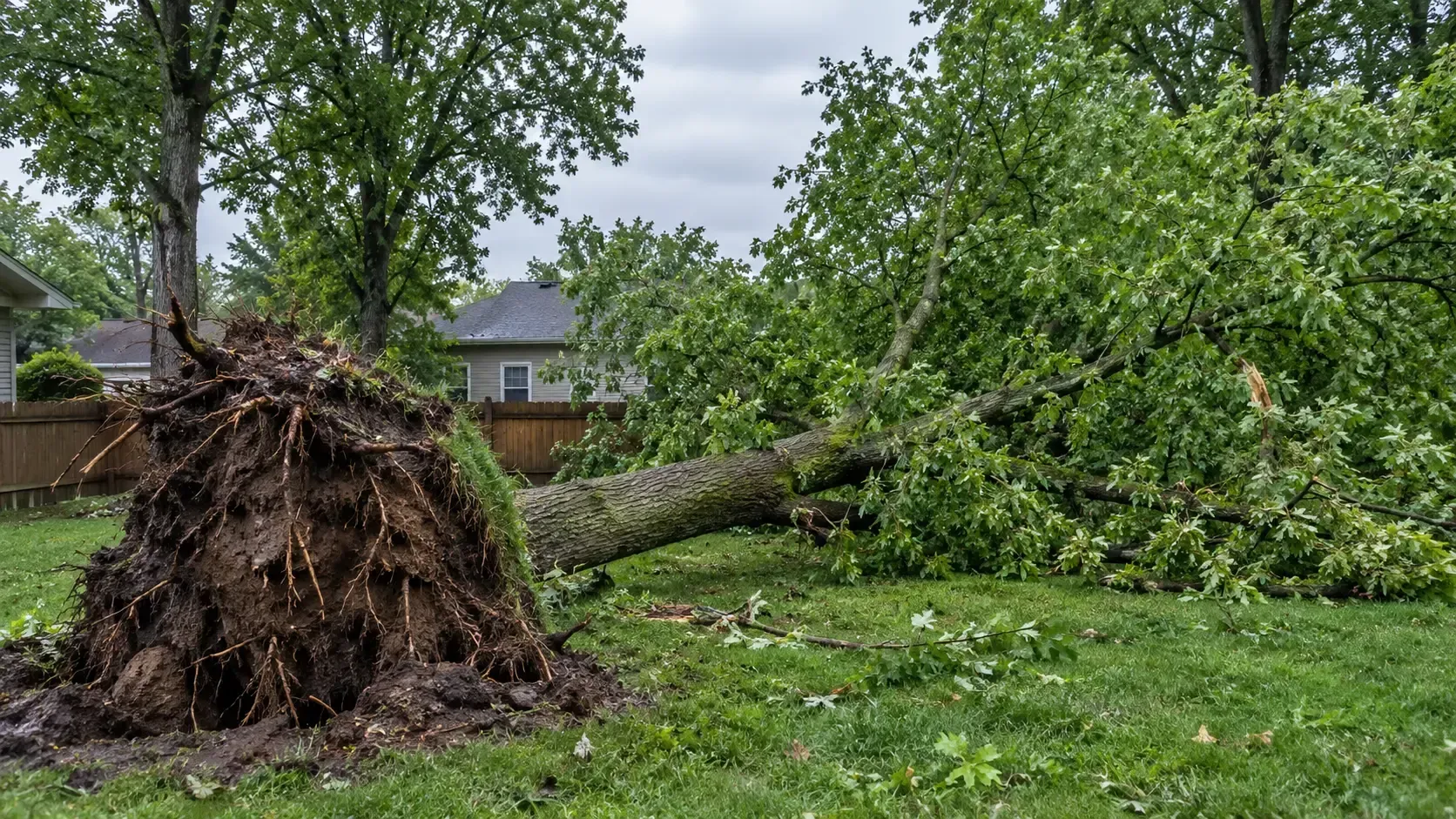
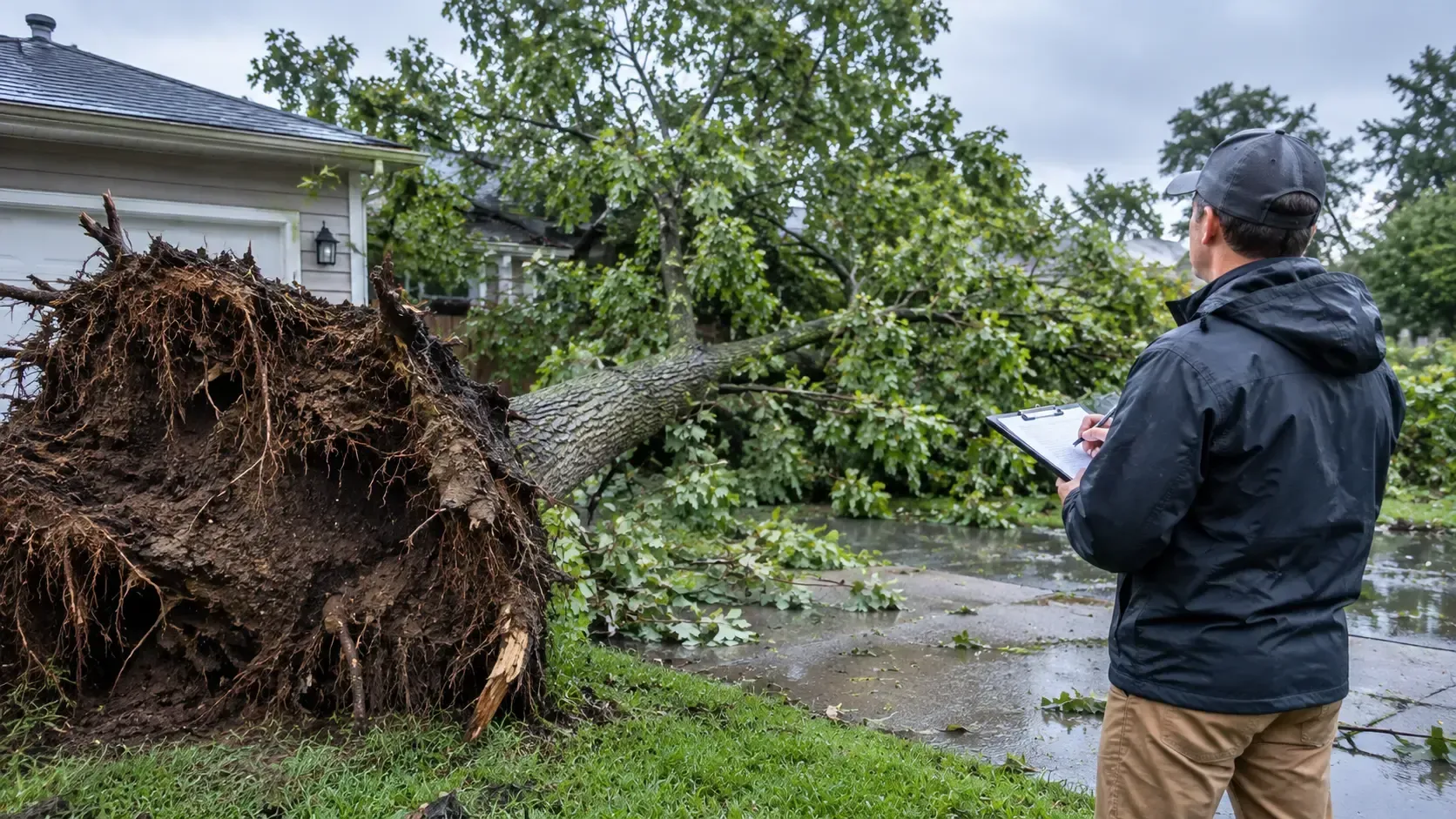
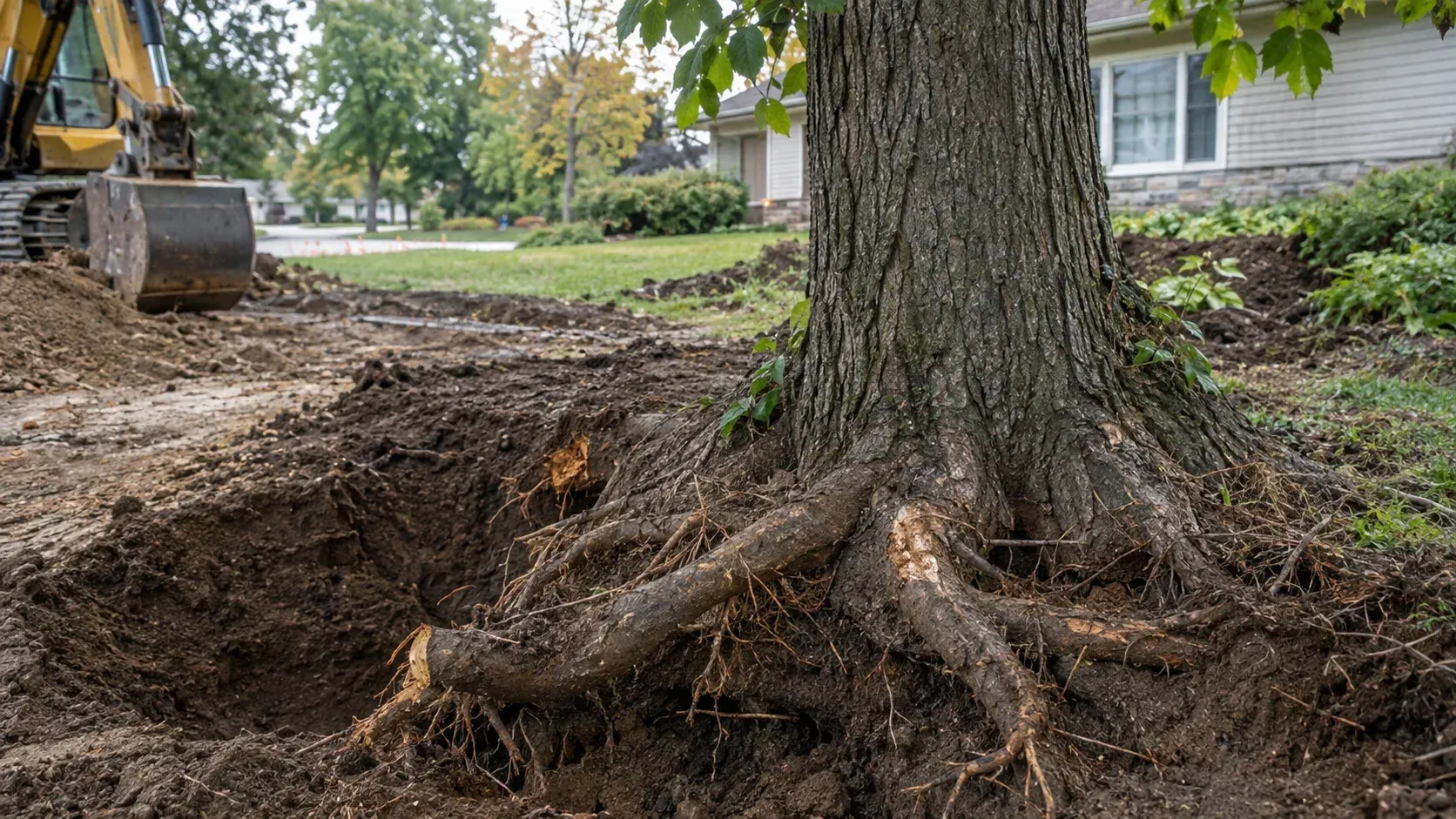
Uprooting is the signature of saturated ground. The wood was fine. The soil could not hold it.
That fourth row is the one people misjudge. A tree that leaned during a storm and appears to have settled back has already broken the bond between roots and soil. It is standing on a loosened plate, and the next wind does not have to be as strong as the last. If a tree has moved at all, it needs looking at, and the warning signs of a leaning tree are worth knowing before you decide it is fine.
How Straight-Line Wind Damage Differs From What People Expect
Most storm tree damage here comes from straight-line winds rather than from rotation, and that distinction matters for how trees fail.
A tornado is brief and rotational. Straight-line winds push steadily from one direction, sometimes for minutes rather than seconds. That sustained one-way load is harder on a root plate than a sharp gust, because the tree never gets to rock back and redistribute.
What that means in practice:
- Duration matters as much as peak speed. A long push at moderate speed can do what a brief stronger gust does not.
- Direction matters. A tree shaped by years of prevailing wind is braced for that direction and not for the opposite one.
- Newly exposed trees are vulnerable. A tree that grew inside a group and is now standing alone, after construction or after neighboring trees came down, has never carried the full load.
- Canopy acts as a sail. Trees in full summer leaf catch far more wind than the same tree bare.
That last point is why summer storms topple trees that handled winter wind without trouble. Full leaf plus wet ground is the combination that does the damage, and both arrive together in a Minnesota June.
Why the Second Storm Is the Dangerous One
The pattern we see most often is not one severe storm. It is rain, then wind, in that order.
Days of steady rain saturate the soil without doing visible harm. Then a thunderstorm arrives, and the wind it brings does not need to be remarkable. The ground is already compromised, and trees start going over at wind speeds that would normally pass without incident.
This is also why damage can look random. Two similar trees on the same street, one down and one standing, often come down to drainage. A tree sitting where water collects, at the base of a slope, near a downspout outlet, or in heavy clay that holds water, is working with worse soil than the one forty feet away on higher ground.
It is worth knowing which trees on your property sit in the wet spots. That is usually a better predictor than size or age, and it costs nothing to notice before the forecast turns.
Which Trees Go Over and Which Ones Hold
Several factors stack, and no single one decides it.
What raises the risk:
- Shallow or restricted root systems, including trees planted in confined spaces
- Root damage from past construction, which can go unnoticed for years
- Recent exposure after neighboring trees were removed
- A dense unthinned canopy, which catches more wind
- Existing lean, especially one that developed recently
- Poor drainage where the tree sits
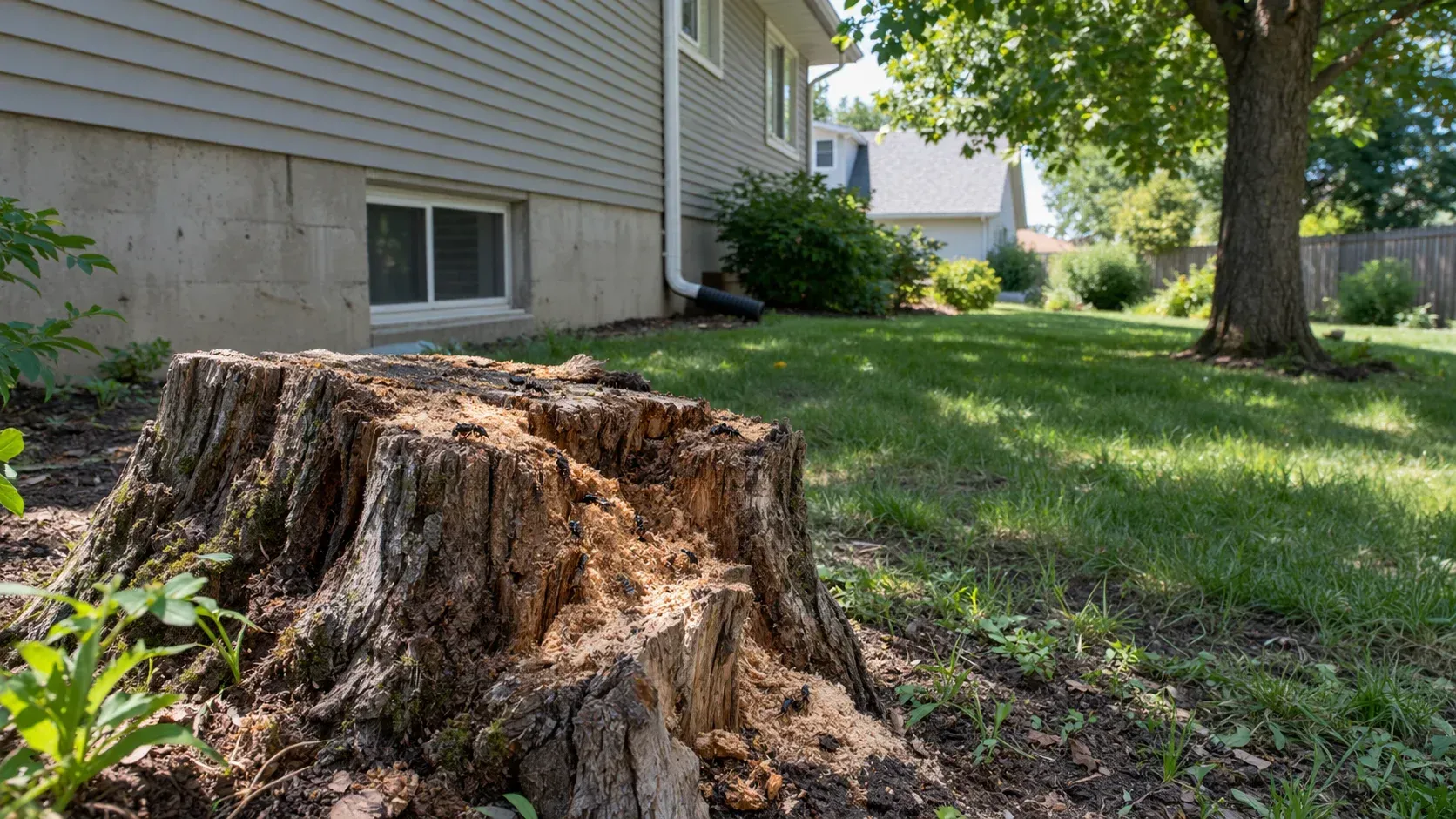
- Decay in the root collar, which is hard to see and reduces anchorage
Decay at the base deserves separate attention, because a tree can look entirely healthy above ground while the roots that anchor it are compromised. That mechanism is covered separately in why trees fall without visible warning, and it compounds with saturated soil rather than competing with it.
Ice is its own case. Ice loads the canopy with weight rather than pushing it sideways, which breaks branches rather than uprooting trunks, and the difference between ice damage and snow is worth understanding on its own.
What to Do in the First 48 Hours After
The hours right after a storm are when most avoidable injuries happen.
- Stay away from downed lines. Assume any line is live and call the utility.
- Do not go under hanging limbs. A limb caught in the canopy can release without warning.
- Look at the base of trees still standing. Lifted soil, exposed roots, or a crack in the ground on one side means the plate has moved.
- Check for new lean against a fixed reference like a fence post or the house.
- Photograph everything before anything is moved, including the ground around the base.
- Keep people and vehicles away from anything that has shifted.
- Call for help with anything over your head or near a structure or line.
Our emergency response runs around the clock for exactly this window, because a compromised tree does not wait for business hours and the next band of weather is often already on the way.
Conclusion
The storm that takes a tree down is rarely the strongest one it has faced. It is usually the one that arrives after the ground has been soaked, when the soil can no longer grip the roots and a moderate wind is enough. That is why survival history is a poor guide and why drainage matters more than size. After any storm, look at the ground around your trees rather than only at the canopy. Lifted soil and a new lean are telling you the anchorage has already failed, whether or not the tree is still upright.
Request an Urgent Safety Check
If a storm has left a tree leaning after heavy rain, or you can see lifted soil around the base, do not wait for the next system to move through. Arbor Barber Tree Service is open 24/7 for emergency tree work across Lakeville, Apple Valley, Burnsville, Farmington, Rosemount, and the surrounding communities. We bring over 20 years of experience and certified arborists, we are safety focused and fully insured, and we respond quickly to assess the situation. Call (612) 703-0175 or reach us and we will take a look before it becomes an emergency.