Why Do Healthy-Looking Trees Sometimes Fall Without Warning?
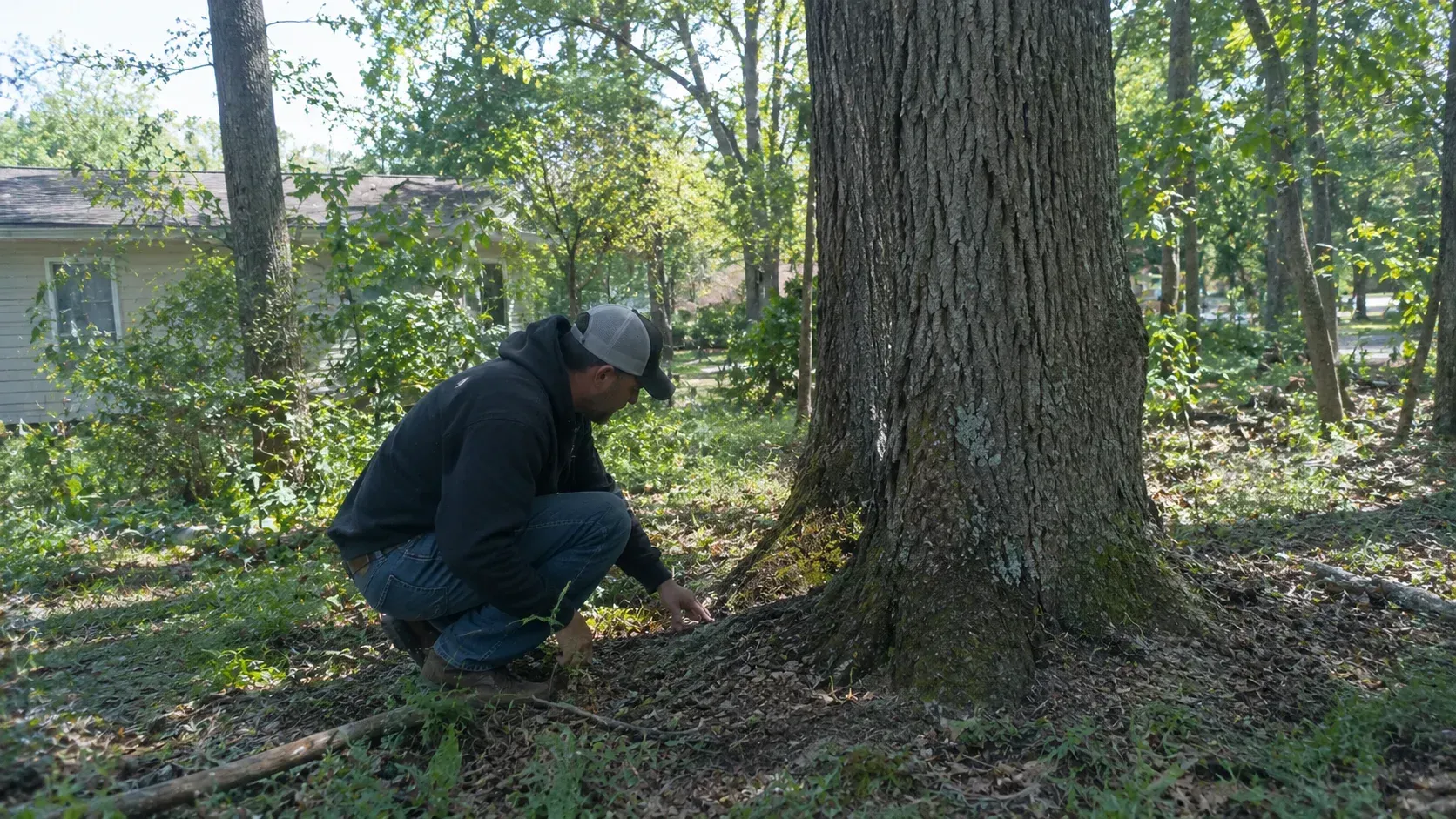
Table of Contents
- Introduction
- Why Trees Fall Without Warning Even When the Canopy Looks Fine
- How Hidden Tree Decay Works From the Inside Out
- Root Problems You Cannot See From Above
- Sudden Tree Failure Usually Has a Long History
- What a Healthy Tree Falling Over Is Actually Telling You
- The Signs That Do Show Up, If You Know Where to Look
- Why Minnesota Trees Have a Few Extra Ways to Go
- What an Inspection Actually Checks
- Conclusion
Key Takeaways
- A green canopy tells you the tree is still moving water and making food. It says almost nothing about whether the wood holding it up is sound.
- Trees move water through a thin outer layer of living tissue, so a trunk can be substantially hollow and still leaf out normally.
- Most sudden failures are not sudden. They are the last moment of a process that has been running for years underground or inside the trunk.
- Roots are the blind spot. The majority of what holds a tree up is buried, and construction damage from years ago is a common cause of failure today.
- The warning signs are usually at the base and the trunk, not in the canopy. That is the opposite of where people look.
Introduction
A tree can carry a full, healthy-looking canopy while hiding advanced decay in its trunk or root system, because the living tissue that moves water and produces leaves is only a thin layer near the outside of the wood. Everything inside that layer can be compromised while the tree above keeps looking exactly as it always has. That is why a tree nobody was worried about comes down in a storm that its neighbours ride out.
We do a fair amount of clearing trees that have already come down around Lakeville, and the sentence we hear most is that the tree looked perfectly fine. It usually did. The canopy is simply the wrong place to be looking.
Here is what is actually going on inside a tree that fails, why it stays invisible, and what does show up if you know where to check.
Why Trees Fall Without Warning Even When the Canopy Looks Fine
Start with how a tree works, because the whole thing follows from this.
The wood at the centre of a mature trunk is not alive. It is structural, and it is what holds the tree up, but it is not doing any of the biological work. The living, functioning part of the tree is a relatively thin zone near the outside: the layer that transports water up, the layer that transports food down, and the growth layer between them.
That arrangement is efficient, and it has one consequence that matters enormously. A tree can lose a great deal of its interior wood and continue to function normally. The outer layer keeps moving water, the canopy keeps leafing out, and from the ground everything looks exactly right.
So the tree is doing two jobs, living and standing up, and it is entirely possible to keep doing the first while quietly failing at the second. The canopy reports on the first job. Nothing about it reports on the second.
How Hidden Tree Decay Works From the Inside Out
Decay in a tree is a fungal process, and it generally follows a recognizable path.
It needs a way in. Decay fungi enter through wounds: a broken branch, a bad pruning cut, a lawnmower or string trimmer strike at the base, storm damage, construction injury, a crack. The wound may have happened decades ago and closed over so thoroughly that nothing is visible now.
Then it works on the interior wood, where there is no living tissue to resist it. Trees do not heal wounds the way animals do. They compartmentalize, walling off damaged areas to stop the spread. That process is often successful, which is why most wounded trees are fine. When it fails, decay advances into the structural wood while the tree continues to grow normally around it.
What makes this hard to judge from outside:
- The tree keeps adding wood to the outside while losing it on the inside, so the trunk looks normal or even thickens
- A hollow trunk is not automatically weak. A tube resists bending surprisingly well, which is why plenty of hollow trees stand for decades
- What matters is the ratio of sound wood remaining to the overall trunk, and where that sound wood sits
- Decay is uneven. A trunk can be solid on one side and largely gone on the other, which is worse than uniform hollowing
- The canopy can stay green the entire time
That third and fourth point together are why "is it hollow" is the wrong question. The right question is how much sound wood is left and where, and that is an assessment rather than a glance.
Root Problems You Cannot See From Above
If the trunk is the blind spot people underestimate, the roots are the one they forget exists.
A large share of what keeps a tree upright is below ground, and essentially none of it is visible. Root problems that cause failure include:
- Root rot, which decays the anchoring system while the canopy holds on
- Severed roots from construction. Trenching for utilities, a driveway, a foundation, a patio or a fence line. The tree may not show decline for several years, which is exactly why nobody connects the two
- Soil compaction from equipment or vehicles parked over the root zone, which damages the fine roots and stresses the tree
- Grade changes. Adding soil over the root zone or cutting it away both cause serious problems
- Girdling roots, which encircle the trunk and strangle it slowly, sometimes visible at the base and sometimes not
- Restricted rooting space, where a tree has grown large in a space that was never going to anchor it
- Saturated soil, which reduces the grip of even a healthy root system, which is why trees come down in wet storms more than dry ones
The delayed decline after construction damage is the one worth underlining. A tree that lost a large share of its roots to a trench three summers ago can look entirely normal today and fail this year. The cause and the effect are far enough apart that almost nobody links them.
Sudden Tree Failure Usually Has a Long History
The word "sudden" describes the moment, not the process. Almost every failure we see is the end of something that took years.
The typical sequence: a wound or root injury occurs, decay or decline begins, the tree continues to look fine while the structural margin narrows, and then a loading event, a storm, wet soil, wind from an unusual direction, arrives and exceeds what is left.
Which explains the two things people find hardest to accept. First, that the storm did not cause the failure, it revealed it. The same wind passed over every other tree on the street. Second, that nothing appeared to change beforehand, because from outside, nothing did.
This is also why a tree that has already survived several storms is not thereby proven safe. Each event can advance the damage while leaving the tree standing, so a history of survival sometimes means a narrower margin rather than a wider one.
What a Healthy Tree Falling Over Is Actually Telling You
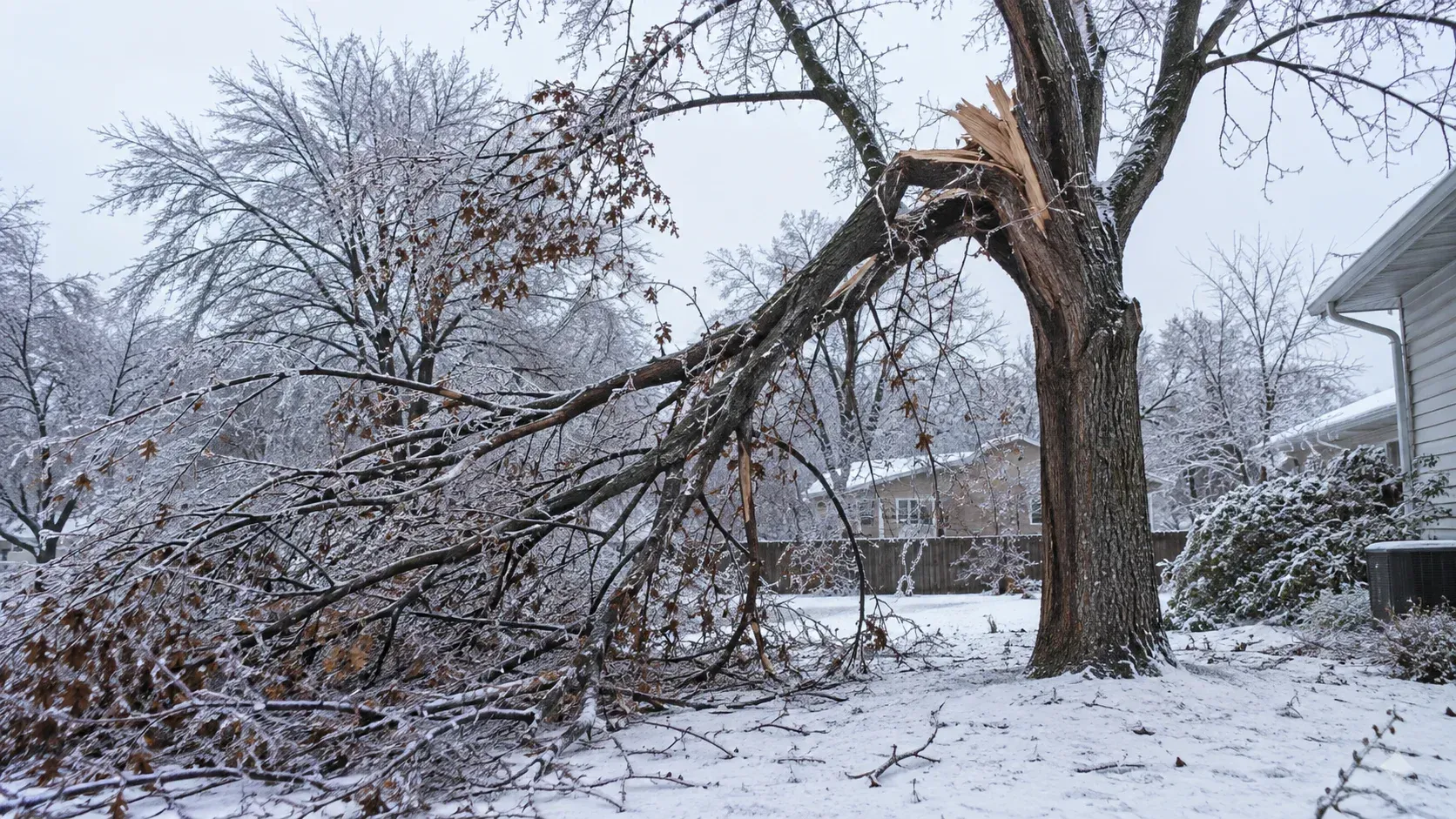
When we get to a failure, the tree almost always explains itself. Looking at the break tells you what was going on.
- A hollow or visibly decayed trunk at the break point, often with the decay obvious the moment the trunk opens
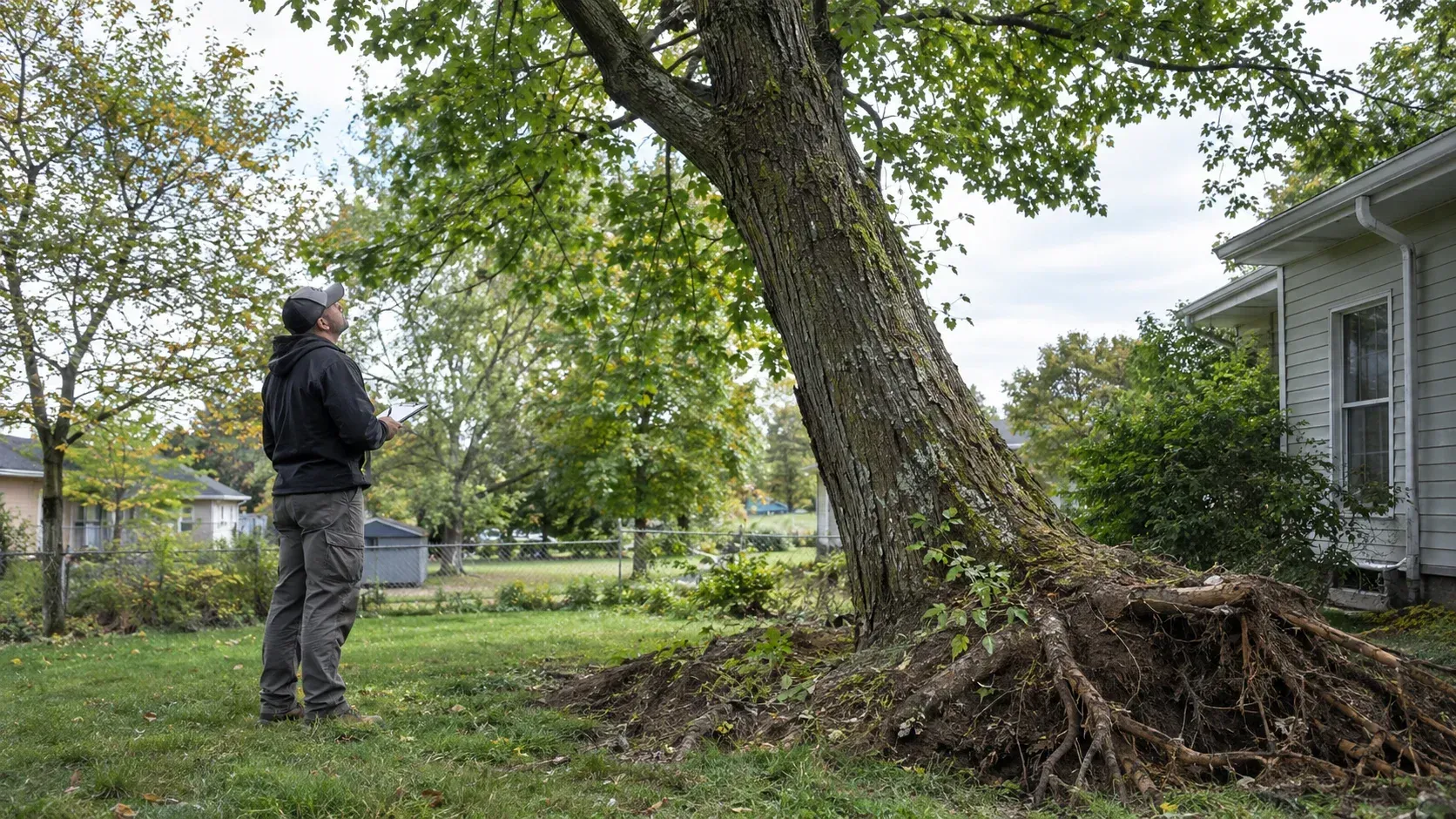
- A root plate that lifted, taking a disc of soil with it, which points at root failure rather than trunk failure
- Roots that are dark, soft or absent where sound wood should be
- Old wound or pruning sites at or near the failure point
- A crack or seam that had been there a long time
- Included bark at a union that split, which is a defect the tree grew in decades earlier
Almost every one of those was present the day before the tree fell. Most of them were findable. That is not a criticism of homeowners, who have no reason to know what to look at. It is the argument for having somebody look who does.
The Signs That Do Show Up, If You Know Where to Look
Here is where to actually look, and it is not up:
- Mushrooms or shelf fungi on the trunk, at the base, or on surface roots. This is the single most significant visible sign, because fruiting bodies generally mean decay is well established inside
- A trunk that sounds hollow when struck, though this is a crude test and its absence proves nothing
- Cavities, holes or soft spots, particularly at the base
- Cracks or seams running vertically, especially ones that have opened
- Bark falling away in patches with no regrowth underneath
- Soil heaving, cracking or lifting anywhere around the base
- A trunk that enters the ground like a telephone pole, with no visible flare, which often means buried root collar or girdling roots
- A lean that is new, or that has visibly increased
- Sawdust-like material or insect activity at the base
- Canopy thinning or dieback, which does eventually show, but late
That last point is the important qualifier. Canopy symptoms are real, they just arrive at the end. By the time the canopy is telling you something, the trunk and roots have been telling you for years.
Why Minnesota Trees Have a Few Extra Ways to Go
Our conditions add some specific pressures on top of the general picture.
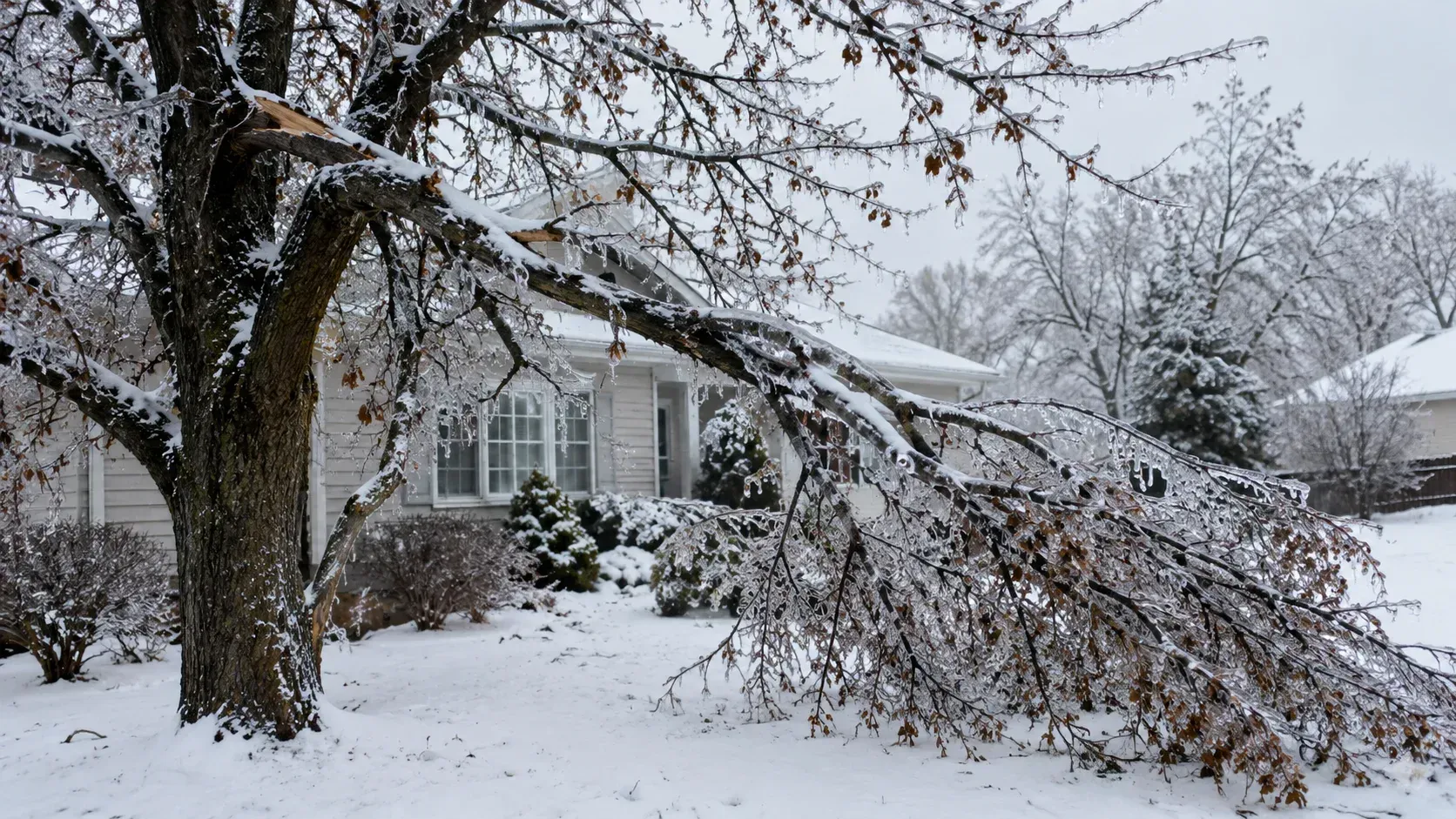
Freeze and thaw cycling works at existing cracks and opens them further, and a defect that was stable can progress through a winter. Heavy wet snow and ice load branches far beyond what wind alone does, and that loading finds weak unions. Saturated spring soil reduces root grip at exactly the time storms arrive.
There is also the disease and pest side. Oak wilt and emerald ash borer have both changed the tree population in this part of the state, and a declining or dead ash is a genuine structural concern rather than just an aesthetic one, because ash tends to become brittle as it dies. Oaks carry their own timing considerations around when pruning wounds are safest, which is worth asking an arborist about before scheduling work rather than after.
We are not going to publish pruning date windows or disease treatment protocols here, because both are specific enough that they deserve current, verified guidance rather than a general article.
What an Inspection Actually Checks
A hazard assessment looks at the things this article says are invisible, which is the point of having one.
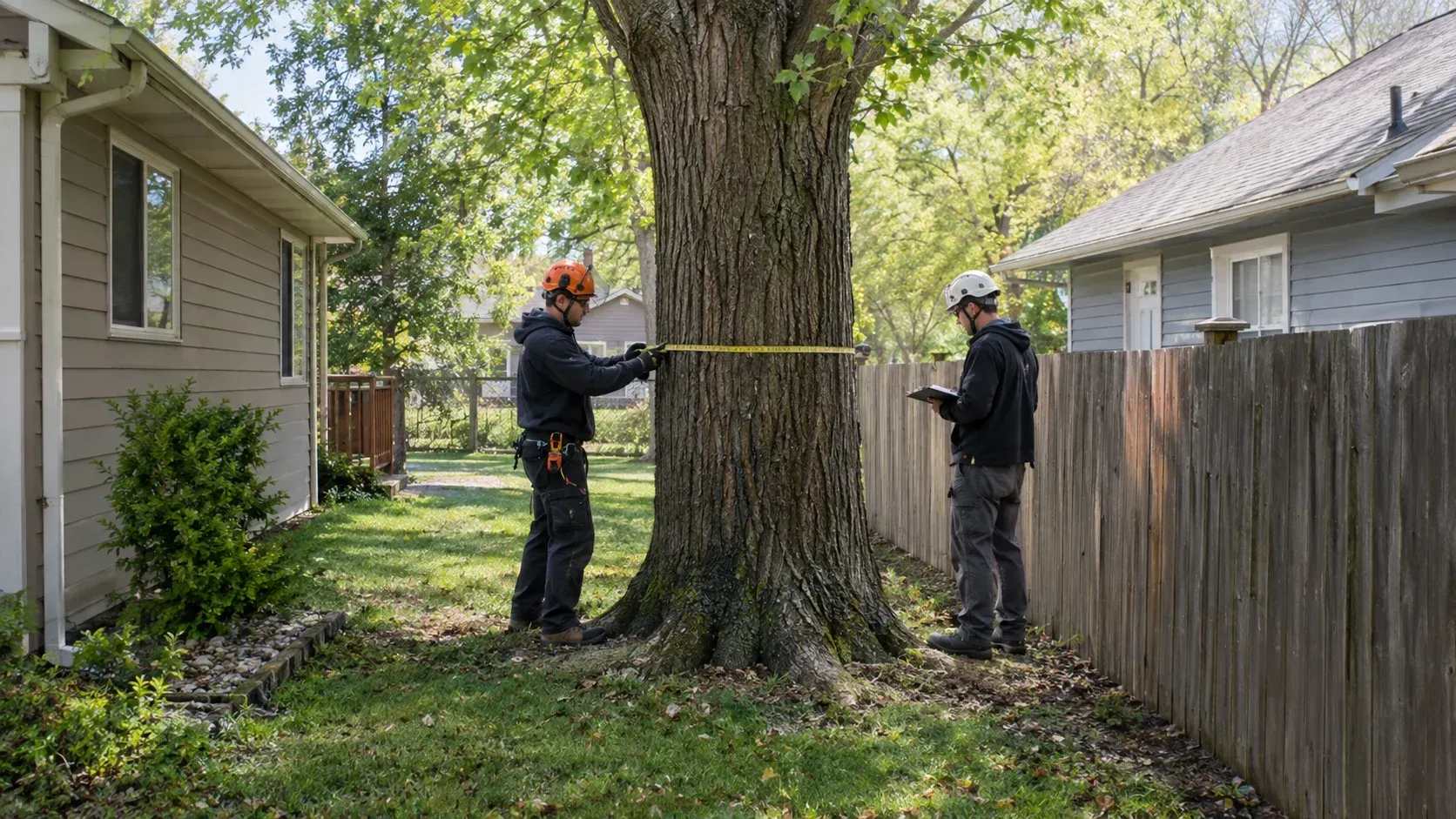
The work generally covers the root collar and base for decay, cavities, fungal bodies and buried flare; the soil around the base for heaving, cracking and disturbance; the trunk for cracks, cavities, old wounds, bark condition and sounding; the structural unions for included bark and splits; the canopy for deadwood, dieback and thinning; the lean and whether it appears recent; the site history, including any construction, trenching or grade change; and the target, meaning what the tree would hit.
That last item changes the urgency more than anything else. A tree with a marginal trunk over open lawn is a different decision from the same tree over a bedroom, and any honest assessment weighs both the likelihood of failure and the consequence.
Checking the root plate and the lower trunk is where most of that assessment sits, and the useful time to do it is before storm season rather than after something comes down.
Conclusion
A healthy-looking canopy is evidence that a tree is alive. It is not evidence that it is safe, because the living layer that makes leaves is thin and sits outside all the wood that actually holds the tree up.
Failures that look sudden are generally the end of a long, quiet process in the roots or the trunk, and the signs that matter are at ground level. Fungal bodies at the base, cavities, cracks, disturbed soil and a missing root flare are worth more of your attention than anything happening thirty feet up.
Get a Hazard Inspection Before Storm Season
If you have a large tree near your house, a driveway or anywhere people spend time, having it looked at before the weather does the testing is the cheaper order of events. We check the base, the roots, the trunk and the structure, not just the canopy, and we will tell you plainly when a tree is fine.
Arbor Barber Tree Service is locally owned and operated in Lakeville, with certified arborists and over 20 years of experience, safety-focused and fully insured. We serve Lakeville, Apple Valley, Burnsville, Farmington and Rosemount.
Call (612) 703-0175 to get a tree looked at.
Frequently Asked Questions
Can a tree that looks completely healthy really fall over?
Yes, and it is common. The living tissue producing leaves is a thin outer layer, so a trunk can be substantially decayed inside while the canopy stays full. Root decay is even harder to see, because none of it is visible from above.
Does a hollow tree always need to come down?
No. A hollow trunk resists bending better than people expect, and plenty of hollow trees stand for decades. What matters is how much sound wood remains, where it sits around the trunk, and what the tree would hit if it failed.
How long after construction damage can a tree fail?
Often years. Roots severed by trenching or a driveway pour may not produce visible decline for several growing seasons, which is why the cause and the failure are rarely connected. If work happened near a large tree, mention it when you have the tree assessed.
Are mushrooms at the base of my tree a serious sign?
They are worth taking seriously. Fungal fruiting bodies on the trunk, base or surface roots generally indicate decay that is already well established inside the tree. It does not automatically mean removal, but it does mean an assessment.
How often should a mature tree be inspected?
Periodically, and specifically after any storm, construction work, trenching or grade change near it. Trees close to a house, driveway or play area justify closer attention than a tree in open ground, because the consequence of failure is higher.
Recent Posts