Does Homeowners Insurance Actually Cover Tree Removal After a Minnesota Storm?

October 20, 2026

Share this article

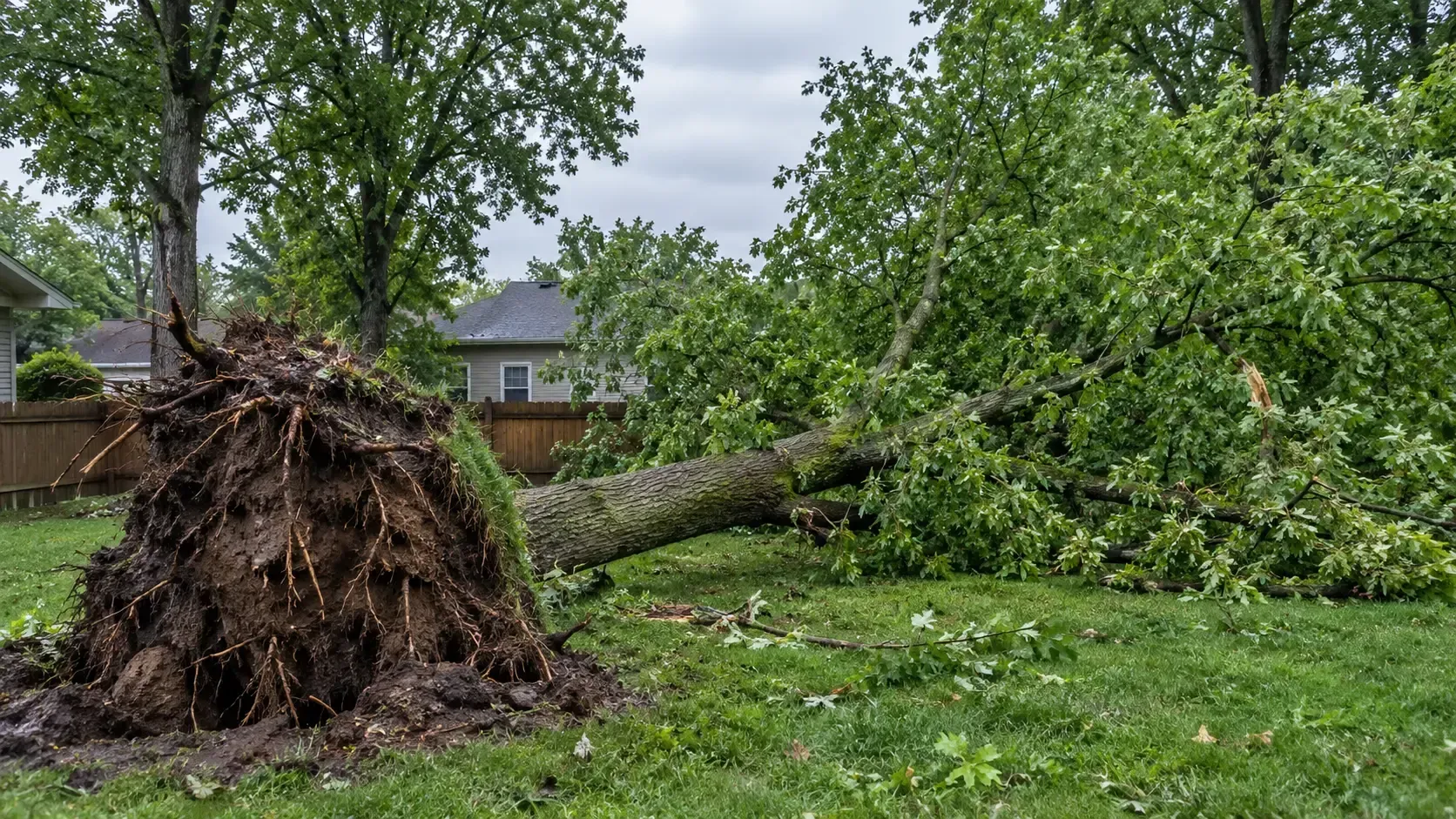
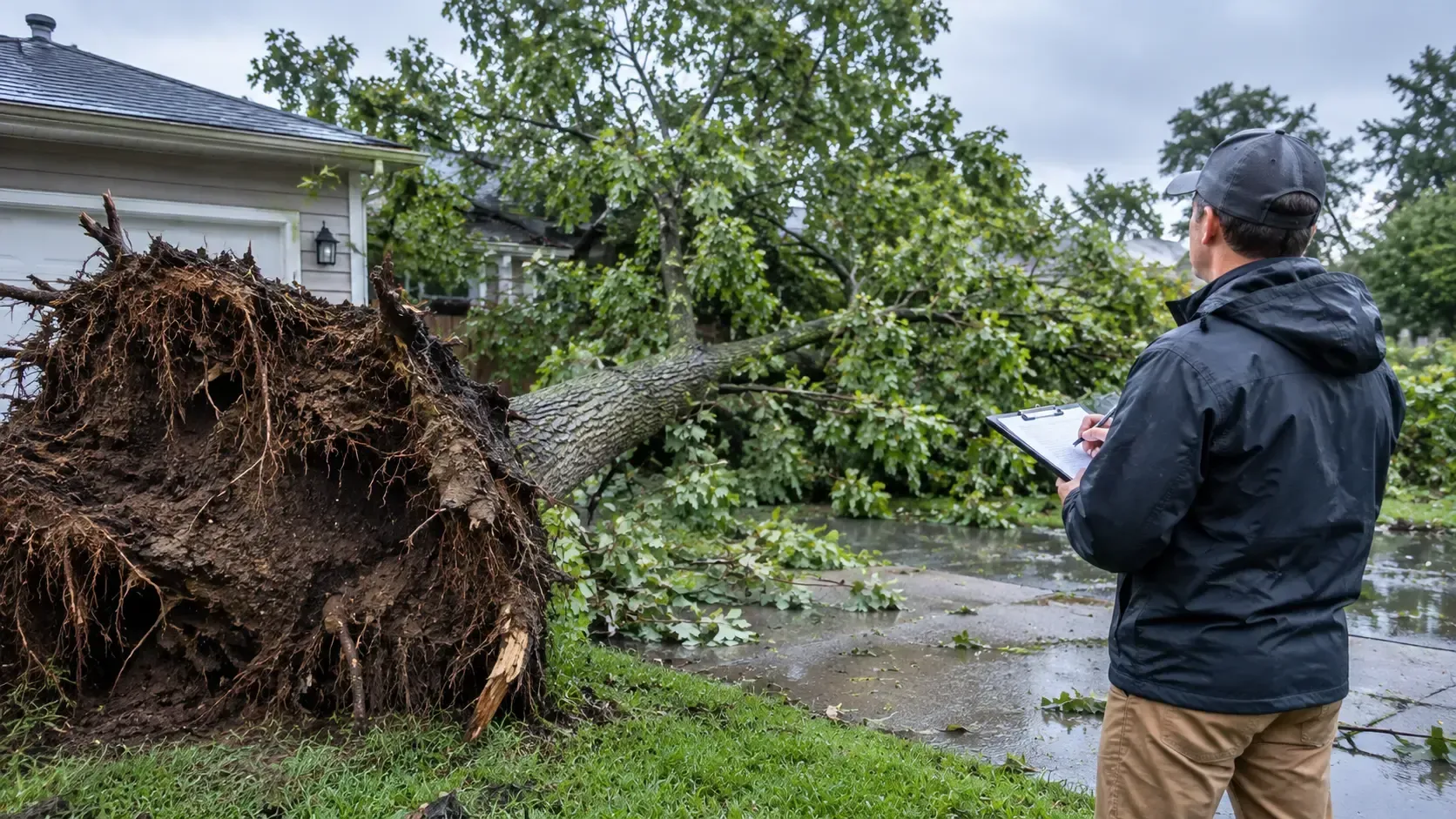
An arborist inspecting a massive uprooted tree with its root plate completely exposed after a severe storm, illustrating Does Homeowners Insurance Actually Cover Tree Removal After a Minnesota Storm?

Table of Contents

  • Introduction
  • Does Homeowners Insurance Cover Tree Removal Storm Damage Causes
  • The Rule Most Policies Follow
  • When a Fallen Tree in Minnesota Is Your Own Expense
  • How to Document a Storm Tree Damage Claim
  • What to Do Before You Call Anyone
  • Conclusion
  • Get Your Storm Damage Assessed and Documented
  • Frequently Asked Questions


Key Takeaways

  • Coverage usually depends on what the tree hit, not on the storm or the size of the tree.
  • A tree down in the yard that damaged nothing is commonly the homeowner's expense.
  • A tree on the house, garage, or fence is the situation policies are built around.
  • Policies often cap removal costs, and caps vary considerably.
  • Your policy and your adjuster decide this. No contractor or article can tell you what you are covered for.

Insurance Disclaimer

This article explains how homeowners policies commonly treat storm related tree removal. It is general information, not insurance advice, and it is not a statement about your coverage. Policy language, limits, exclusions, and endorsements vary between carriers and between policies, and only your insurer or agent can tell you what applies to your situation. Read your policy and call your carrier before assuming anything here applies to you. For questions about insurance practices in Minnesota, the Minnesota Department of Commerce is the state authority.


Introduction

Most standard homeowners policies cover tree removal after a storm only when the fallen tree damages something covered, such as a house, garage, or fence, which is why storm cleanup costs often land on the homeowner rather than the carrier. A tree that comes down in the yard and hits nothing is commonly treated as a maintenance expense rather than a claim.


That single distinction surprises more people than anything else about storm coverage, and it is worth understanding before you start making calls.


Does Homeowners Insurance Cover Tree Removal Storm Damage Causes

Coverage generally turns on what the tree landed on rather than on what knocked it down.

What happened How policies commonly treat it
Tree falls on the house Typically a covered loss, removal usually included
Tree falls on a detached garage or shed Commonly covered under other structures
Tree falls on a fence Often covered, though limits vary
Tree falls in the yard, hits nothing Commonly not covered
Tree blocks a driveway or a ramp Sometimes covered, varies by policy
Tree falls on a vehicle Usually an auto policy matter, not the home policy

That last row catches people. A tree on a car is generally an auto insurance matter rather than a homeowners one, falling under the part of the auto policy that covers non-collision damage, which means a different claim and often a different deductible.


Every row above says commonly or typically for a reason. These are general patterns, not guarantees, and your policy is the only document that answers your situation.


The Rule Most Policies Follow

The logic behind the pattern is simpler than the paperwork suggests.


Homeowners insurance is built to restore covered property after a sudden loss. The tree itself is generally not the insured property. The house, the garage, the fence are. So when a tree damages one of those, removing it is part of putting the covered property back, and removal commonly comes along with the repair.


When nothing covered is damaged, there is no covered loss to restore. The tree is debris on your land, and clearing your land is ordinarily your responsibility, the same as any other yard maintenance.


Two things follow from that:

  • Removal coverage is often capped at a specific amount per storm or per tree, and those caps are frequently lower than the full cost of a large removal.
  • Hauling and stump work may be treated separately from the removal itself.


Ask your carrier about the cap specifically. It is the number that most often turns an expected full reimbursement into a partial one.


When a Fallen Tree in Minnesota Is Your Own Expense

The common scenarios where homeowners end up paying out of pocket are worth knowing in advance.


  • The tree fell in open yard and damaged nothing.
  • The tree is still standing but compromised, since preventive removal of a hazardous tree is almost never covered.
  • The tree was already dead or visibly declining, where a carrier may argue the loss was foreseeable rather than sudden.
  • The removal cost exceeds the policy cap, leaving the balance with you.
  • The damage falls under your deductible, which can make a small claim not worth filing.
  • The tree belongs to a neighbor and the situation turns on negligence rather than weather.


That second point is the one worth sitting with. Insurance responds to damage that has happened, not to risk you can see coming. A leaning tree over your roof is your problem to solve before it falls, and it becomes considerably more expensive once it falls.


Neighbor situations have their own complications, and ownership questions around trees on a boundary are a separate matter from insurance entirely.


How to Document a Storm Tree Damage Claim

Documentation is the part homeowners control, and doing it properly before cleanup starts protects the claim.


What to capture:

  • Photographs from several angles before anything is moved, including wide shots that show the whole scene
  • Close ups of the damage to the structure itself
  • The base of the tree, showing whether it uprooted or snapped
  • Date and time stamps, which most phones record automatically
  • Weather records for the date, which your carrier may ask for
  • Written scope of the work performed, kept with your receipts
  • Receipts for everything, including emergency work done to prevent further damage


Emergency work deserves a note. Most policies expect you to take reasonable steps to prevent further damage, such as tarping an opening, and those costs are commonly reimbursable. Keep the receipts and tell your adjuster what you did and why.


Do not clear everything away before the adjuster has seen it or released you to proceed. Removing the evidence is the most common avoidable mistake, and it usually happens because people want the mess gone.


What to Do Before You Call Anyone

Order matters more here than speed, with one exception.


  1. Make the area safe. Stay away from lines and anything overhead.
  2. Call your insurer first if a structure was hit, and ask what they need.
  3. Photograph everything before any cleanup begins.
  4. Do only what prevents further damage, such as tarping, and keep the receipts.
  5. Get the work scoped in writing rather than agreeing to a number over the phone.
  6. Ask your carrier about the removal cap before assuming the full cost is covered.
  7. Keep every document together in one place.


The exception is anything actively dangerous. A limb hanging over a doorway or a tree resting on a roof does not wait for a claims process, and our 24/7 response exists for exactly that. Make it safe first, document as you go, and sort out the claim afterward.


One more thing worth knowing. Understanding why fallen tree failures happen at all matters for the trees still standing, because a carrier is far more sympathetic to a healthy tree that came down in a storm than to one that was visibly failing for years.


Conclusion

The question is not really whether insurance covers tree removal. It is what the tree hit. A tree on a covered structure usually brings removal with the repair, subject to a cap worth asking about. A tree lying in the yard that damaged nothing is usually yours to deal with, and a hazardous tree still standing is almost always yours to deal with before it falls. Photograph everything before cleanup, call your carrier early if a structure was involved, and read your own policy rather than trusting a general answer, including this one.


Get Your Storm Damage Assessed and Documented

If a storm has brought a tree down on your property, we will assess the situation and document what we find, so you have a written record of the damage and the work before anything gets cleared. Arbor Barber Tree Service is open 24/7 across Lakeville, Apple Valley, Burnsville, Farmington, Rosemount, and the surrounding communities, with over 20 years of experience, certified arborists, and fully insured crews. Call (612) 703-0175 or talk to us and we will get it looked at safely.
Frequently Asked Questions

  • Does homeowners insurance cover tree removal after a storm?

    Commonly only when the tree damaged something covered, such as the house, a detached structure, or a fence. A tree that falls in the yard without hitting anything is usually the homeowner's expense. Check your own policy, since terms vary by carrier.

  • Who pays if my neighbor's tree falls on my house?

    It commonly goes through your own policy regardless of whose tree it was, with your carrier deciding whether to pursue the neighbor's insurer. Negligence, such as a known hazardous tree left standing, can change that. Ask your carrier.

  • Will insurance pay to remove a dangerous tree before it falls?

    Almost never. Policies respond to damage that has occurred rather than to risk you can see coming. Preventive removal of a leaning or declining tree is generally the homeowner's responsibility and cost.

  • Is there a limit on tree removal coverage?

    Policies often cap removal at a set amount per storm or per tree, and caps are frequently lower than the cost of a large removal. Hauling and stump work may be handled separately. Ask your carrier about the specific limit.

  • Should I clean up storm damage before the adjuster arrives?

    Photograph everything first and do only what prevents further damage, such as tarping. Clearing the scene before the adjuster has seen it or released you to proceed removes the evidence your claim rests on. Keep every receipt.

Recent Posts

An arborist inspecting an uprooted tree, showing why storms topple resilient trees.
October 20, 2026
Find out why a Minnesota thunderstorm can topple a tree that survived stronger winds before, from saturated soil and straight-line gusts to hidden root decay.
Examining pest risks to ask: Is It True That Leftover Tree Stumps Attract Termites to Your House?
September 28, 2026
Tree stumps can genuinely attract termites and carpenter ants, but the real risk to your house depends mostly on distance and how long the stump has decayed.
Arborist inspecting damage from emerald ash borer confirmed in just one branch of a tree.
September 28, 2026
Emerald ash borer confirmed in one branch rarely stays contained. Learn the realistic timeline, your options, and how the infestation likely progresses next.
Arborist checking an oak tree: What happens once emerald ash borer is confirmed in a branch?
August 19, 2026
Oak trees losing leaves in summer can signal oak wilt, drought stress, or fungal disease. Learn how to tell the difference and what to check first right away.
Arborist pruning a branch: Is It True That Pruning an Oak Tree in Summer Can Get It Infected With a
August 12, 2026
Learn why pruning oak trees in summer increases oak wilt risk in Minnesota, how the disease actually spreads, and when it's truly safe to prune oaks instead.
Arborist checking how do you know if a tree has internal decay with no visible damage on the outside
July 15, 2026
Learn the subtle signs of internal tree decay even when the outside looks healthy, including fungal conks, sound tests, and when to schedule an inspection.
Tree with exposed roots by an excavator, showing why trees die after construction damage.
July 9, 2026
Learn why trees sometimes die years after construction damaged their roots, how this delayed decline develops, and which symptoms signal long-term trouble.
Fresh pruning cut bleeding heavy sap what happens if a maple or birch tree is pruned wrong.
June 16, 2026
Learn what happens when maple or birch trees are pruned at the wrong time of year, including sap bleeding, borer risk, and the correct pruning window overall.
A topped tree showing why some trees grow back faster but weaker after trimming.
June 8, 2026
Learn why some trees produce fast, weak regrowth after trimming, what epicormic shoots actually are, and how improper cuts trigger this stress response overall.
Topped tree: is it true that topping a tree makes it grow back thicker and fuller?
May 21, 2026
Learn why topping a tree doesn't actually make it grow back fuller or healthier, what epicormic sprouts are, and why proper pruning works better long-term.
Show More