Introduction
A tree can survive serious root loss or soil compaction from nearby construction for several years before it visibly declines, because the damage reduces its ability to take up water and nutrients gradually rather than all at once. In the meantime the tree runs on stored energy reserves, looking normal while quietly falling behind. Decline appears when the reserves are spent, which is why the tree that struggled through this summer was frequently injured three or four years ago by work nobody connects to it.
This is one of the most common things we diagnose, and
assessments of declining trees
around Lakeville regularly end with a question about what was built, dug or driven over near that tree in the last five years. The answer is usually yes, something was.
Here is why the delay happens, and what can and cannot be done about it.
Why a Tree Dying Years After Construction Damage Is So Common
Two things have to be true at once for this pattern to be as widespread as it is, and both are.
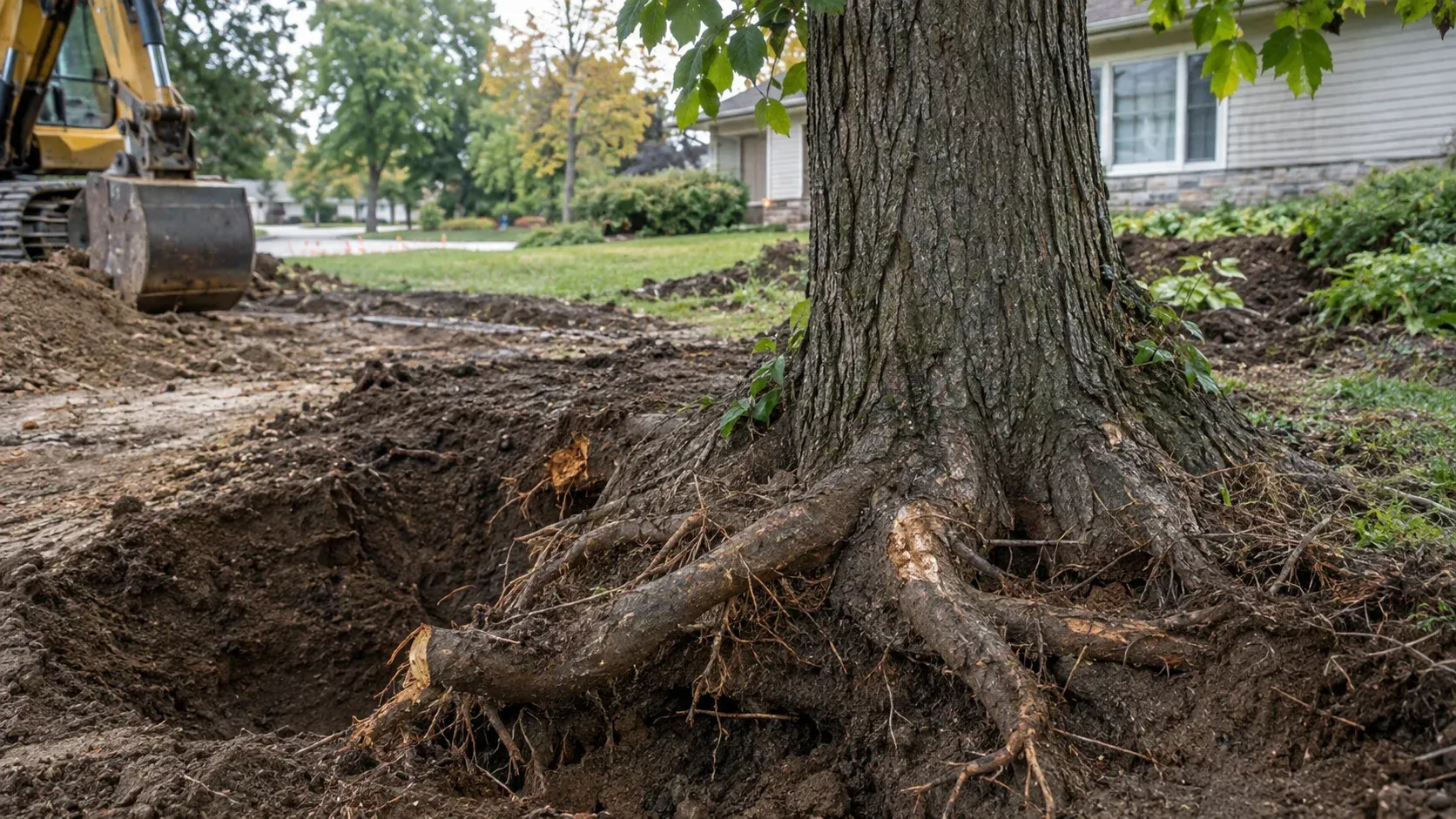
The first is that construction damages roots easily. A tree's root system is invisible, it extends much further than people expect, and almost any site work reaches into it. Trenching, excavation, grading, driveway and patio pours, foundation work, fence lines, irrigation, utility runs, and simply parking equipment on the soil all affect it.
The second is that trees do not respond on a human timescale. A tree that loses a significant share of its absorbing roots does not wilt the next day. It has reserves, it has redundancy in the root system, and it adjusts. The decline is gradual and the symptoms are subtle for a long time.
Put those together and you get a situation where the cause and the effect are separated by years, and the homeowner draws a straight line from a dry summer or a storm to the tree's decline, because that is the event they can see.
What Construction Actually Does to a Root System
The damage comes in several forms, and most projects deliver more than one:
- Severed roots.
Trenching for utilities, irrigation or footings cuts straight through whatever is in the path. A single trench on one side of a tree can remove a large share of the roots on that side.
- Soil compaction.
Equipment, vehicles and material stockpiles press soil particles together, collapsing the pore spaces roots need for air and water.
This is the damage nobody sees, and it is often the most significant.
- Grade changes, soil added.
Fill placed over the root zone buries roots below the depth they can get oxygen at. Even a modest layer can smother a root system.
- Grade changes, soil removed.
Cutting the grade down removes the shallow absorbing roots outright.
- Paving over the root zone.
Sealing the surface cuts off water infiltration and gas exchange.
- Trunk and bark wounds
from equipment strikes, which are visible but usually less consequential than what happened underground.
- Chemical injury.
Concrete washout, fuel, solvents and other materials rinsed onto the soil.
- Drainage changes.
New hardscape, grading or footings redirect water, and a tree that had reliable moisture can be cut off from it or left sitting in it.
The pattern that does the most harm is a combination: roots cut on one side, soil compacted on another, and drainage altered across the whole area.
Root Compaction Symptoms Are the Ones People Miss
Compaction deserves its own section because it is invisible, it is very common, and homeowners rarely believe it matters.
Roots need air. Soil that is healthy for roots is roughly half solid material and half pore space, and those pores hold the air and water roots depend on. Drive a loaded truck across it, park a skid steer on it for a week, or stockpile material on it, and those pores collapse.
What follows:
- Reduced oxygen
in the root zone, which impairs the fine absorbing roots first
- Reduced water infiltration, so rain runs off rather than soaking in
- Physical resistance
to new root growth, so the tree cannot rebuild into that area
- Slower recovery, because compacted soil does not decompact on its own in any useful timeframe
The symptoms are non-specific and easy to blame on something else: thinner canopy, smaller leaves, less annual growth, early fall colour. Nothing that points at a cause.
And the timing misleads. Somebody parks equipment on a root zone for two weeks during a summer project. The tree looks fine that year, slightly thin the next, noticeably poor by year four. Nobody remembers the parking.
The Delay: Why Decline Takes Years to Appear
The mechanism is worth understanding because it explains the whole phenomenon.
A tree stores energy reserves, built up over previous growing seasons and held in the roots, trunk and branches. Those reserves buffer it through bad years, and they are what it draws on to leaf out each spring before the new leaves start producing.
When root damage reduces the tree's ability to take up water and nutrients, the tree does not immediately fail. It produces a slightly smaller canopy, draws a little more on reserves, and carries on. But a smaller canopy produces less energy, which means less goes back into storage, so next year it starts from a lower base.
That is the spiral. Each season the tree runs a small deficit, the reserves draw down, and the decline accelerates as it goes. Early on it is invisible. Late on it is obvious and largely irreversible.
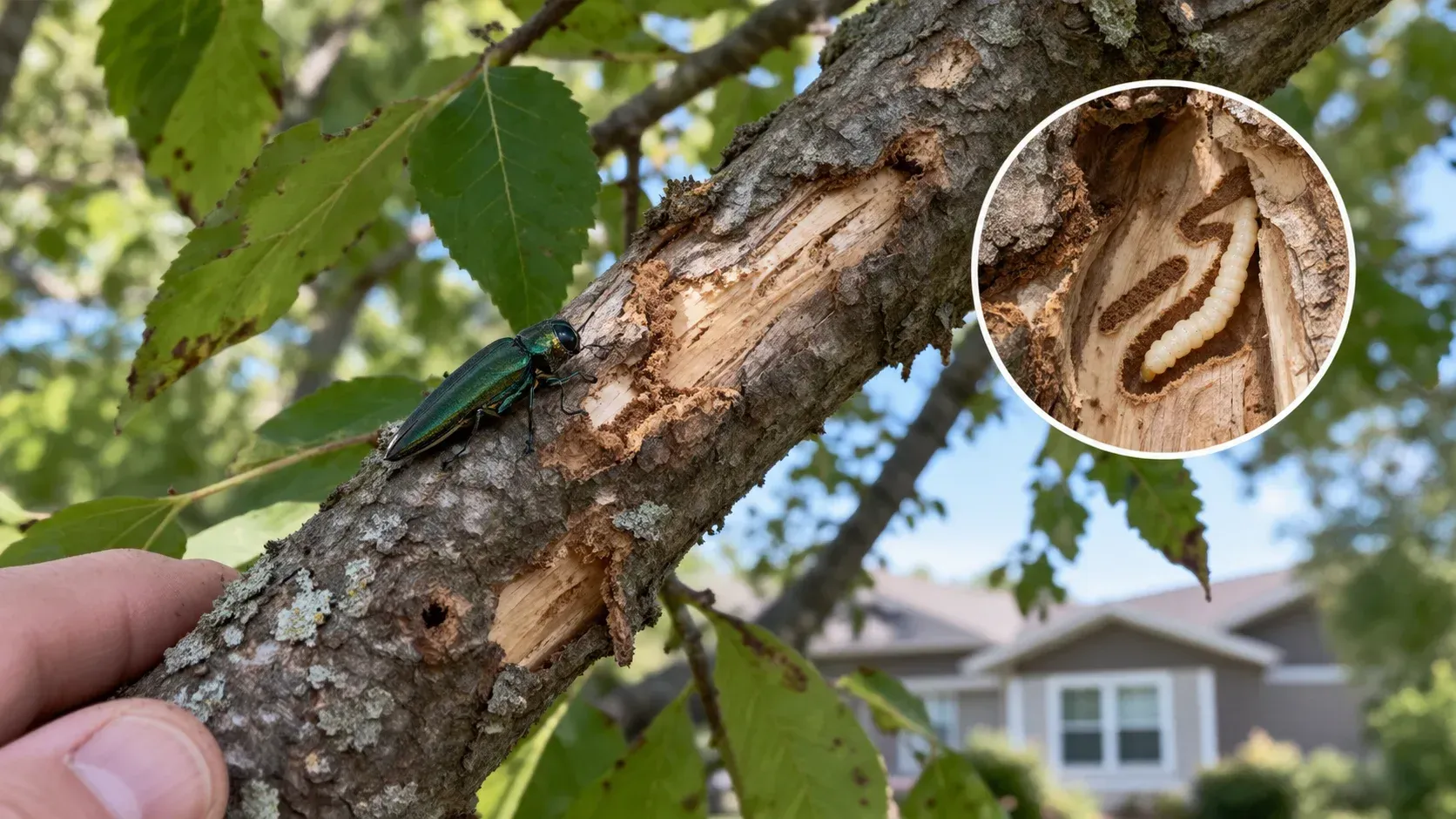
Two things make the timing worse. A drought year, a hard winter or a pest outbreak lands on a tree with no buffer left, which is why the final decline often coincides with a stress event that gets the blame. And the tree's reduced defensive capacity makes it more susceptible to secondary pests and diseases, which then appear to be the cause rather than the consequence.
Construction Root Damage Tree Decline, Season by Season
Roughly what the progression looks like, though it varies with species, tree age, damage severity and weather:
The first season.
Usually nothing visible. The tree leafs out on stored reserves. Occasionally some leaf scorch or early drop in a hot summer.
The second and third seasons.
Subtle changes. Slightly smaller leaves, a bit less extension growth on the branch tips, canopy that looks marginally thinner. Nothing a homeowner would flag.
Years three to five.
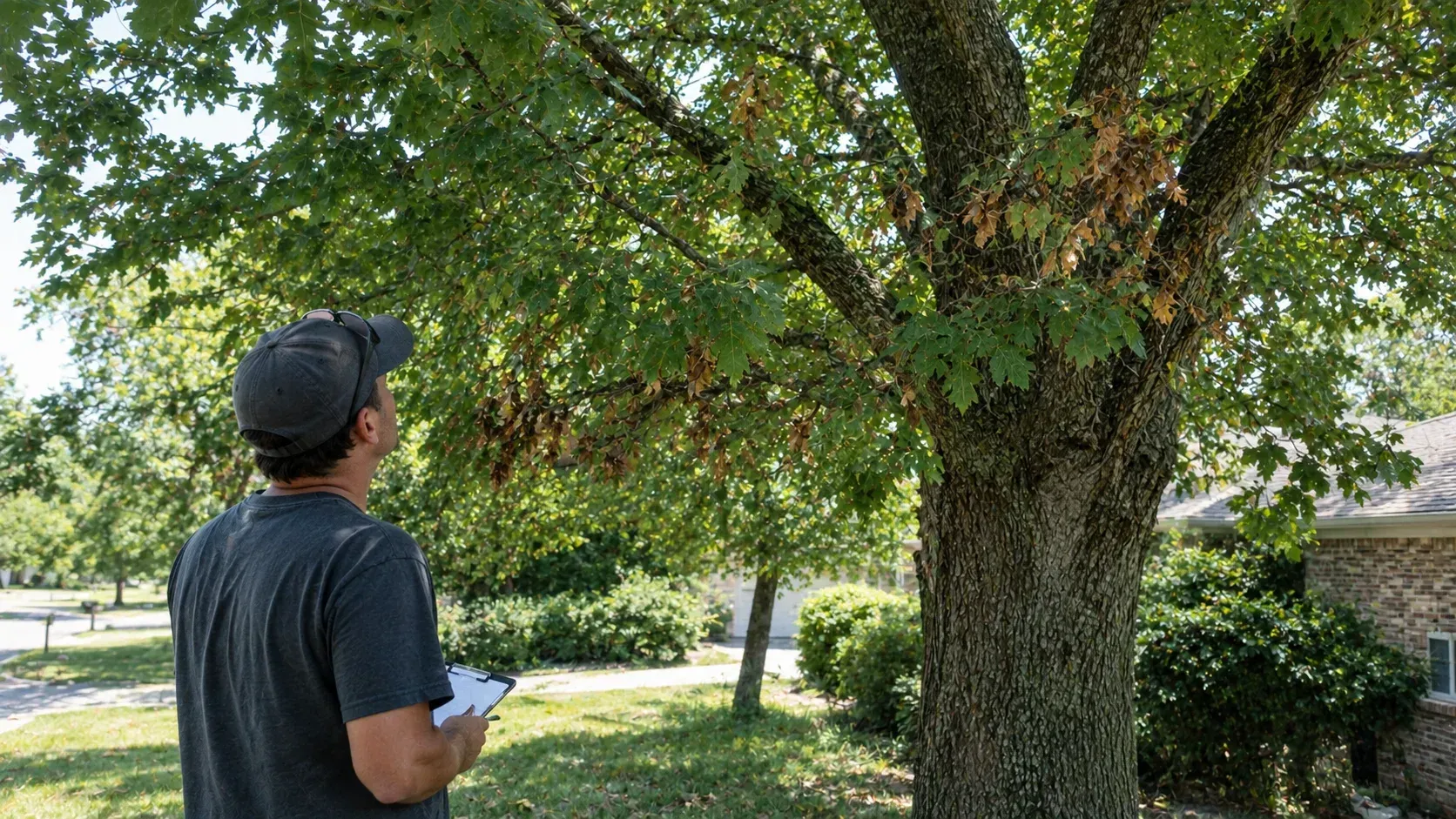
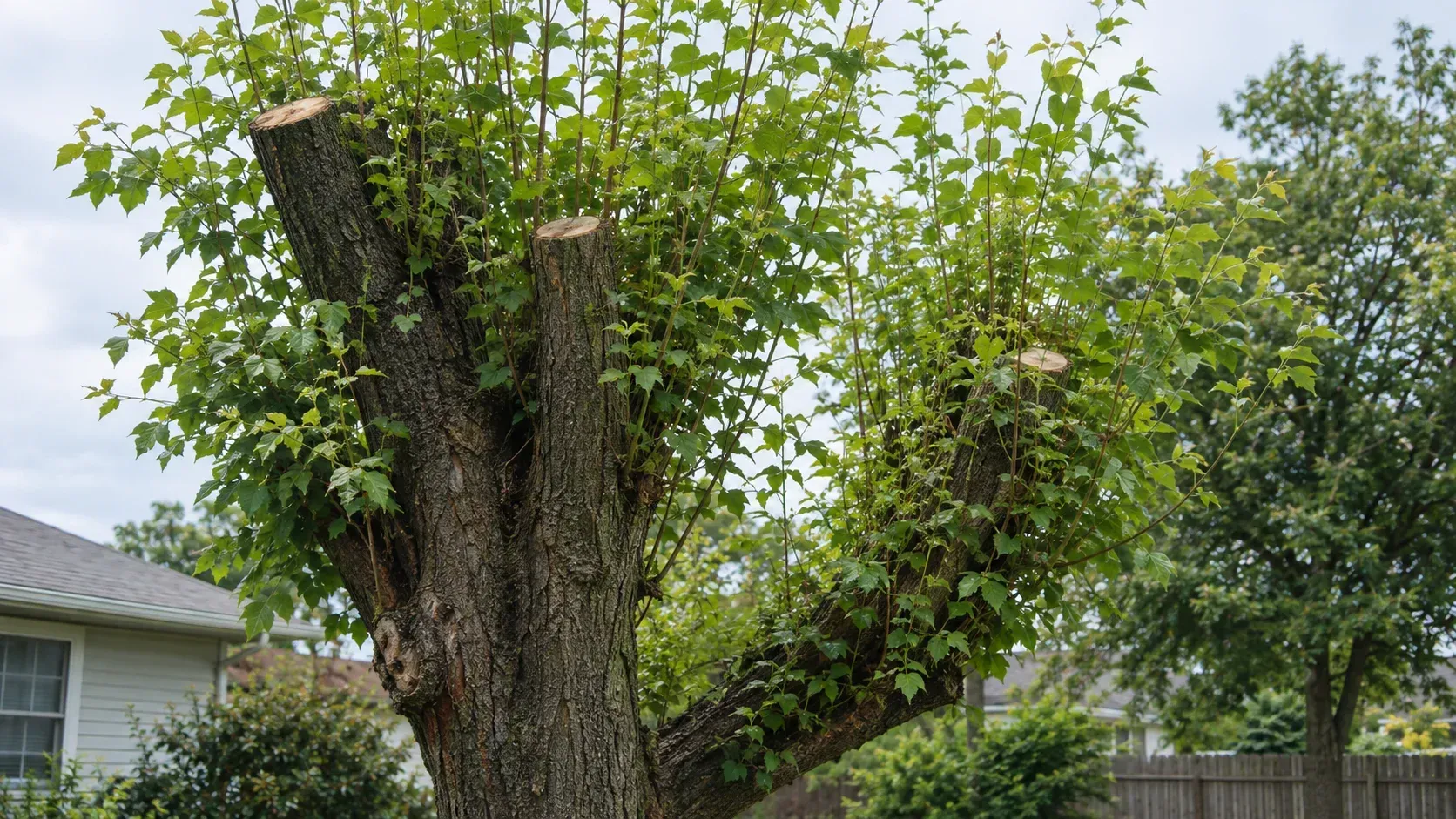
Now visible. Noticeably thin canopy, dieback beginning at the branch tips and upper crown, smaller leaves, earlier fall colour than neighbouring trees. Often a heavy seed crop, which is a stress response rather than a good sign.
Years five and beyond.
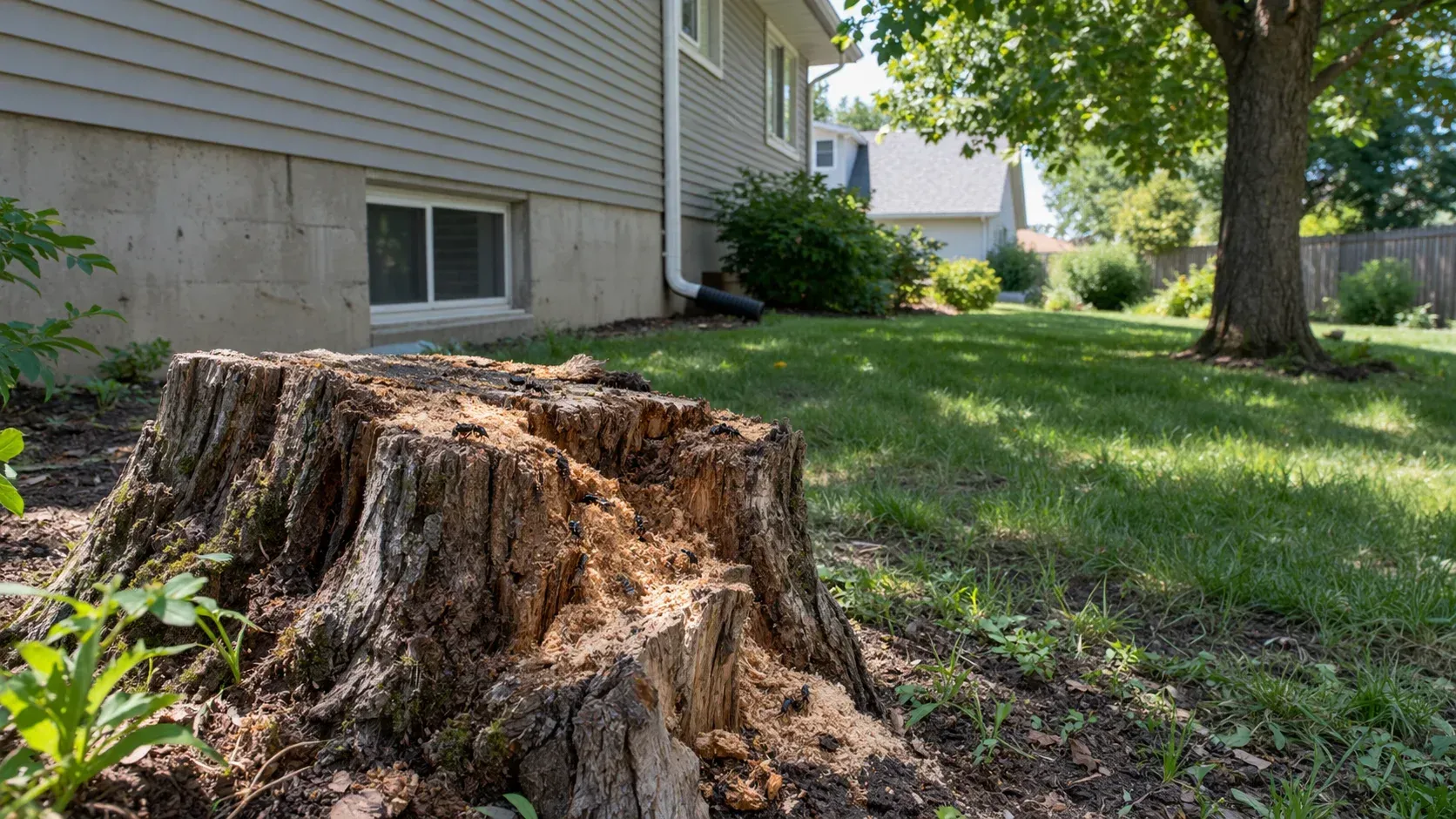
Substantial dieback, large dead branches, sparse canopy, secondary pests and disease establishing, sometimes fungal growth at the base as decay progresses.
The intervention window is early in that sequence, which is precisely when nothing appears wrong. That is the frustrating part of this topic and the reason it is worth writing about.
Why the Damage Radius Is Bigger Than You Think
The single most useful correction in this article.
Most people picture a tree's roots as a mirror image of the canopy, going down as deep as the tree is tall. Neither is true.
Tree roots are mostly shallow. The fine absorbing roots that do the actual water and nutrient uptake are concentrated in the upper layer of soil, typically the top foot or so, because that is where the oxygen is. There is no deep taproot on most mature landscape trees.
And they spread wide, well beyond the edge of the canopy, frequently considerably further than the branches reach. The area that matters is a broad, shallow plate rather than a deep ball.
Which means work that feels comfortably clear of the tree is often directly on top of its root system. A trench dug a good distance from the trunk, outside the drip line, can still be in the middle of the absorbing roots. Equipment parked on what looks like ordinary lawn is parked on the root zone.
When we assess a declining tree, the question is never just what happened near the trunk. It is what happened anywhere in a wide radius, including things that did not look like they involved the tree at all.
What Can Be Done for a Tree That Was Damaged
Honestly: mitigation rather than repair. Severed roots do not reattach and compacted soil does not fully recover. But the outcome is not fixed, and how much it matters depends on where the tree is in the sequence above.
What genuinely helps:
- Water management.
The most useful single intervention. A tree with a reduced root system needs consistent moisture through dry periods, deep and infrequent rather than light and frequent.
- Mulch over the root zone.
A wide ring of coarse organic mulch, kept off the trunk, improves soil conditions over time and protects against further compaction.
- Stopping further damage.
Keep traffic, parking and storage off the root zone permanently.
- Removing added fill
where soil was placed over the roots, if that is practical.
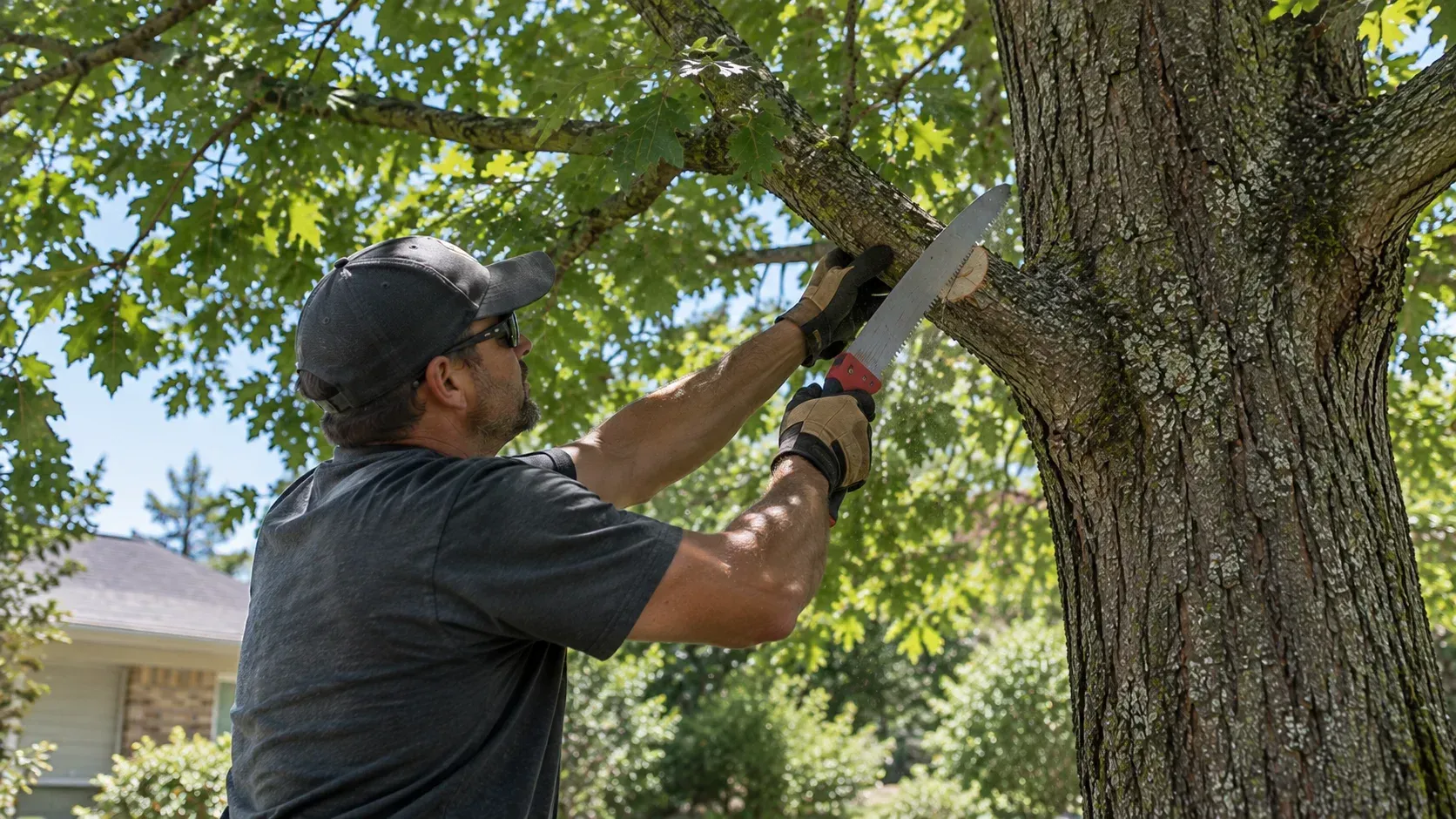
- Corrective pruning, limited to removing dead and hazardous wood.
Not a heavy prune, because a stressed tree cannot afford to lose more canopy.
- Soil decompaction techniques
exist and can help in some situations, which is worth asking about on a valuable tree.
- Monitoring.
Knowing whether it is stabilising or continuing to decline changes the decision.
What does not help: fertilizing a stressed tree as a reflex, which can push growth the tree cannot support, and heavy pruning to "reduce the load," which removes the food production it needs to recover.
And the honest part: a tree well into decline, with significant dieback and reduced structural integrity, may be past saving. At that point the question shifts from health to hazard, and
taking the tree out
is the answer we would rather not give but sometimes have to.
How to Protect Trees Before Work Starts
This is the section that actually matters, and it only works if you read it before the excavator arrives.
- Identify which trees you want to keep, before planning, not after.
- Establish a protection zone
around each and fence it. Physical fencing works because it stops people making judgment calls.
- Keep everything out of it.
No equipment, no parking, no material storage, no spoil piles, no washout, no foot traffic.
- Route utilities around root zones
where possible, and specify boring or tunnelling under them rather than open trenching where it is not.
- Get root pruning done properly
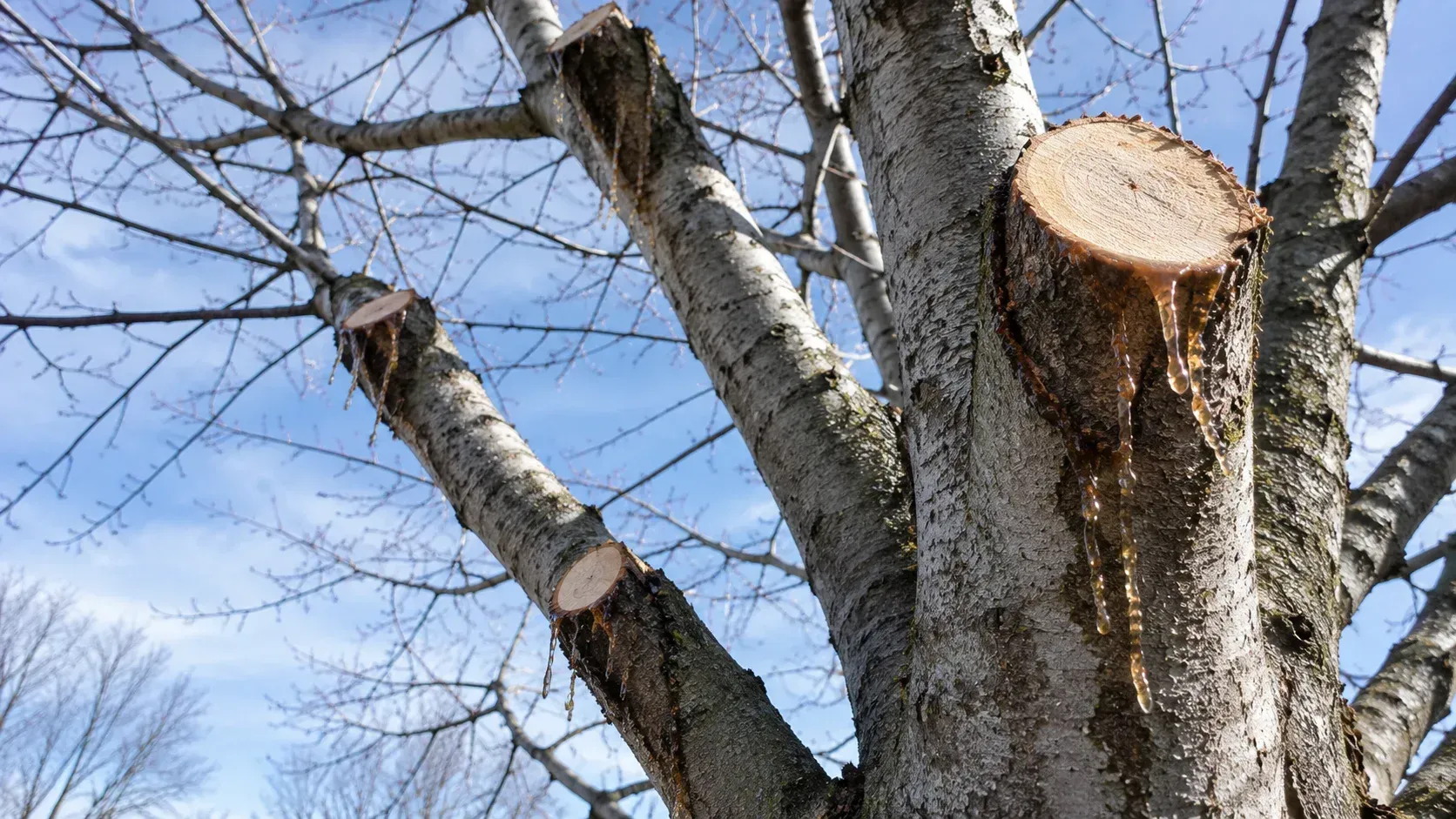
where roots must be cut, with clean cuts rather than tearing, which gives the tree a better chance of compartmentalising.
- Avoid grade changes
over the root zone in either direction.
- Write it into the contract.
Contractors work to what is specified, and tree protection that exists only as a conversation does not survive a busy site.
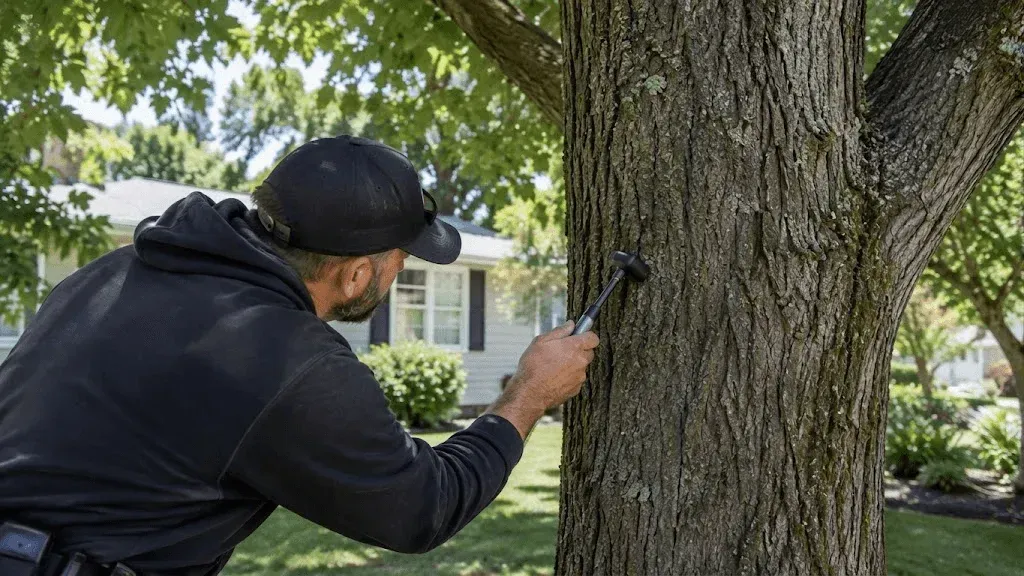
- Have the trees assessed beforehand
so you know which ones are worth protecting and which are already compromised.
- Water through the project and afterward, since construction sites are hard on soil moisture.
Prevention is the only intervention with a high success rate here. Everything after the fact is damage limitation.
Conclusion
Trees die years after construction because the damage is to a system that works on reserves. Cut roots, compacted soil and altered drainage reduce what the tree can take up, the tree covers the shortfall from storage, and the shortfall compounds quietly until the storage is gone.
If work has happened near a mature tree in the last few years, the useful time to look at it is now, while the symptoms are still subtle enough to be worth acting on. And if work is planned, the fencing goes up before anything else does.
Have Trees Near Recent Construction Evaluated
If you have had building, excavation, driveway or utility work near a mature tree in the last few years, it is worth having someone look at the tree while intervention is still useful. Early decline is subtle, and the difference between year two and year five is the difference between managing a problem and removing a tree.
Arbor Barber Tree Service is locally owned and operated in Lakeville, with certified arborists and over 20 years of experience, safety-focused and fully insured. We serve Lakeville, Apple Valley, Burnsville, Farmington and Rosemount.
Call
(612) 703-0175, and if you have work planned rather than completed, that is an even better time to call.