Introduction
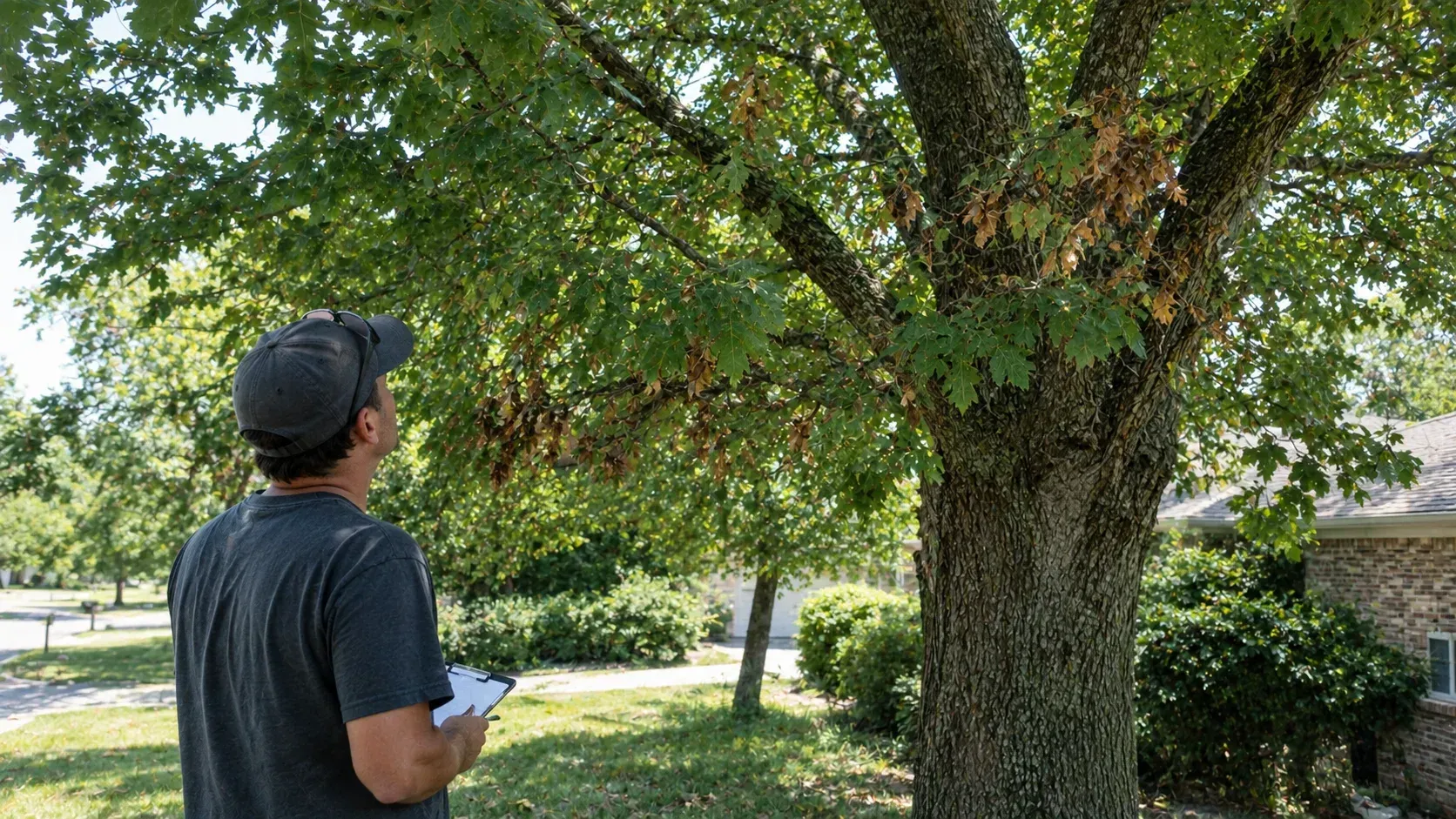
An oak losing leaves in midsummer is usually reacting to drought stress, but the same symptom can also be the first visible sign of oak wilt, a disease that can kill a red oak within a single season, so the pattern of the leaf loss matters far more than the fact of it. Leaves browning gradually from the edges in a dry August is a different situation from a canopy wilting from the top down over three weeks.
Most of the trees we are called out to look at in this situation turn out to be stressed rather than dying. That is genuinely the more likely answer and it is worth saying before the rest of the article makes you nervous. But the difference is not something to guess at from the ground with a fatal disease on the list, and
a diagnosis while the leaves are still on the tree is far more informative than one made after they have all dropped.
Here is how to read what your tree is doing.
Oak Tree Losing Leaves in Summer: What It Usually Means
Trees shed. An oak carries an enormous number of leaves and it drops some of them all season long, especially the interior ones that have been shaded out by the growth above them. Finding leaves on the ground in July is not by itself a symptom of anything.
What changes the picture is scale and pattern. The questions worth asking are how much, how fast, from where, and what else changed.
A tree that has thinned slightly, in a summer with little rain, with browning leaf edges and no other symptoms, is almost certainly telling you it is thirsty. A tree that has lost a third of its canopy in two weeks, starting at the top, with leaves that went limp and discoloured before they fell, is telling you something else entirely.
The rest of this article is really just a way of sorting between those two.
The Pattern Matters More Than the Number of Leaves
Four observations carry nearly all the diagnostic weight, and you can make all of them from the ground.
Where it started. Top and outer canopy first is the concerning direction. Interior and lower branches first is usually shading, which is normal.
How fast. Weeks is serious. Gradual thinning across a whole season is usually stress.
What the leaves look like. Wilting, meaning limp and drooping while still partly green, is different from browning while staying crisp and flat. Wilting points toward a water transport failure inside the tree. Browning from the edges points toward not enough water arriving in the first place.
Whether it is spreading between trees. One affected oak is one problem. An affected oak with a neighbouring oak starting to show the same thing is a pattern, and patterns in oaks raise the priority considerably.
Write down what you see and when. If someone assesses the tree later, that timeline is more useful than anything they can reconstruct from a canopy that has already dropped.
Oak Wilt Symptoms: The Version Worth Recognising
This is the one that justifies the whole article, so it gets stated plainly and without embellishment.
The classic presentation is rapid wilting that starts at the top and the outer ends of the branches and progresses inward and downward. Leaves often go limp and discolour from the tip and outer edges while the base of the leaf is still green, and the tree drops them while they are still partly green rather than holding them until autumn. On a red oak the whole canopy can go in a matter of weeks.
The reason it looks like wilting rather than like ordinary decline is that the problem is internal plumbing. The fungus is in the vascular system, the tree responds by blocking off the affected tissue, and in doing so it cuts off its own water supply. The leaves are not diseased. They are unwatered.
Red oaks, the group with pointed bristle-tipped leaf lobes, are the ones that die fast. White oaks and bur oaks, with rounded lobes, are more resistant and often decline slowly instead.
Two things this article will not do. It will not tell you that your tree definitely has it, because visual diagnosis from a description is not diagnosis. And it will not give you a treatment protocol, because confirmation, root-graft response and management are governed by current state guidance from University of Minnesota Extension and the Minnesota Department of Natural Resources rather than by general advice.
What it will tell you is that this pattern is worth acting on quickly, largely because of the other oaks nearby.
Drought Stress Looks Similar and Is Far More Common
Before assuming the worst, consider the simpler explanation, because it is usually the right one.
Oaks under water stress shed leaves on purpose. Dropping foliage reduces the amount of water the tree has to supply, which is a sensible response to a dry stretch even though it looks like decline. Trees in lawns, in compacted soil, in restricted planting spaces or on south-facing slopes hit that point sooner than trees with open root runs.
Drought stress typically shows as browning that starts at the leaf margins and works inward, with the leaves staying fairly flat and crisp rather than going limp. It tends to appear across the canopy rather than sweeping down from the top. And it tends to follow the weather, showing up weeks after a dry spell rather than out of nowhere.
There is also a lag effect that surprises people. A dry summer two years ago can still be affecting a tree now, because the fine roots it lost then have not fully recovered. Trees keep their own timeline.
The fix is unglamorous. Deep, infrequent watering out under the canopy rather than at the trunk, mulch over the root zone rather than piled against the bark, and no fertilising a stressed tree in the hope of helping it.
Leaf Spots, Galls and the Problems That Look Worse Than They Are
Several common oak problems produce dramatic-looking leaves and very little actual harm.
Leaf spot and blight fungi are favoured by wet spring weather and usually show as blotches, distorted leaves and early drop on the lower and interior canopy. They look bad. On an established tree they are rarely consequential, and they run their course as the weather dries.
Galls are growths on leaves, twigs or acorns caused by tiny insects, and oaks host a startling variety of them. They are mostly cosmetic.
Chewing insects can strip visible amounts of foliage in a bad year. A healthy oak generally handles one defoliation. Repeated years are a different conversation.
The distinguishing feature of this whole group is that the damage is on the leaves rather than in the tree. Spots, holes, bumps and distortion are leaf problems. Wilting is a tree problem.
When the Cause Is Underground
If the canopy is thinning and nothing on the leaves explains it, the cause is often below grade, and often years old.
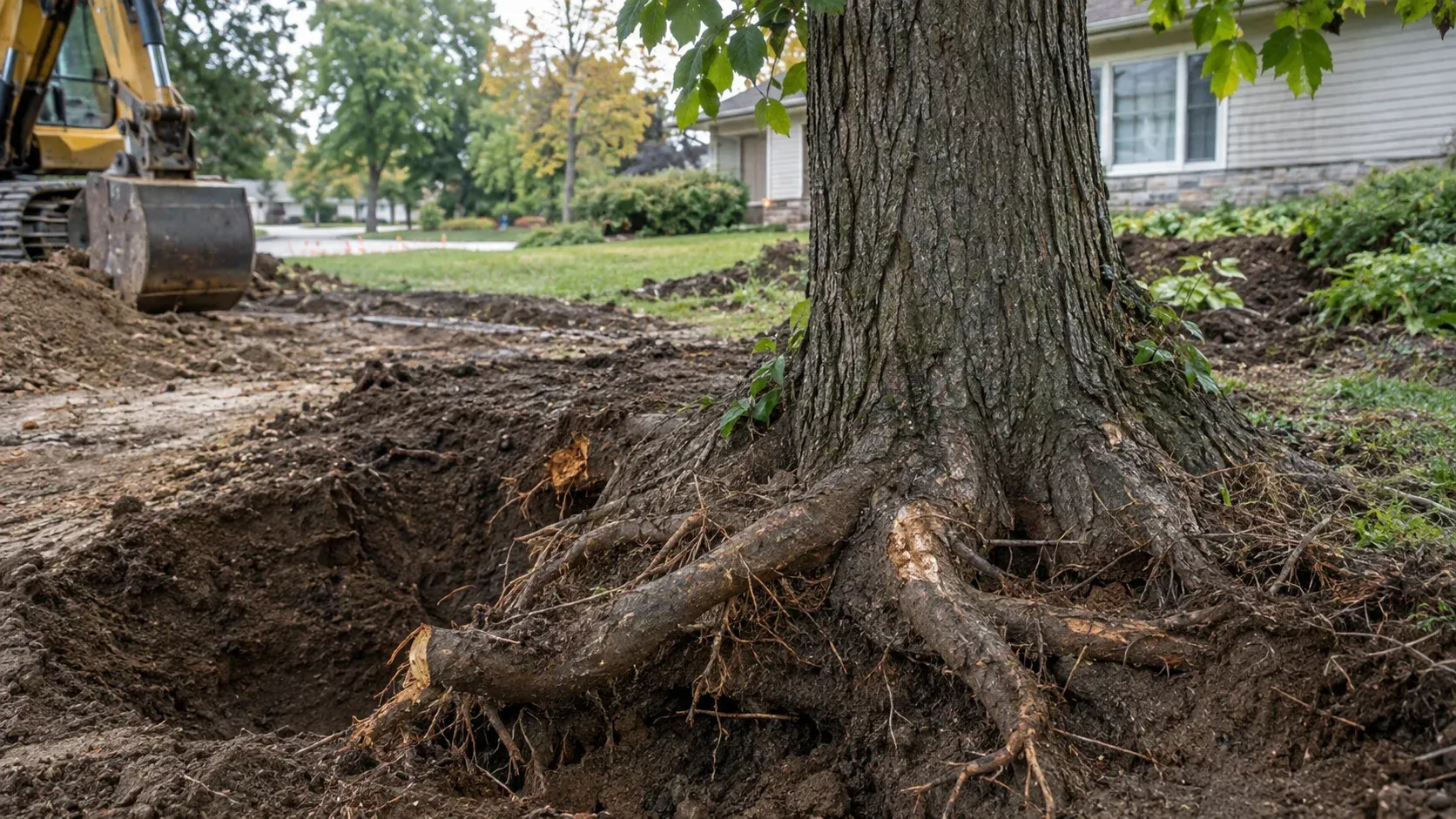
Root damage from construction, driveway work, trenching for utilities, regrading or heavy equipment traffic reduces the tree's capacity to take up water. The canopy responds by thinning, but often not immediately. Oaks are slow to show it and slow to recover.
Soil compaction does the same thing without any visible wound. So does grade change, meaning soil added over the root zone, which is one of the most damaging things that can happen to a mature tree and one of the least obvious.
Girdling roots, where a root has wrapped around the base of the trunk and is slowly strangling it, produce gradual canopy decline over years. Look for a trunk that goes straight into the ground without a visible flare at the base.
If anything was built, dug, paved or driven over near the tree in the last several years, mention it when you have the tree assessed. It reframes the whole diagnosis.
Sudden Oak Leaf Drop After Work on the Property
There is a specific version of this worth separating out, because the timing tells you something.
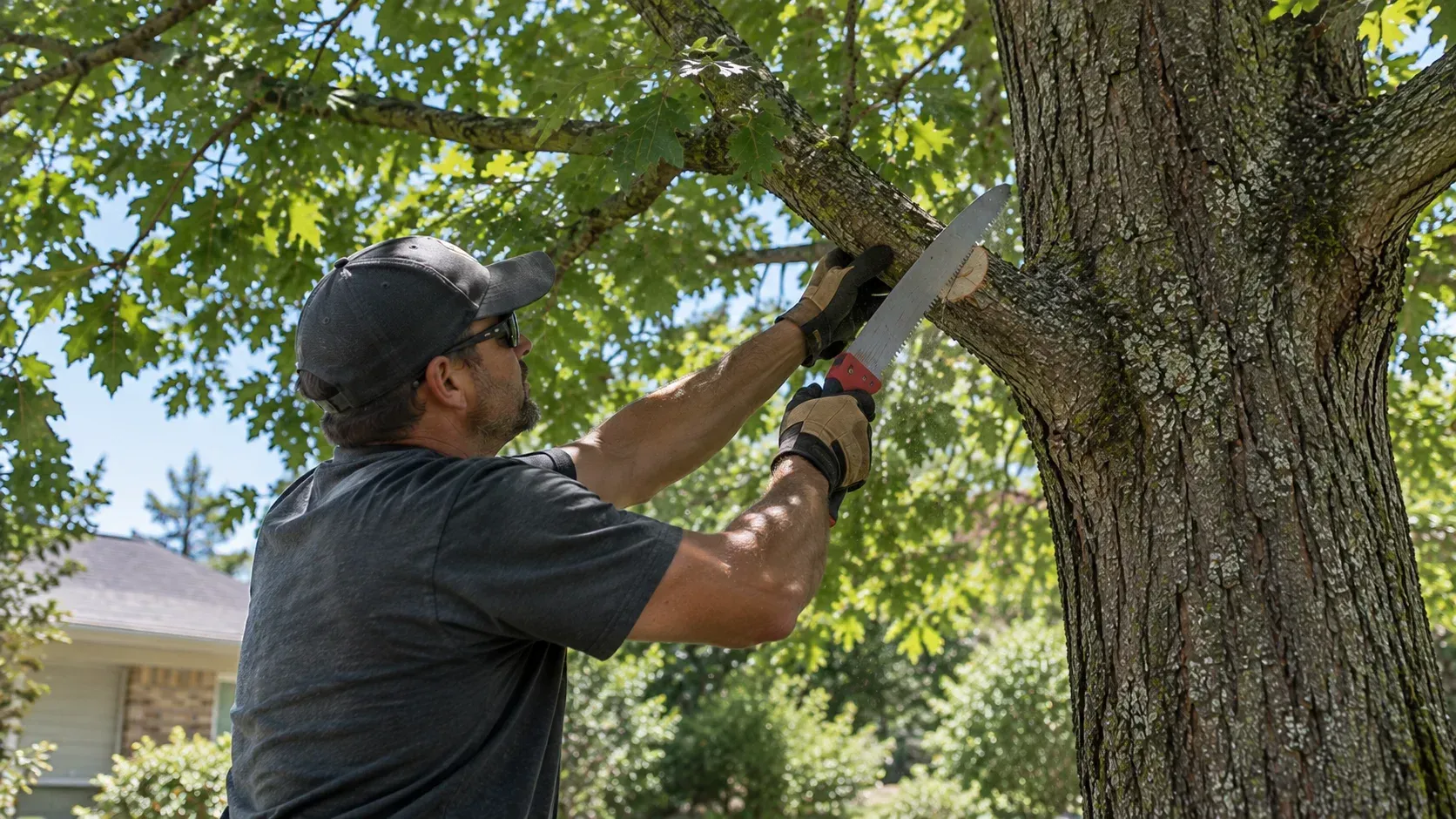
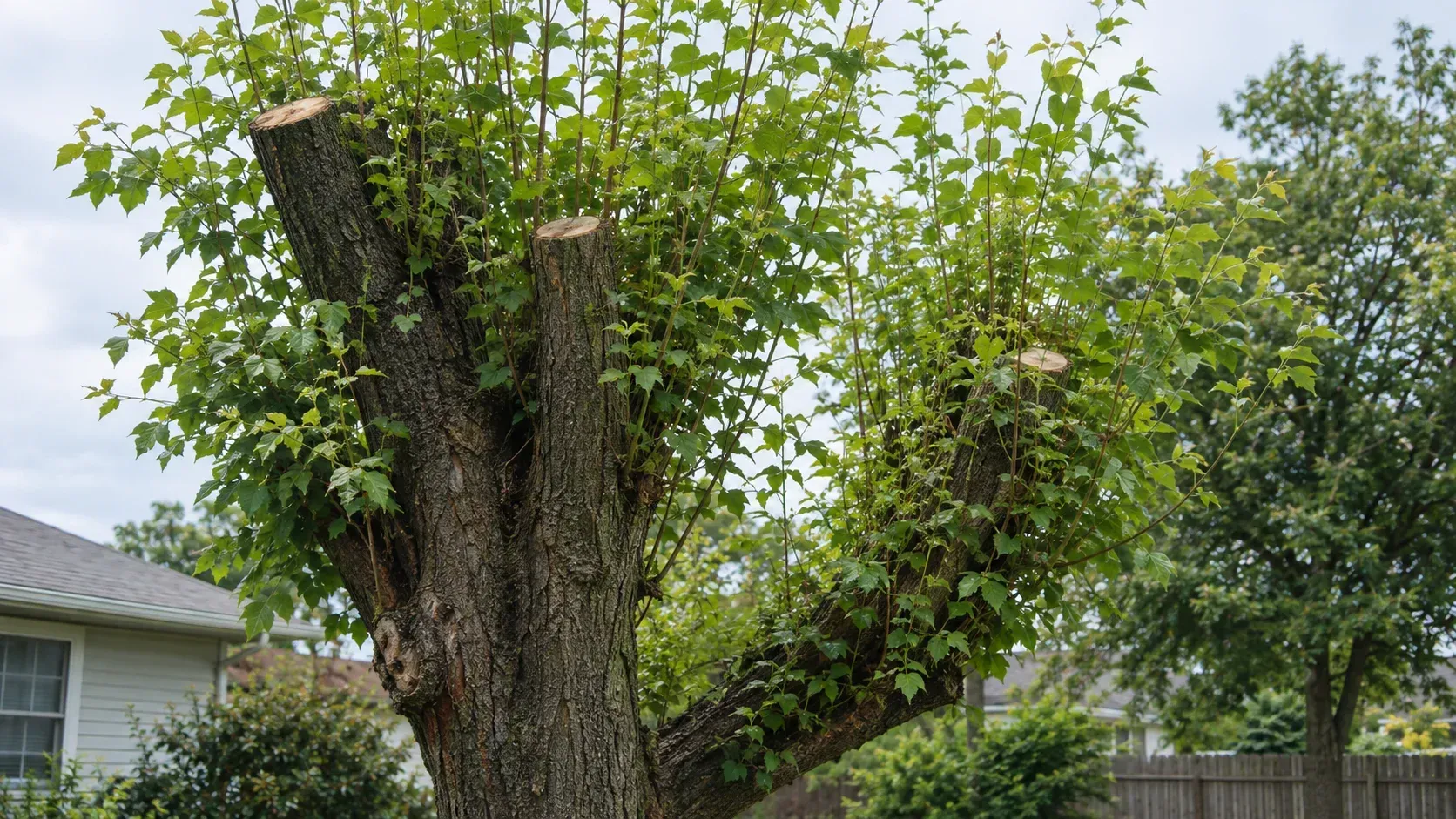
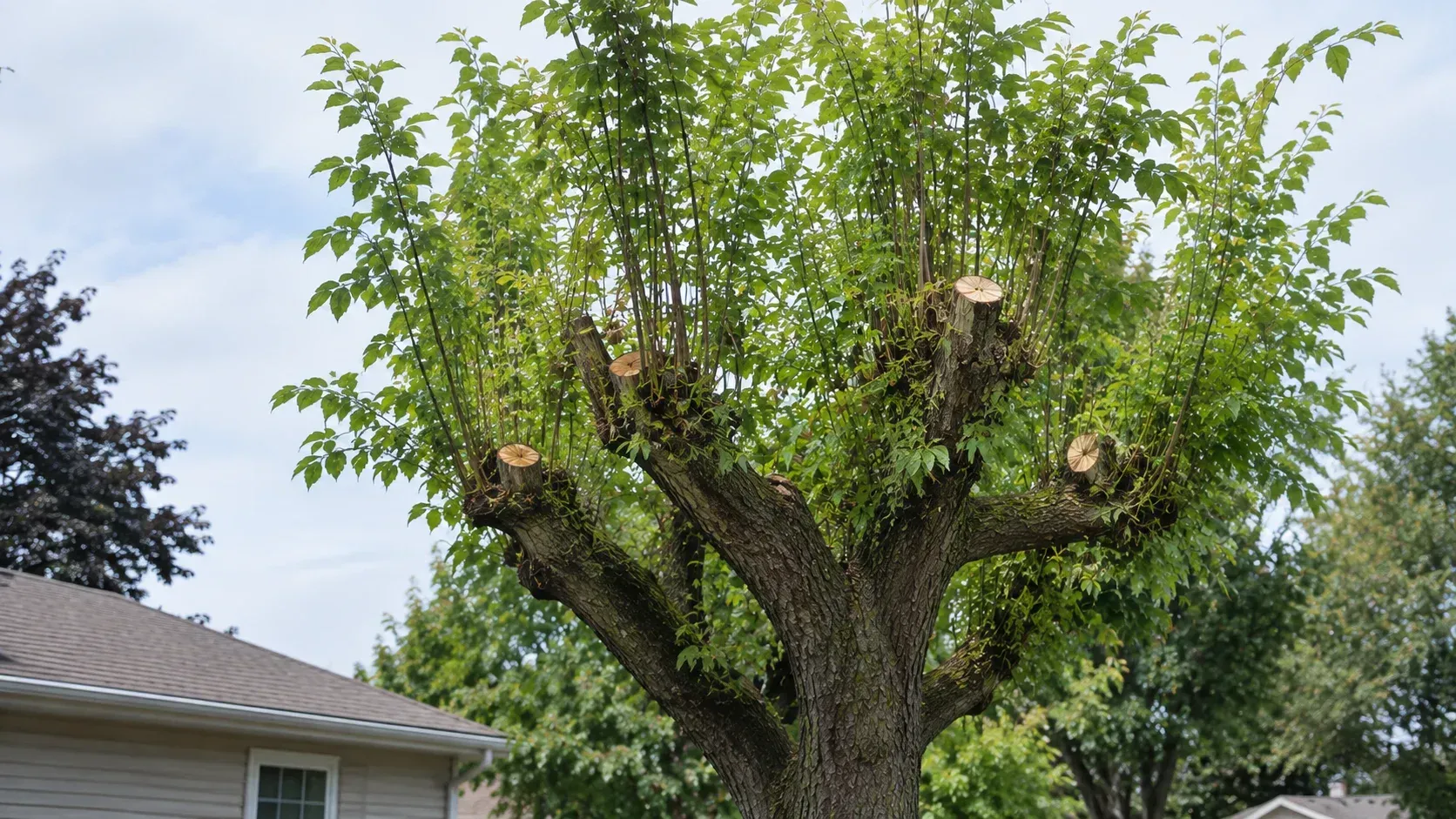
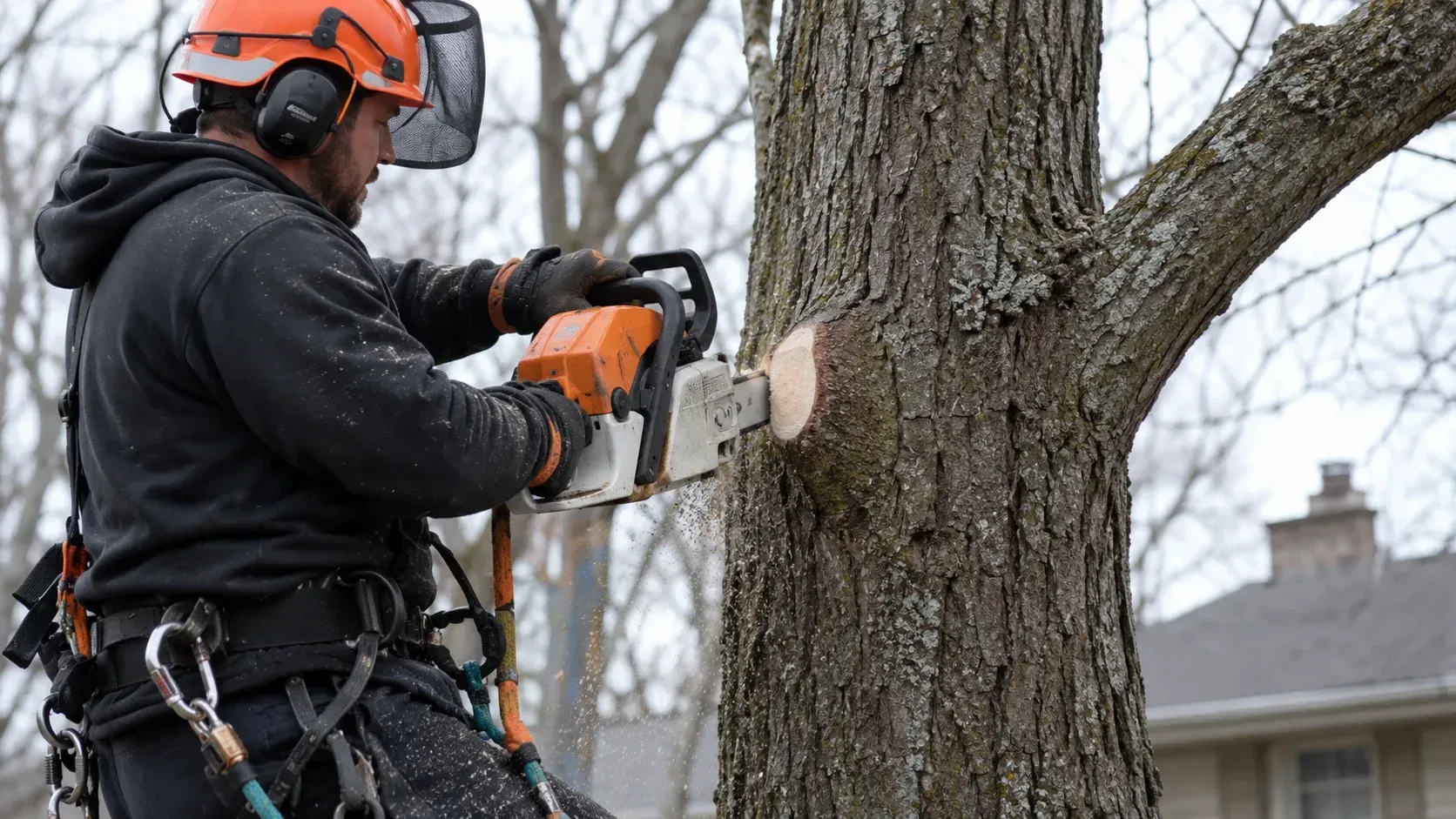
If an oak started dropping leaves in the weeks after it was pruned during the growing season, that sequence matters, and whether
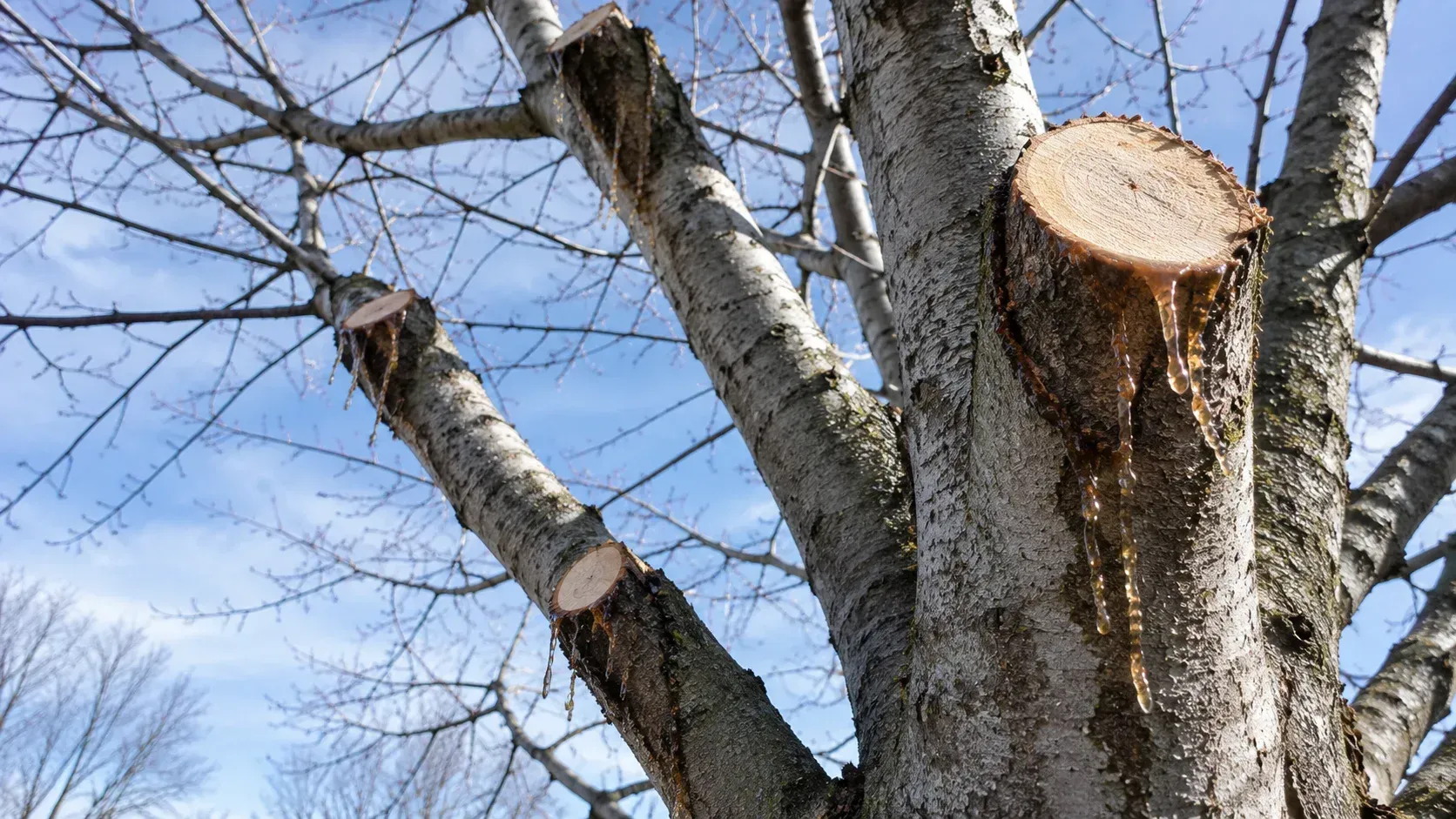
recent trimming opened a wound during the warm months is one of the first questions worth answering. Fresh cuts on oaks in the growing season are the main avoidable route by which oak wilt gets into a healthy tree, which is why the timing of oak pruning is treated so carefully.
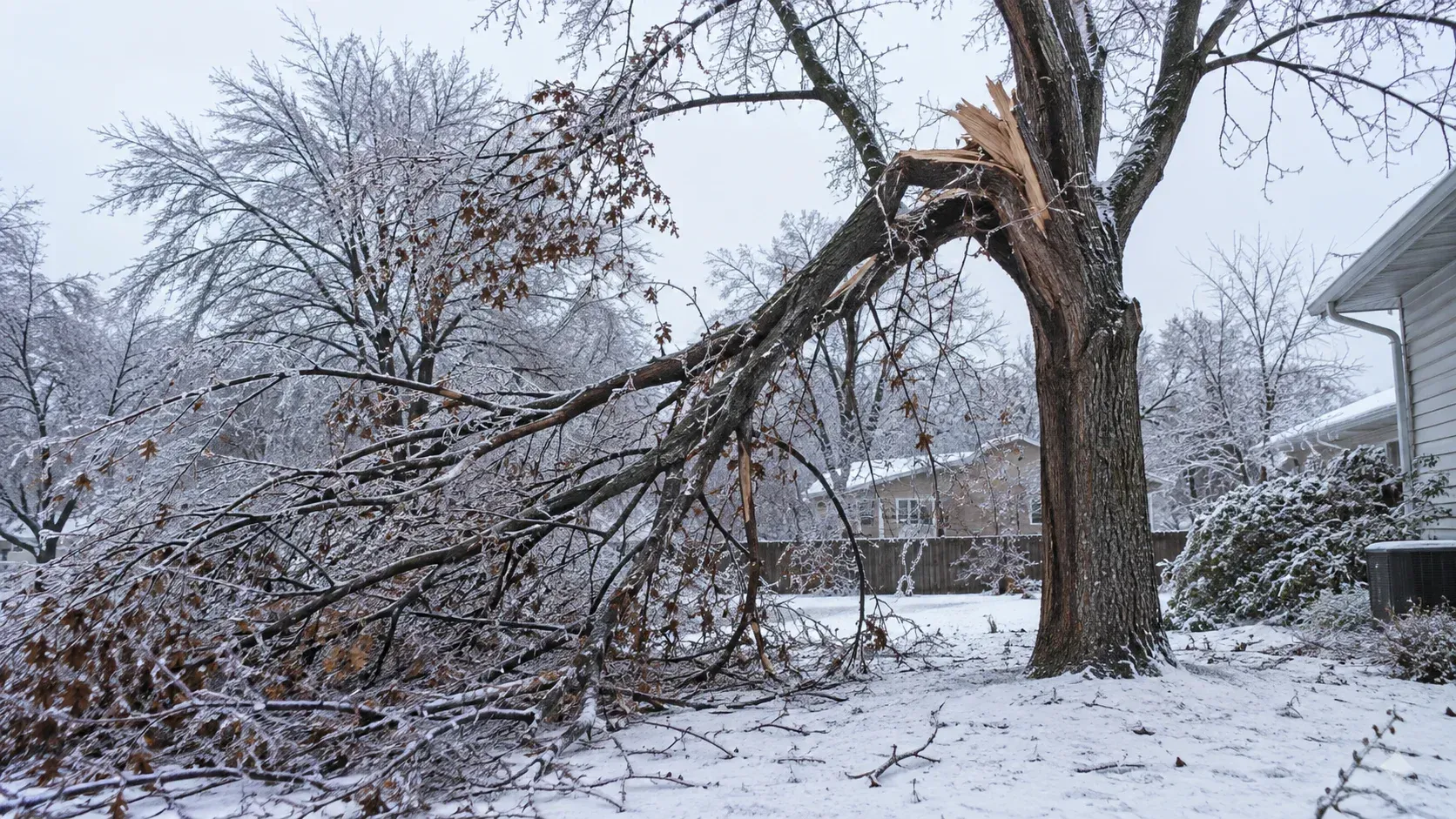
The same logic applies to storm damage that tore limbs open, to bark knocked off by equipment and to roots cut during landscaping. Any of those is an opening.
None of it is proof of anything. Trees also drop leaves after being pruned simply because they were pruned. But if a cut was made during the warm months and the canopy is now wilting from the top down, say so clearly to whoever looks at the tree. It changes what they check first.
What to Do This Week
In order:
- Take photographs. Whole tree from a distance, canopy from below, a handful of affected leaves, and the base of the trunk. Date them.
- Note the sequence. When it started, from where, how fast it has moved.
- Check the other oaks. Look for the same thing starting, particularly on trees within a hundred feet.
- Recall what happened nearby. Pruning, storms, construction, trenching, regrading, lawn equipment damage, in the last several years.
- Water deeply if the ground is dry, out under the canopy, not at the trunk.
- Do not prune it. Whatever is wrong, adding wounds during the growing season is not the answer.
- Do not fertilise it. Pushing growth on a stressed tree is rarely helpful and can be actively harmful.
- Get it looked at promptly if the pattern is top-down wilting, or if a second oak is starting to show it.
That last line is the only urgent item on the list. Everything else can wait a week.
When a Dead Oak Becomes a Different Problem
If the tree is already gone, the question changes from diagnosis to what happens next, and it stops being only about that tree.
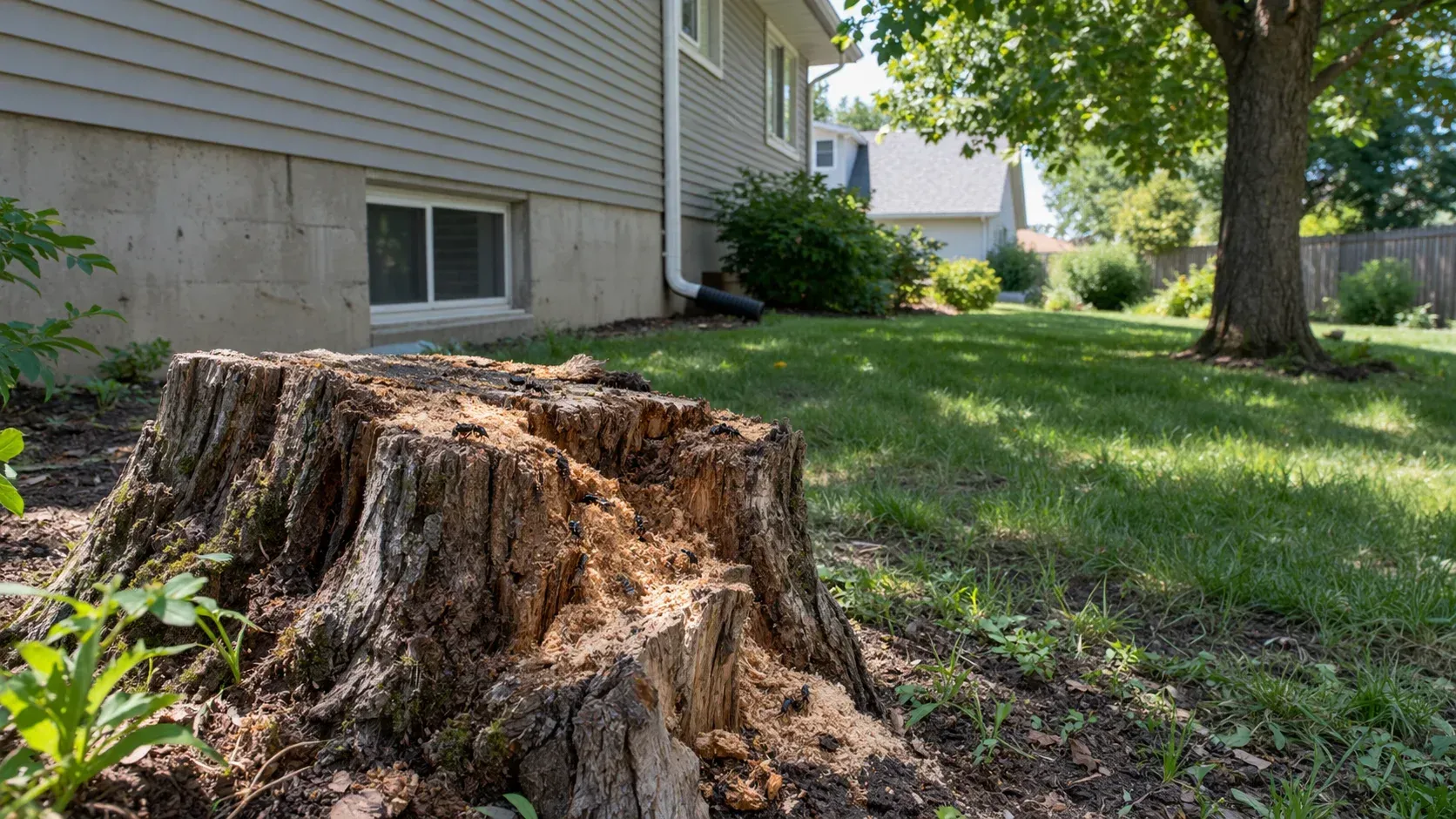
A dead oak is a structural liability on a schedule you do not control. The wood dries, the small branches shed first, the larger limbs follow, and the strength of the attachment points declines while the tree stands there looking much as it did.
Taking out a tree that has already died while it is still sound enough to work on safely is both cheaper and less risky than dealing with it after it has started coming apart.
If the cause was disease, there is a second reason for promptness that has nothing to do with the structure. A dead red oak can become the source of new infections for the healthy oaks around it, and both the timing of removal and the handling of the wood are covered by state guidance.
And if the tree in question is
a dead oak standing over a driveway or a roof, that is not a spring project. Position relative to what it can hit is what sets the urgency.
Conclusion
Most oaks losing leaves in midsummer are thirsty, not dying. Browning from the leaf edges, a gradual thin across the canopy and a dry few weeks behind it add up to an ordinary story with an ordinary answer, which is water and patience.
The pattern that changes the urgency is wilting that starts at the top and the outer branches and works its way in over weeks, with leaves dropping while still partly green. That one deserves attention quickly, not because panic helps, but because the oaks nearby have a stake in the answer.
Photograph it, note when it started, and if it is moving fast or a second oak is following it, get someone to look before the evidence falls off the tree.
Have a Declining Oak Assessed Before the Leaves Are Gone
A canopy that is actively changing tells an experienced eye far more than a bare tree in November. If your oak is thinning, wilting or dropping leaves out of season, the useful time to look at it is while it is still doing it.
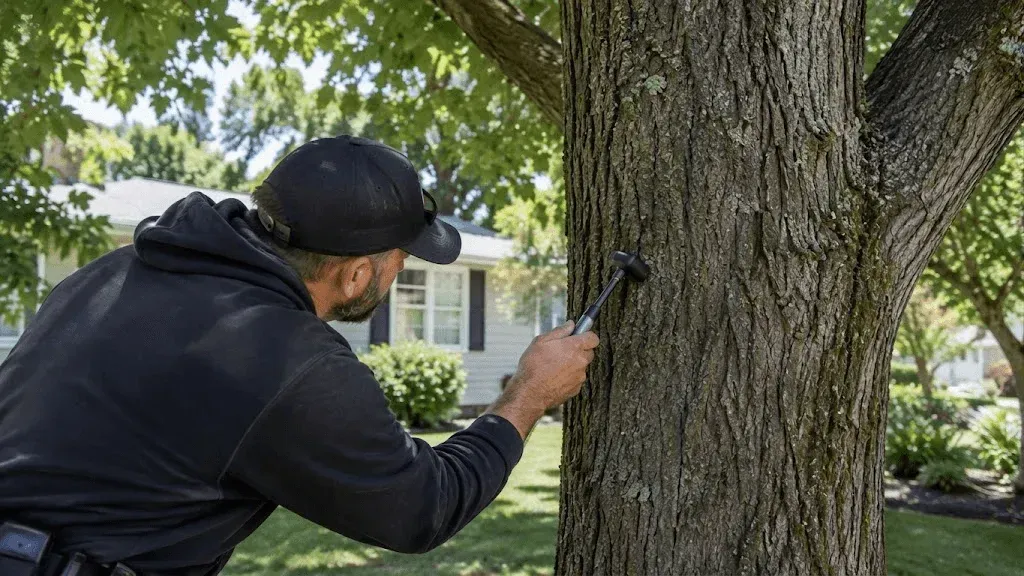
We inspect tree condition and structure, identify issues early, and provide ongoing care recommendations. If removal turns out to be the answer, we assess the tree and the surrounding area first, remove it using controlled techniques, and clear all debris so the property is left clean and safe. Arbor Barber Tree Service is locally owned and operated in Lakeville, with certified arborists, over 20 years of experience, safety-focused and fully insured, and open 24/7.
When you get in touch,
say when the leaf drop started and whether any other oaks are showing it. We serve Lakeville, Apple Valley, Burnsville, Farmington and Rosemount. Call
(612) 703-0175.