Introduction
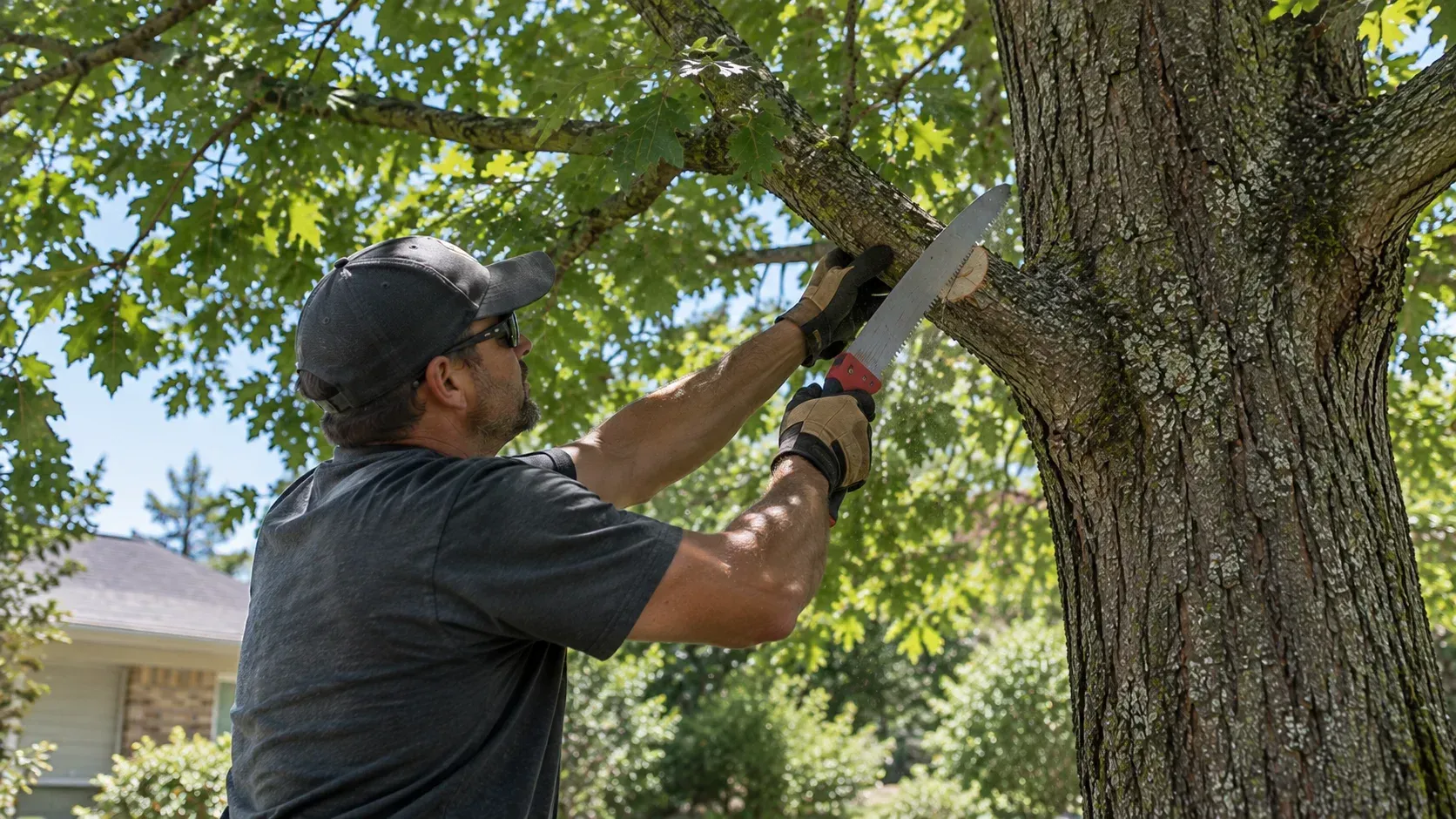
Yes, it is true. Pruning an oak in summer can expose it to oak wilt, a fungal disease that can kill a red oak within a single season, and the connection between fresh cuts and new infections is well enough established that state agencies publish warnings about it every year. It is one of the few pieces of tree folklore that turns out to be straightforwardly correct.
The good news is that the risk is entirely avoidable, because it depends on timing rather than on luck. Oaks are not fragile trees. They are only vulnerable in a specific way, during a specific part of the year, through a specific kind of opening. If you are unsure what shape your oaks are in or when work on them should happen,
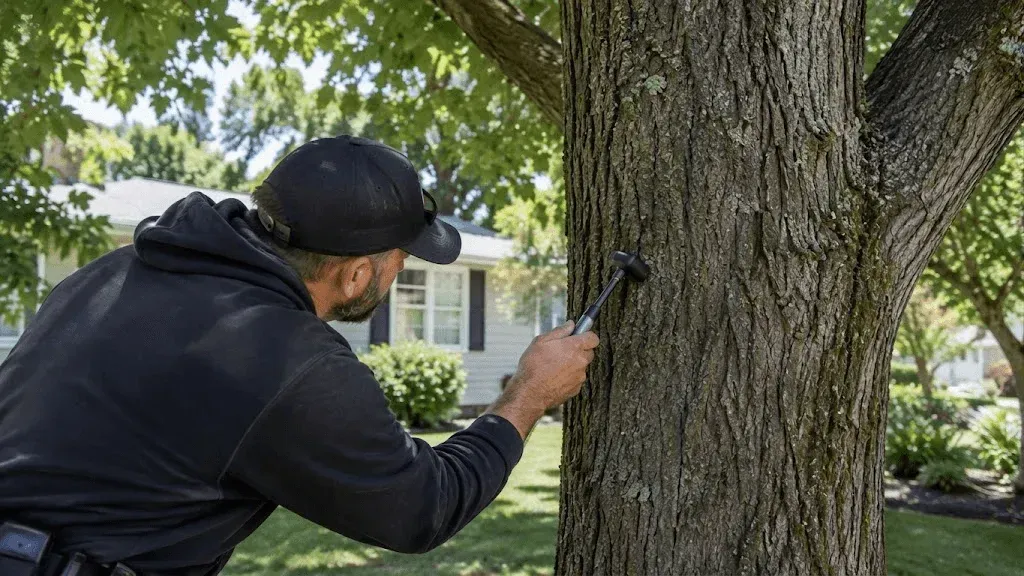
having an oak assessed before any cuts are made
resolves both questions at once.
Here is what is actually going on, and what to do if the cut has already happened.
Pruning Oak Tree Summer Oak Wilt: What the Risk Actually Is
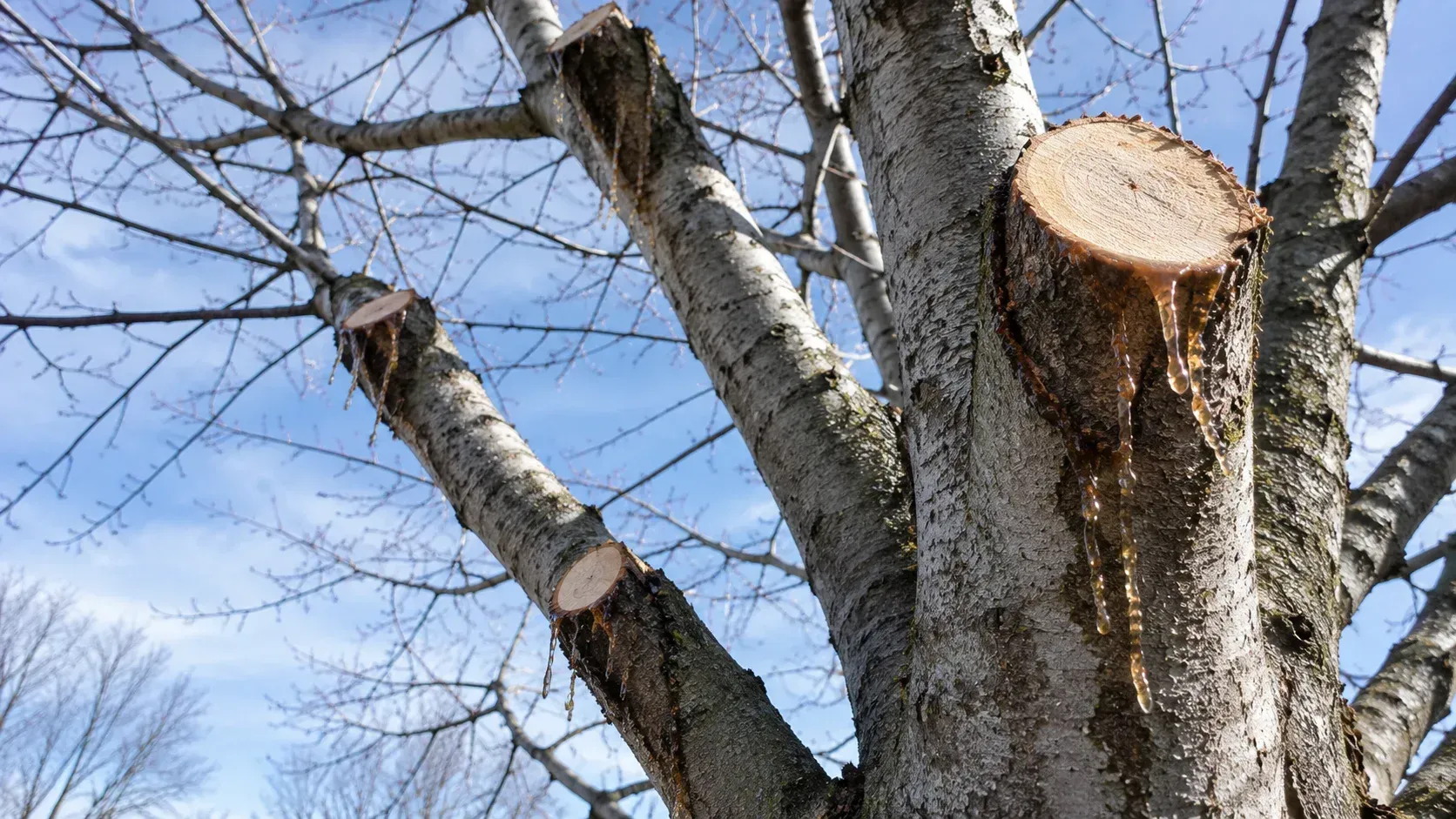
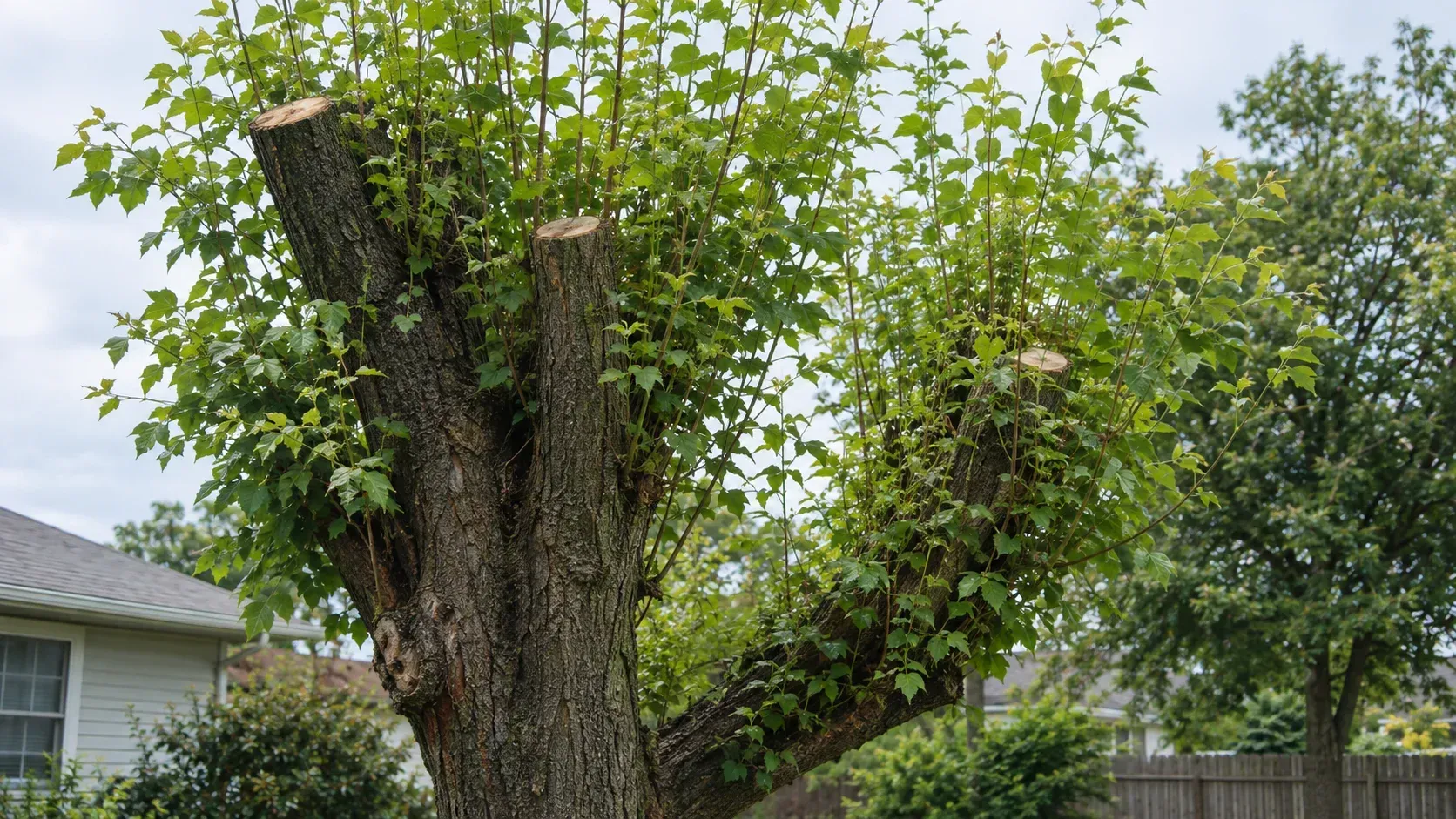
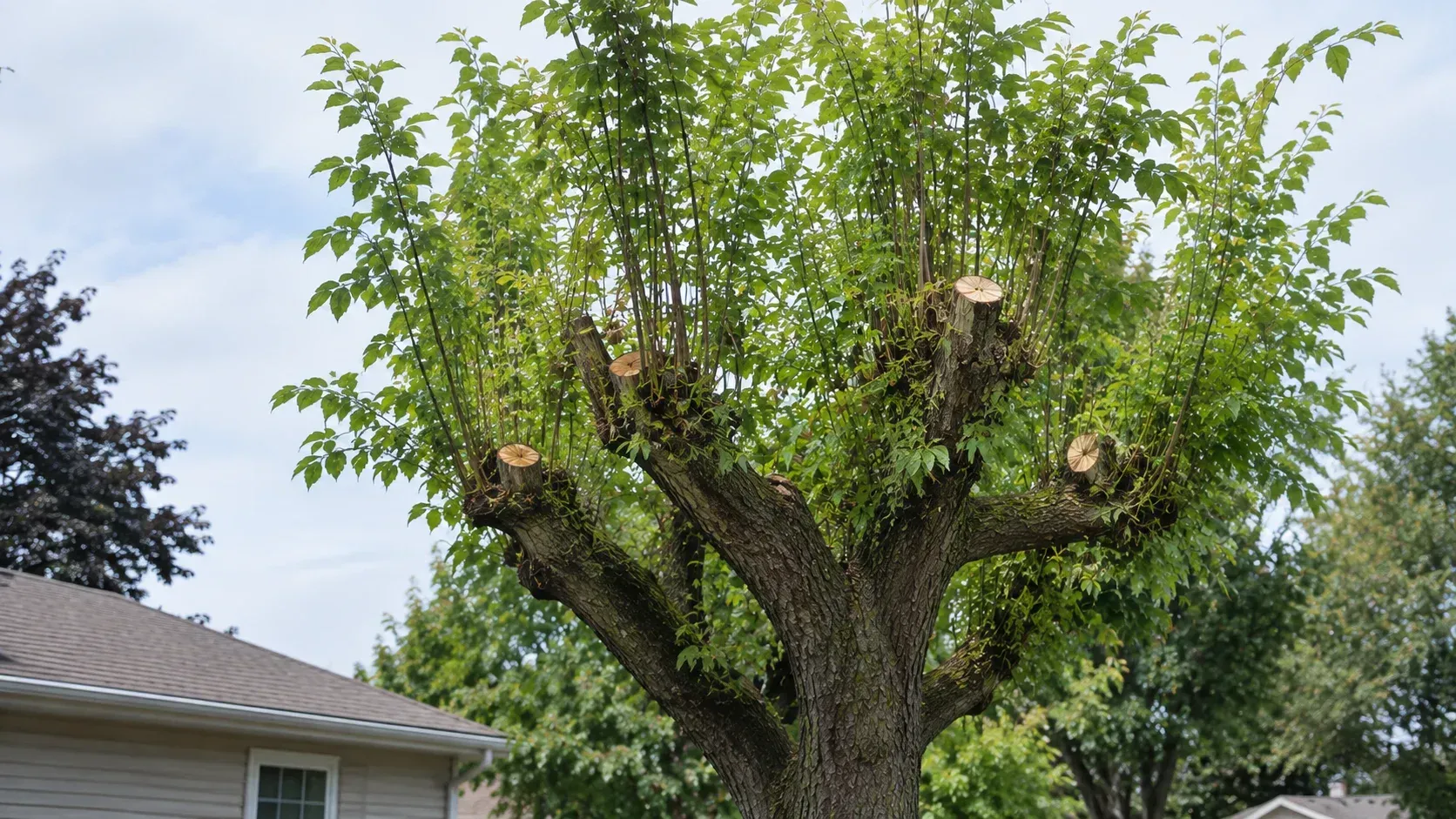
The risk is not that cutting an oak causes disease. A pruning cut is not itself an infection. The risk is that a fresh cut on an oak during the warm months creates an entry point at exactly the time of year when something is available to carry the pathogen to it.
Think of it as a delivery problem. The fungus that causes oak wilt has to get from an infected tree into a healthy one. It cannot travel on its own. It needs either a carrier or a physical connection. Pruning in the growing season supplies the perfect landing site for the carrier, and does it at the moment the carriers are out flying.
That is why the same cut made in the dormant season carries so much less risk. Nothing is flying, the wound is not producing the sap that attracts anything, and by the time the weather warms up the cut has begun to close.
How the Disease Gets Into a Fresh Cut
The sequence is short enough to hold in your head.
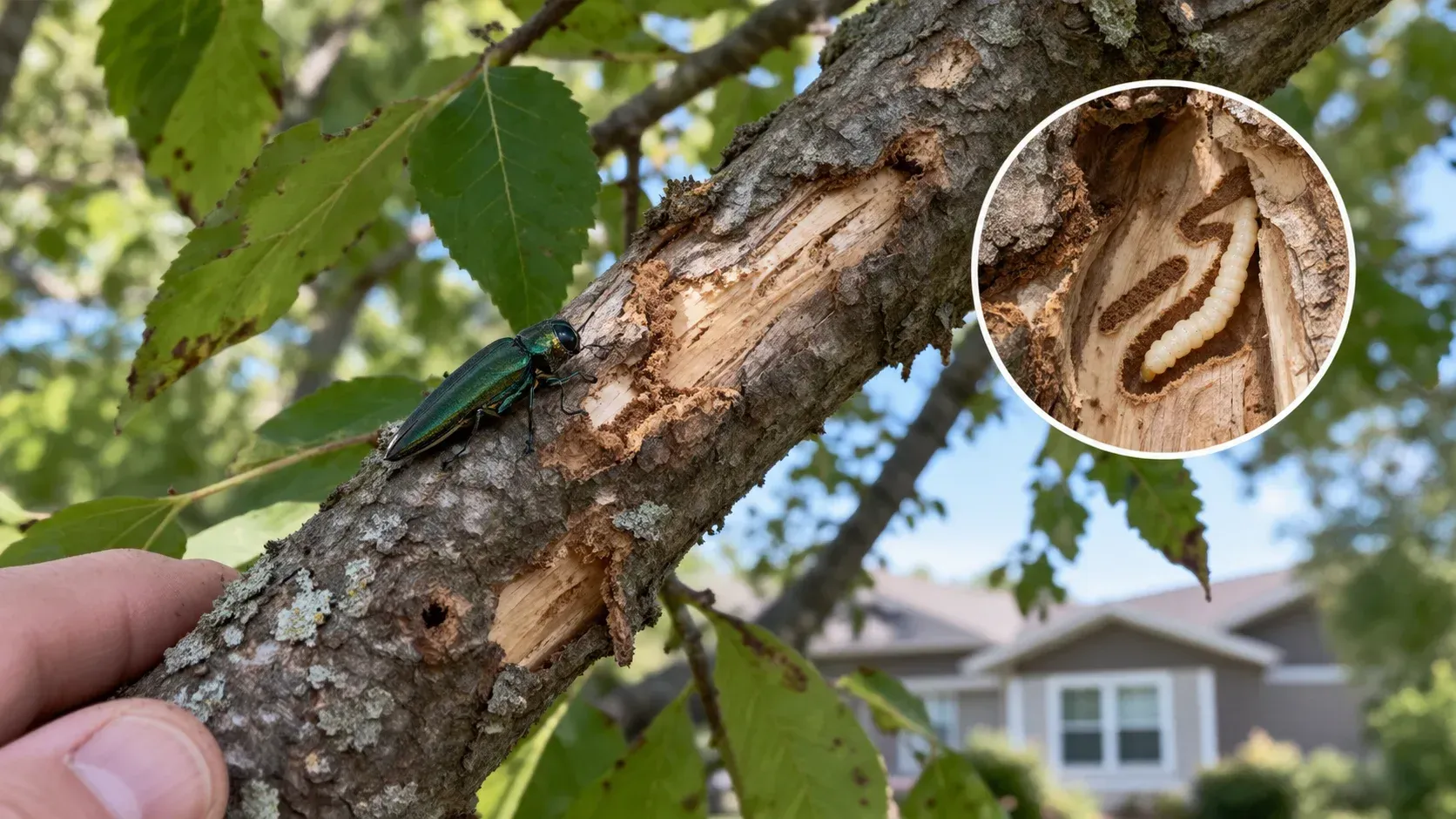
An oak somewhere in the area dies of the disease. Under its bark, the fungus produces material that smells sweet, and small sap-feeding beetles are drawn to it. They walk across it and pick up spores.
Those same beetles are attracted to fresh wounds on living trees, because a wound on an oak weeps sap and sap smells like food. So a beetle carrying spores from a dead tree can land on the cut you made yesterday.
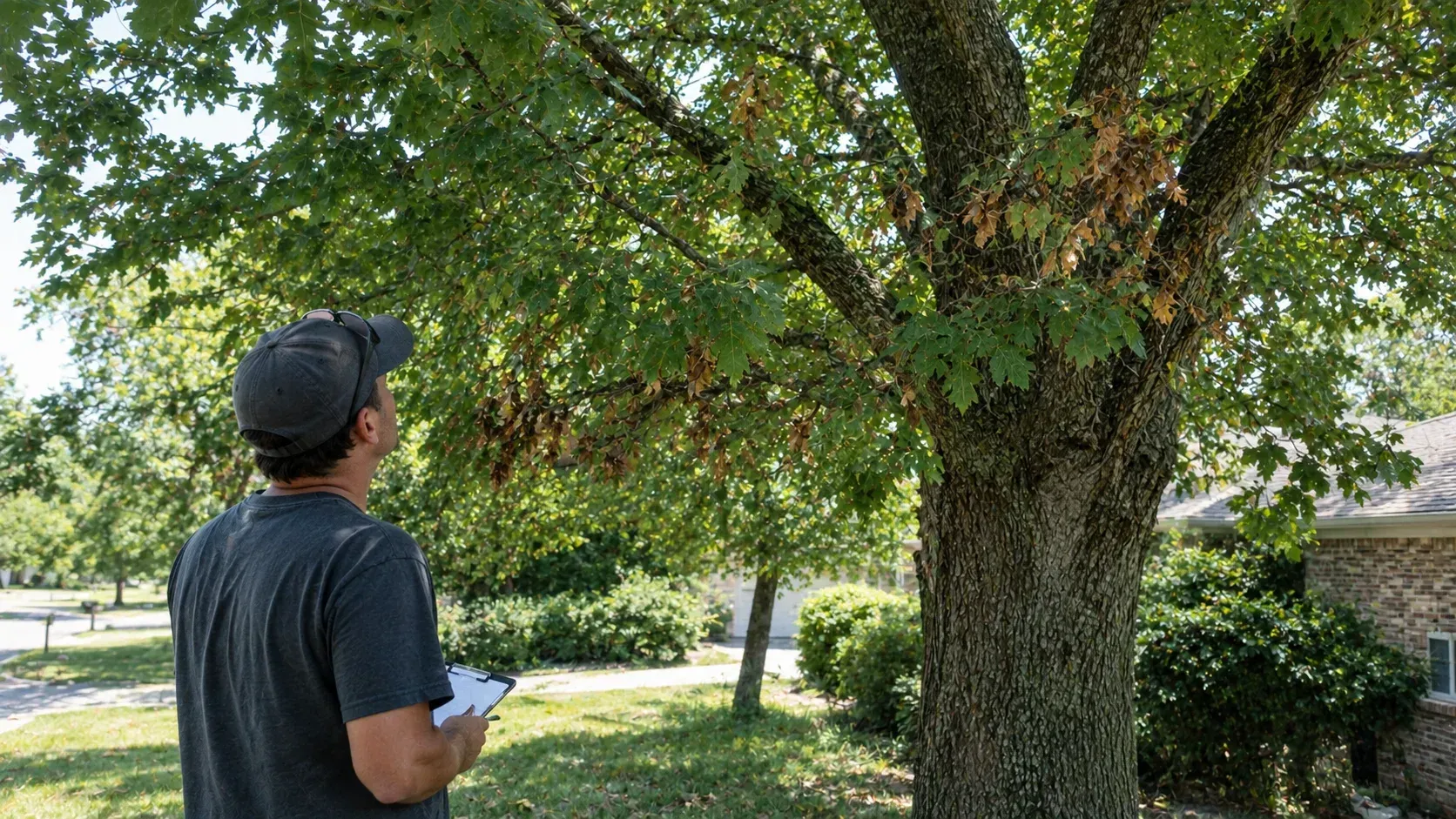
Once the fungus is in the tree, it moves through the vascular system, the plumbing that carries water from the roots to the leaves. The tree responds by trying to wall off the infection, and in doing so it plugs its own water transport. The leaves wilt because water is no longer reaching them. In red oaks the whole process can run its course in weeks.
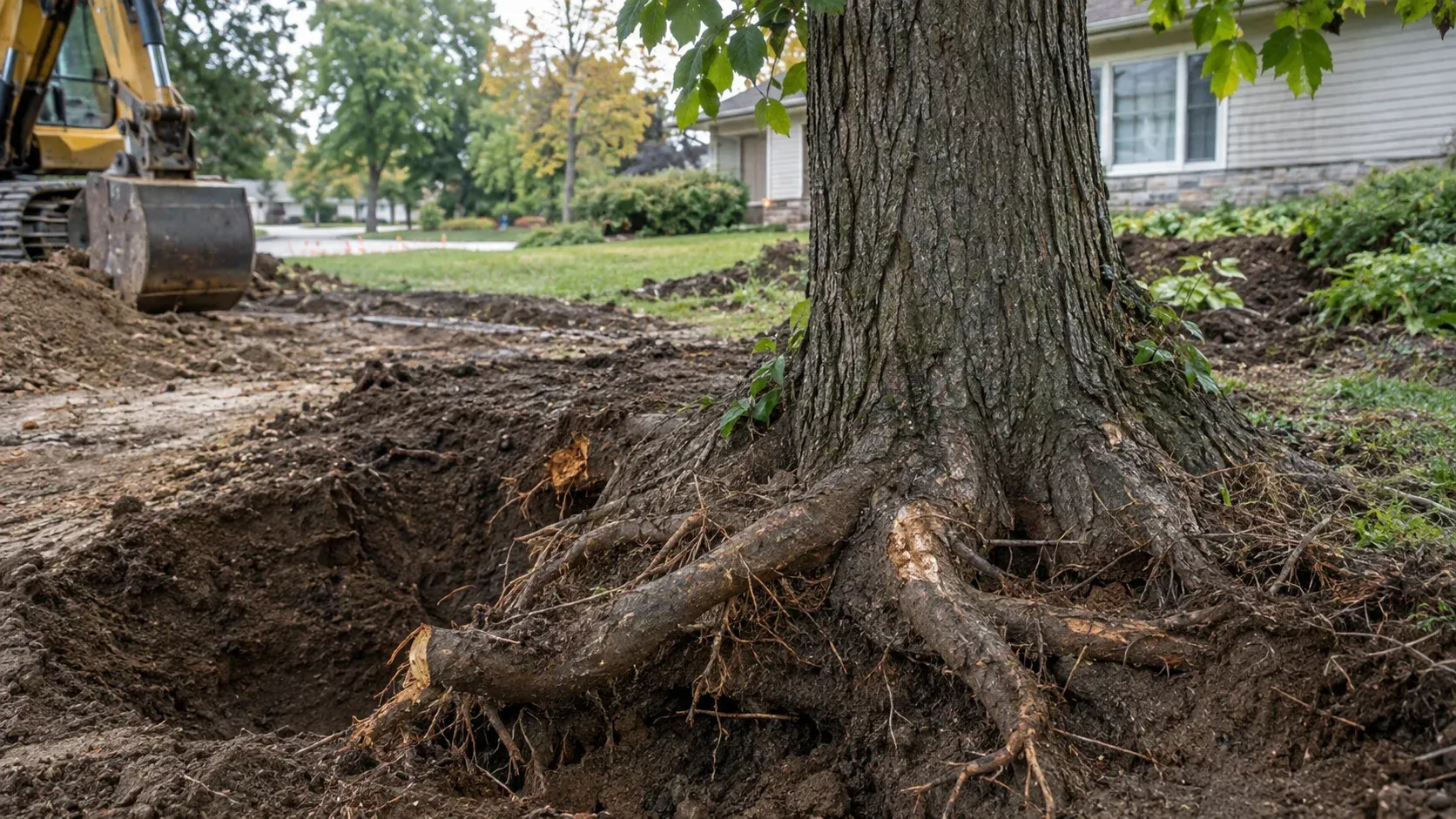
There is a second pathway that has nothing to do with wounds. Oaks growing near each other frequently fuse roots underground, forming a connected system. The fungus can move from tree to tree through those connections, which is why the disease often shows up as an expanding patch of dead oaks rather than as scattered single trees.
Why Oak Wilt Minnesota Homeowners Hear About Is Treated So Seriously
Minnesota has a lot of oak, much of it in exactly the residential settings where people prune. The disease is established here, it has been tracked for decades, and the response is coordinated rather than casual.
The seriousness comes down to three things. It is fatal rather than merely damaging, at least in the red oak group. It spreads, both above ground by beetle and below ground by root graft, so one tree is rarely the end of it. And the trees it kills are often the large, old, irreplaceable ones that gave the neighbourhood its character in the first place.
That combination is why the advice is preventive. There is no convenient fix after the fact, so the whole strategy is built around not creating the opportunity.
We are a tree service, not a diagnostic laboratory or a regulatory agency. For current distribution, confirmed county status and the official guidance, the University of Minnesota Extension and the Minnesota Department of Natural Resources are the authorities, and they update their material as conditions change.
When Not to Prune Oak Trees, and Who Sets the Dates
This is where we are going to be deliberately careful, because the specific dates matter and they are not ours to invent.
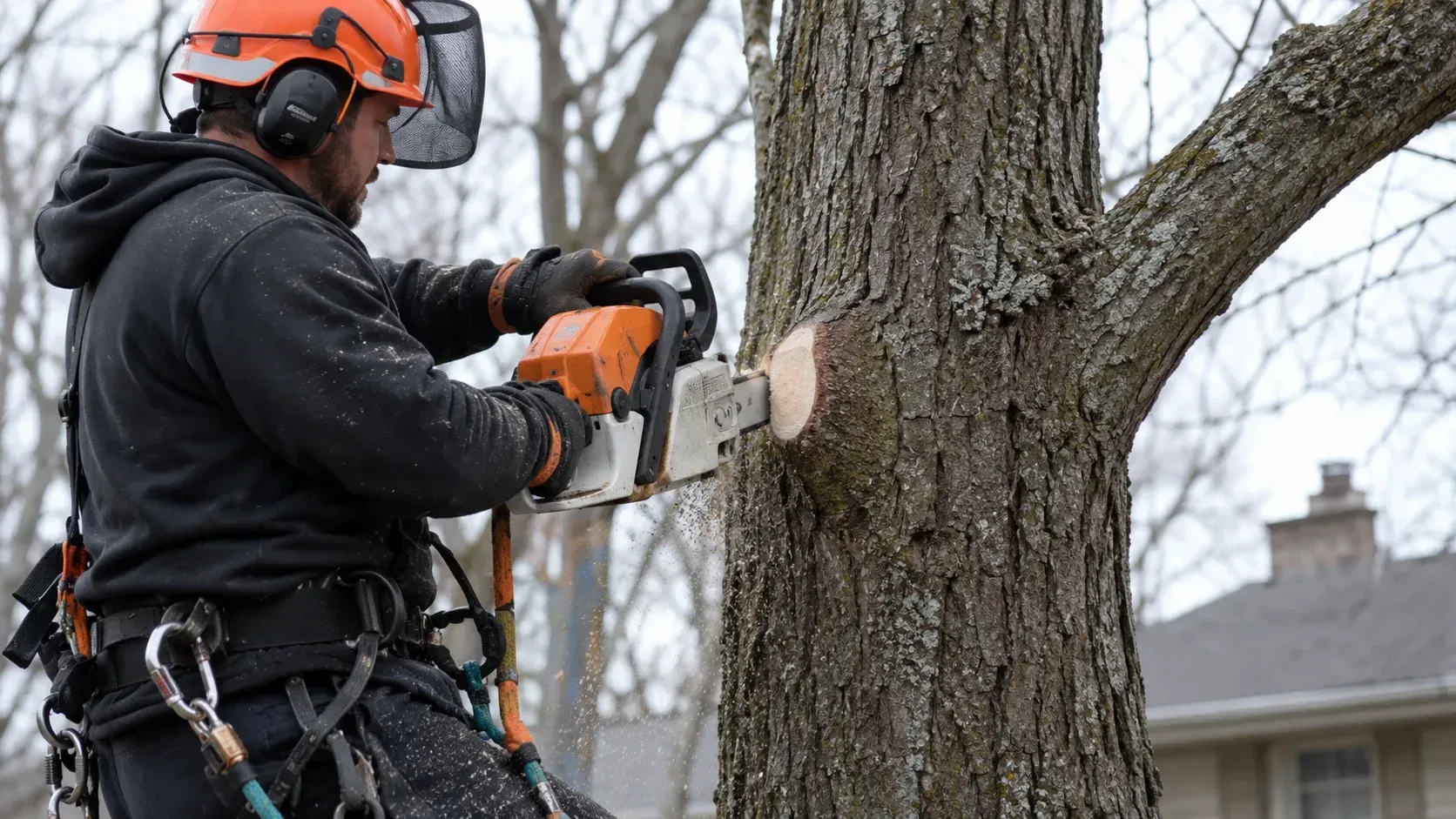
The general principle is stable and worth knowing: the high-risk period is the growing season, when beetles are active and oaks are producing sap. The low-risk period is the dormant season, when they are not. Structural work on oaks belongs in the cold months.
The exact boundaries of those periods are a different matter. They shift with the season, they are revised as research accumulates, and they are published by state authorities for each year rather than fixed permanently. A date that was current when you last looked may not be the date being advised now.
So we are not going to print a month range here that might be wrong by the time you read it. Check the current guidance from University of Minnesota Extension or the Minnesota DNR, or ask whoever is doing the work to tell you what this year's advice says. When we do structural work on oaks, it gets
scheduled for the low-risk window
rather than for whenever the calendar happens to be open.
If that feels like an inconvenient answer, consider the alternative. The cost of waiting a few months is nothing. The cost of being wrong is a mature oak.
Red Oaks and White Oaks Do Not Behave the Same Way
Not every oak carries the same level of risk, and it is worth knowing which ones are in your yard.
Oaks divide broadly into two groups. The red oak group, which includes northern red oak and pin oak among others, is highly susceptible. These are the trees that die quickly once infected, and they are the trees that produce the material the beetles feed on, which makes them the source of new infections as well as the victims.
The white oak group, which includes bur oak and white oak, is more resistant. Those trees can become infected but they often decline slowly or compartmentalize the infection rather than dying outright.
One practical way to tell them apart is leaf shape. Red oak group leaves have pointed lobes tipped with a small bristle. White oak group leaves have rounded lobes without bristles. It is not a perfect rule and hybrids exist, but it gets most homeowners to the right answer.
The caution applies to all of them regardless. A more resistant tree is not an invulnerable one, and root connections do not care which group a tree belongs to.
The Wounds You Did Not Choose
Pruning is the wound people think about because it is the one they control. It is not the only one.
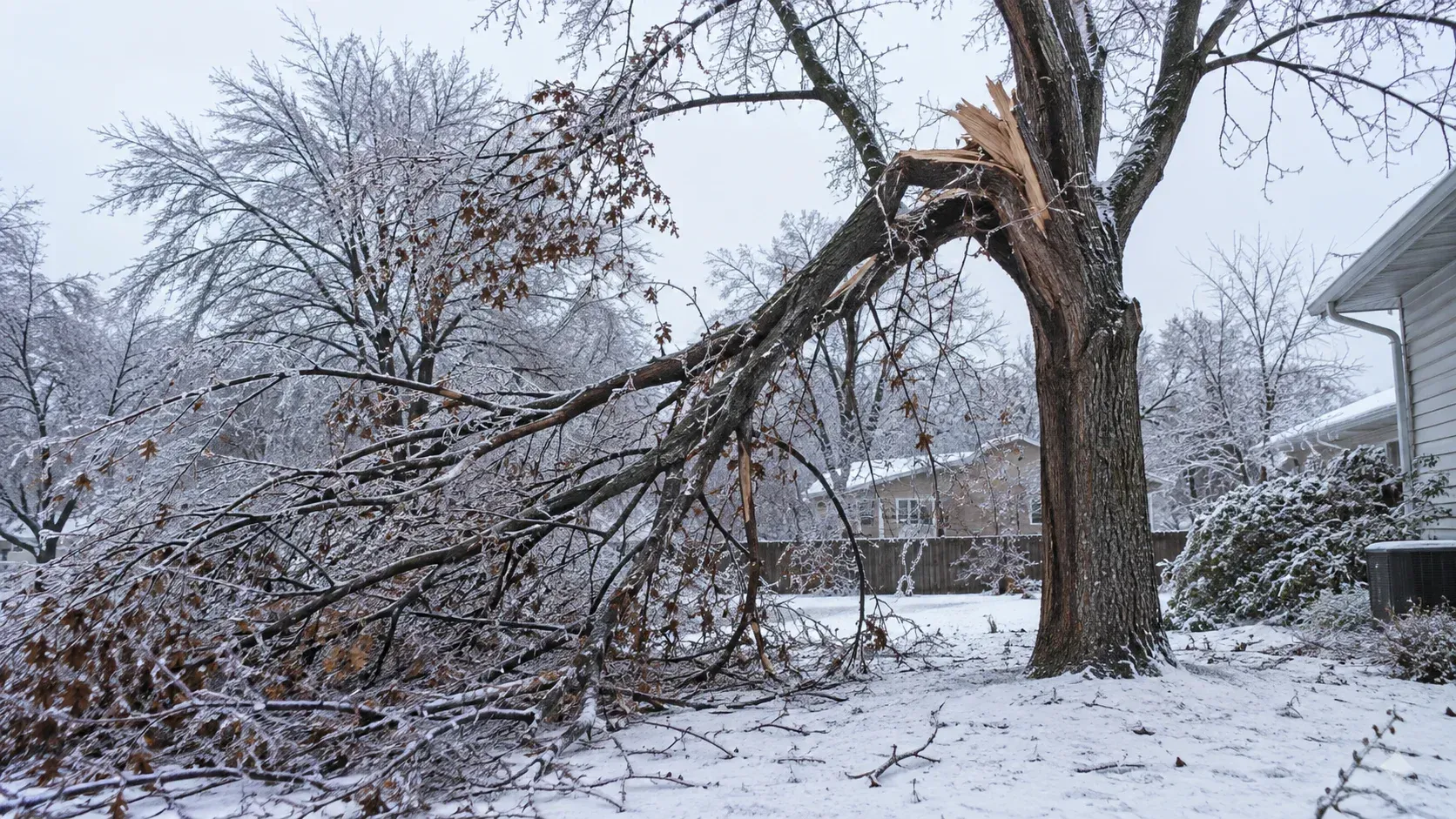
Anything that breaks bark on an oak during the growing season is a potential entry point. That includes
storm damage that tears limbs open, which is the most common one here, along with construction injuries, lawn equipment strikes at the base, deer rubbing, squirrel damage and roots cut during landscaping or trenching.
Storm damage is the awkward case, because it happens when it happens and the tree does not wait for a convenient month. A torn limb is an open wound whether you like it or not.
The general approach in that situation is to deal with the damage promptly and to treat the wound as a wound rather than pretending it is not there. What specifically should be applied to a fresh wound on an oak during the risk period, and when, is guidance that comes from the state authorities rather than from us, and it is worth getting right rather than guessing.
What to Do If an Oak Was Already Cut This Summer
If you are reading this after the fact, the honest position is this: a cut made in the risk period is not a sentence. Infection requires a beetle carrying spores to find that particular wound in a fairly narrow time frame. Plenty of poorly timed cuts lead to nothing at all.
What is worth doing:
- Stop cutting.
Whatever else is true, do not make further wounds until the dormant season.
- Note the date.
If symptoms appear later, knowing when the wound was made is genuinely useful information for whoever assesses the tree.
- Watch the canopy through the rest of the season.
The thing to look for is wilting and leaf drop that starts at the top and outer edges and moves inward and downward, often quite fast.
- Do not panic at ordinary leaf loss.
Oaks shed some leaves in a dry summer. Speed and pattern are what distinguish a problem.
- Have it looked at if the canopy changes.
Early is better, mainly because of the neighbouring trees.
Worry is not a strategy, and neither is ignoring it. Watch the tree, and get eyes on it if it changes.
What Happens When a Tree Is Already Infected
If an oak is confirmed infected, the decision stops being about that tree and starts being about the ones around it.
A dying red oak is not just a loss. It is the thing that produces the fungal material the beetles feed on, which makes it the source for the next round of infections. That is why
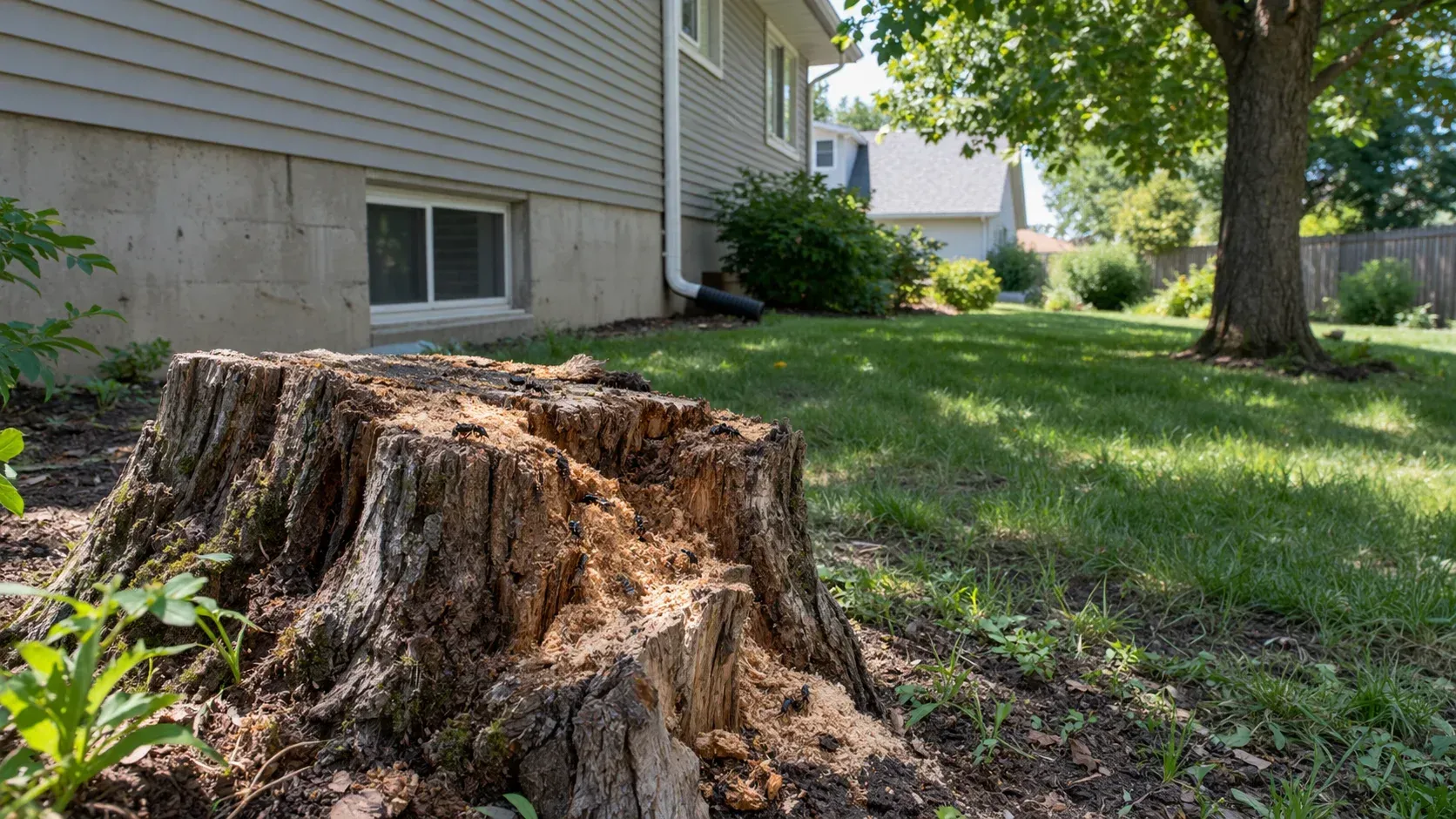
removing an infected oak promptly
is usually recommended rather than letting it stand and decline, and why how the wood is handled afterward matters too.
The root connection question is the other half of it. If the infected tree is grafted to healthy oaks nearby, the fungus has a path that has nothing to do with beetles, and the response involves interrupting those connections. The methods, the distances and the equipment involved are technical, they are specified in state guidance, and they are not something to work out from a blog post.
There is also a timing element to removal and to wood handling that is tied to the same seasonal cycle as pruning. Getting that sequence right is the difference between removing a problem and spreading it.
The short version: confirmation and the response plan both belong with people who work with the current state guidance in front of them. What you should take from this article is the preventive half, which is entirely within your control.
Conclusion
The folklore is right. Pruning an oak in summer can get it infected, because a fresh cut on an oak during the growing season is an open invitation to the beetles that carry oak wilt from tree to tree.
What makes this worth caring about is not the pruning cut specifically. It is that the disease kills fast, spreads through root connections as well as through the air, and mostly takes the big old oaks that cannot be replaced in a lifetime. Against that, waiting for cold weather to do the trimming is not much of an imposition.
Save the saw for the dormant season, check the current state guidance for the dates, and if a limb tears open in a July storm, deal with it promptly rather than leaving it weeping through the warm months.
Plan Your Oak Work for the Dormant Season
If you have oaks on your property, the useful move is to get the work identified now and scheduled for the right part of the year. Nothing about that requires cutting anything today.
We inspect tree condition and structure, identify issues early, and provide ongoing care recommendations. When trimming is needed, branches are selectively pruned to strengthen structure and balance, and the work is done in a way that maintains the tree's natural shape. Arbor Barber Tree Service is locally owned and operated in Lakeville, with certified arborists, over 20 years of experience, safety-focused and fully insured, and open 24/7.
If an oak has already been cut this season or a storm has torn a limb,
tell us what you are seeing and when it happened
so we can prioritise properly. We serve Lakeville, Apple Valley, Burnsville, Farmington and Rosemount. Call
(612) 703-0175.