How Do You Know If a Lot Is Too Overgrown for Standard Clearing Equipment to Handle?
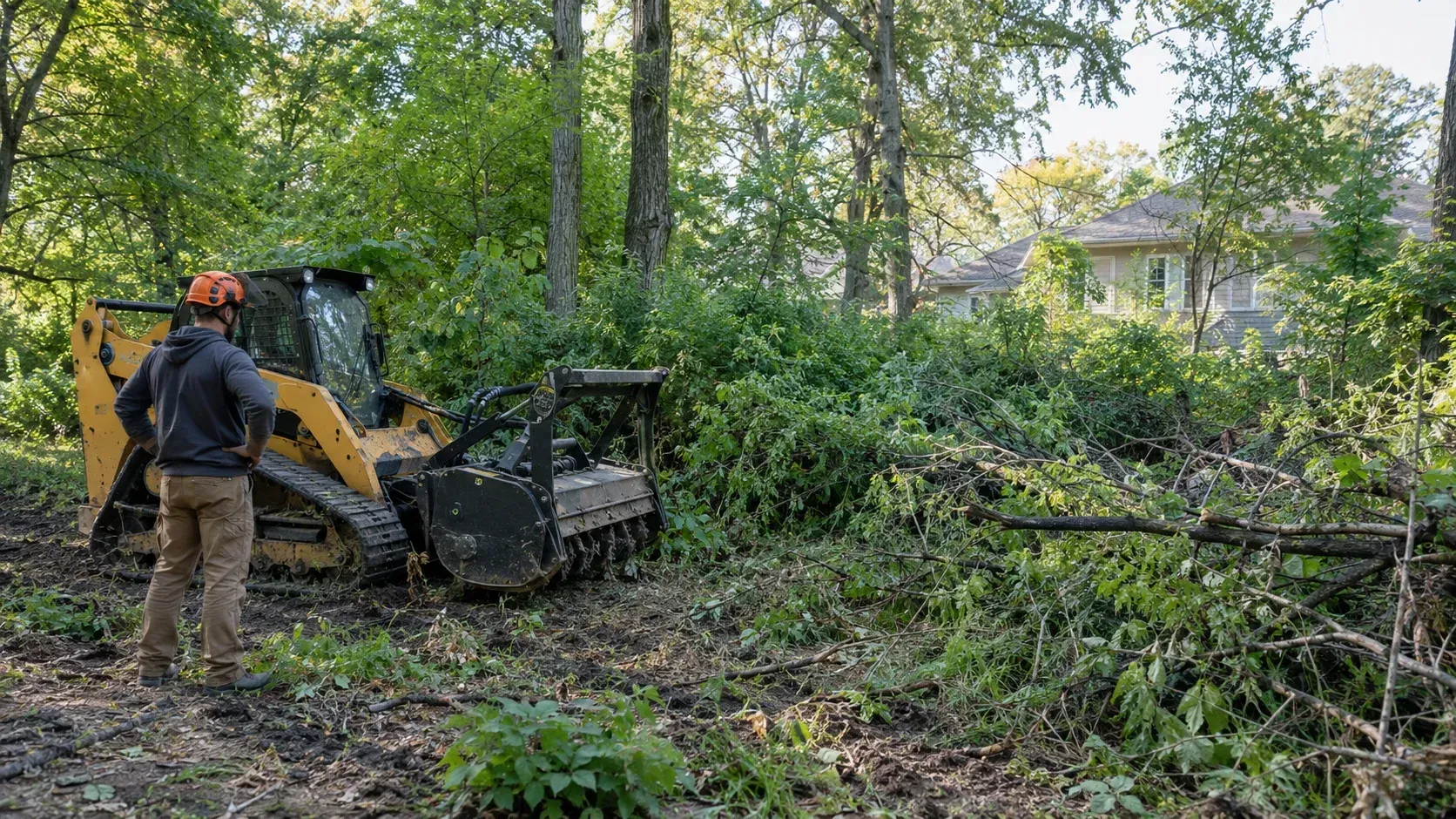
Table of Contents
- Introduction
- What Counts as Standard Clearing Equipment
- Signs Your Lot Has Outgrown Standard Equipment
- Continuous Buckthorn or Brush Thickets
- Trunk Diameter and Tree Density
- Steep, Uneven, or Soft Terrain
- Standing Deadwood and Hazard Trees
- Why Buckthorn Clearing Is Its Own Category
- What Heavy Equipment Actually Solves
- A Practical Framework for Assessing Your Lot
- Common Misconceptions About Lot Clearing
- What Typical Online Advice Overlooks
- Realistic Scenarios
- Conclusion
- Next Steps
- Frequently Asked Questions
Key Takeaways
- A lot typically exceeds standard equipment capacity when buckthorn or brush forms a continuous dense stand rather than scattered growth, when trunk diameters regularly exceed 6 inches, or when terrain is too steep or uneven for wheeled machines
- Buckthorn presents a unique clearing challenge because its dense root systems and thicket growth pattern often require specialized cutting and stump treatment beyond what handheld tools can manage efficiently
- Standing dead trees, unstable slopes, and wet or soft ground each independently signal that a project needs heavy equipment rather than chainsaws and brush cutters
- Attempting to clear an overgrown lot with undersized equipment often costs more in time, fuel, and repeated effort than starting with appropriately sized machinery
- An on-site assessment is the most reliable way to determine equipment needs, since photos and general descriptions rarely capture density, terrain, and stump conditions accurately
Introduction
A lot has typically outgrown standard clearing equipment when brush and buckthorn form continuous thickets rather than isolated patches, when tree trunks regularly exceed 6 inches in diameter, or when terrain is too steep, wet, or uneven for wheeled machinery. At that point, professional lot clearing with tracked or heavy equipment becomes more practical than continuing with chainsaws and hand tools.
Property owners in Lakeville often underestimate how quickly a lot moves from "needs some cleanup" to "needs heavy equipment." A parcel left untouched for five or six years can develop buckthorn thickets and downed limbs that make standard tools inefficient or genuinely unsafe. Knowing the specific signs that separate a DIY-manageable lot from one requiring commercial equipment helps you plan realistic timelines and budget accurately before work begins.
This article walks through the practical indicators that determine equipment needs, explains why buckthorn changes the calculation, and outlines a framework for assessing your own property.
What Counts as Standard Clearing Equipment
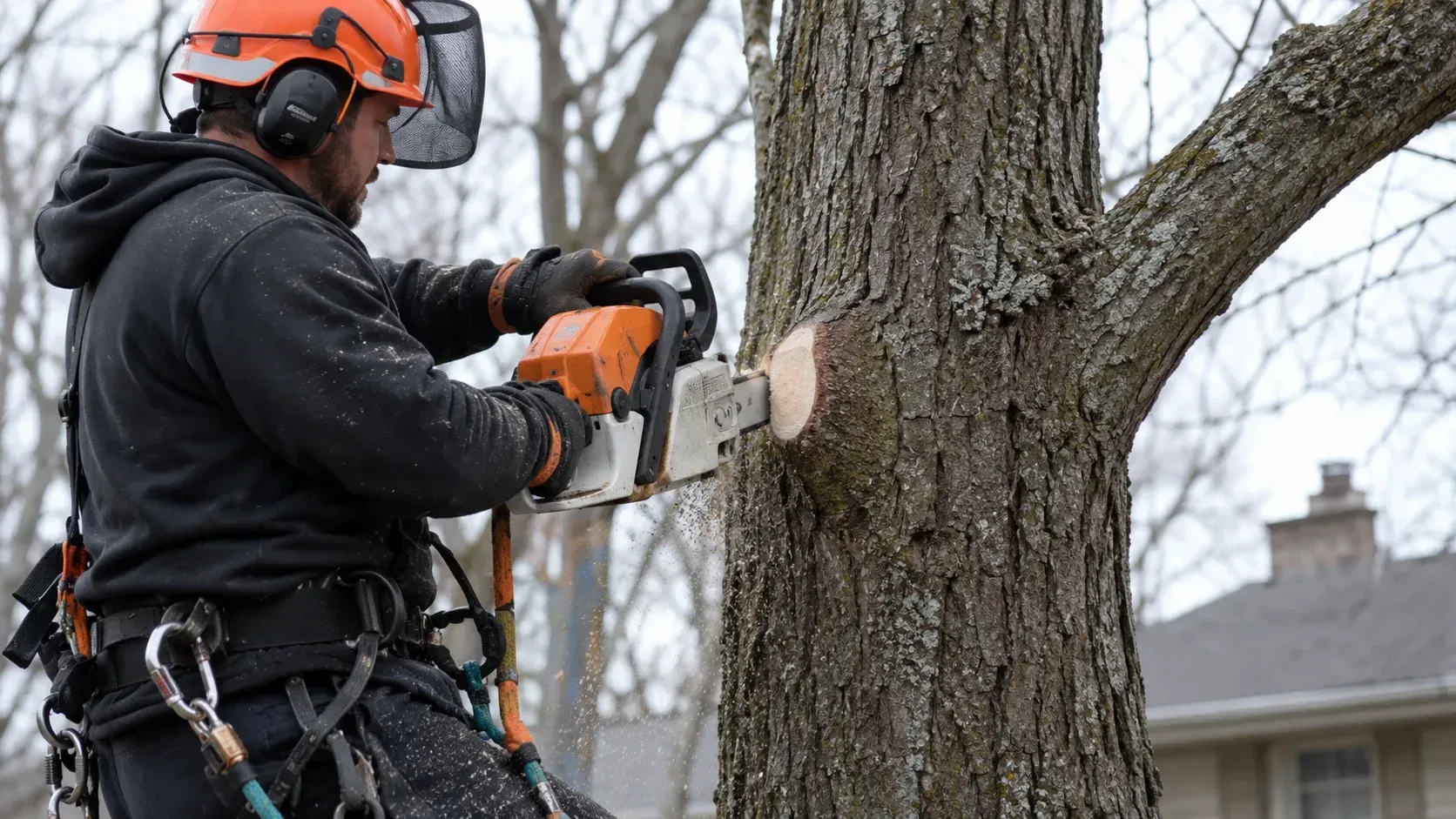
Standard clearing equipment includes handheld chainsaws, brush cutters, pole saws, and small walk-behind mowers or mulchers, along with light towable chippers.
These tools work well for scattered brush, saplings under 4 inches in diameter, and general yard maintenance that's gotten behind schedule. They're affordable and most property owners can operate them safely with basic training.
The limitation is capacity and safety margin. When vegetation density, tree size, or terrain conditions exceed what these tools were designed for, continuing to use them becomes inefficient and often unsafe.
Signs Your Lot Has Outgrown Standard Equipment
Continuous Buckthorn or Brush Thickets
Scattered buckthorn, even a dozen plants across an acre, can usually be managed with handheld tools over a few weekends. The equation changes when buckthorn forms a continuous thicket you cannot walk through without pushing branches aside every few feet.
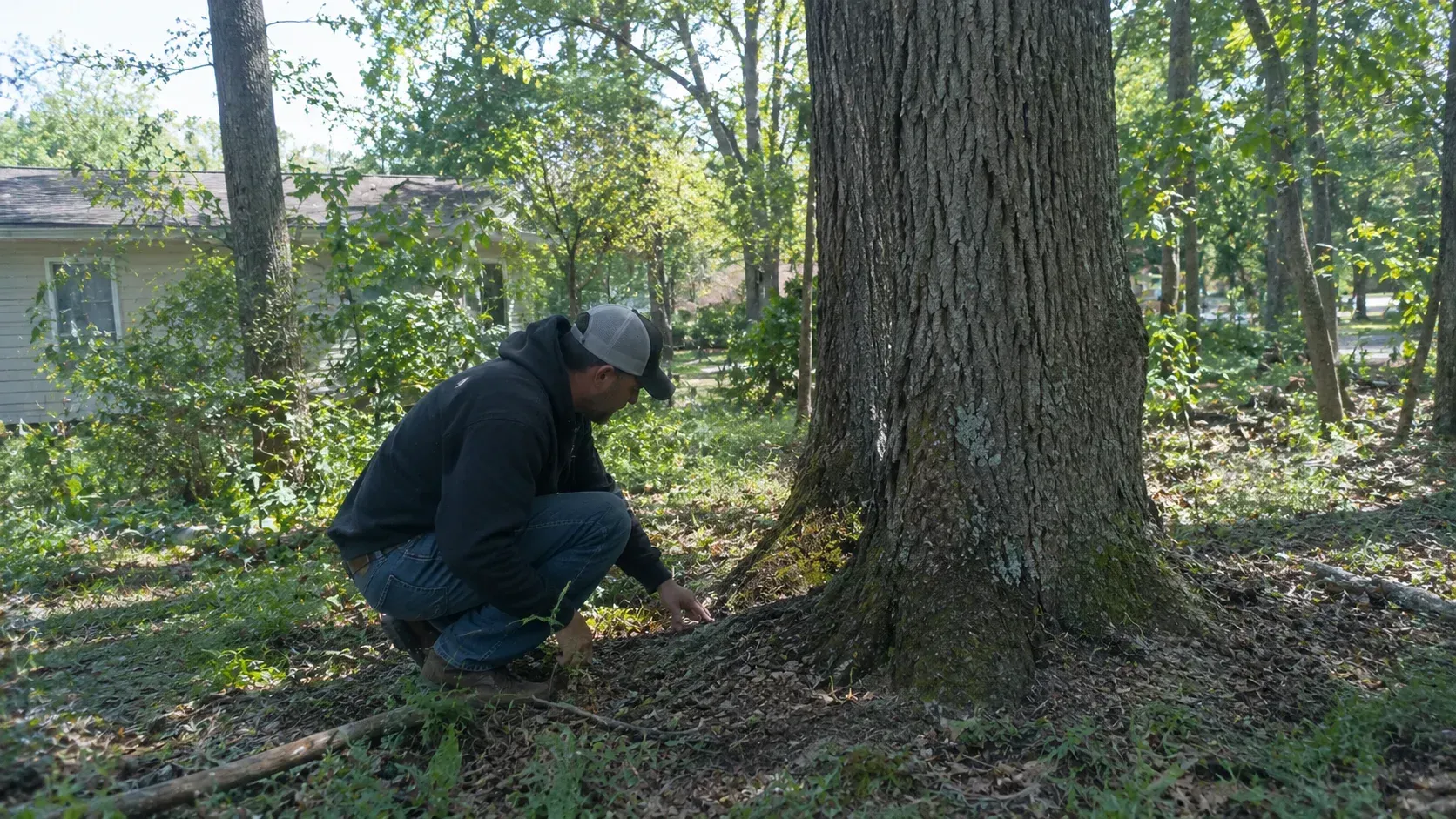
Continuous thickets mean an extensive, interconnected root mass underground. Cutting visible stems with a brush cutter leaves a root system that regenerates aggressively unless it's ground out or treated, which is where stump grinding becomes essential to a complete solution rather than an afterthought.
Trunk Diameter and Tree Density
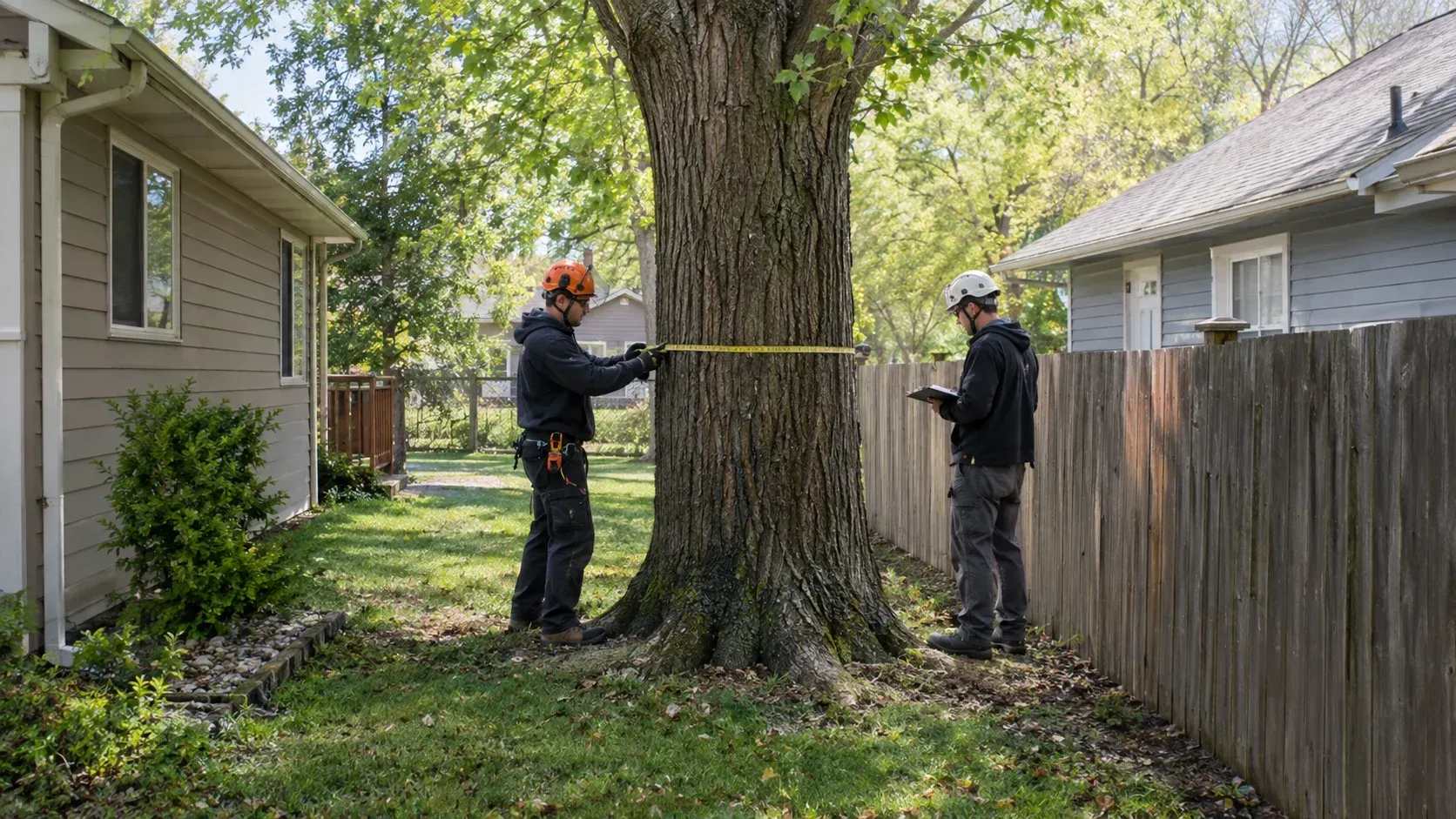
A single chainsaw handles occasional trees up to 6-8 inches in diameter reasonably well. The math changes when a lot has dozens of trees in that range, or when trunks regularly exceed 10-12 inches.
Larger diameter wood takes significantly longer to cut and generates more debris volume. A half-acre lot with 30 mature trees in the 8-15 inch range represents a fundamentally different project than the same lot with scattered saplings.
Steep, Uneven, or Soft Terrain
Slopes over roughly 15 degrees make it difficult and unsafe to operate wheeled equipment or maintain footing with a chainsaw. Soft or wet ground presents a similar problem - standard wheeled equipment can get stuck or cause rutting in wet Minnesota clay soils, especially during spring thaw.
Tracked equipment distributes weight differently and handles these conditions without the same risk.
Standing Deadwood and Hazard Trees
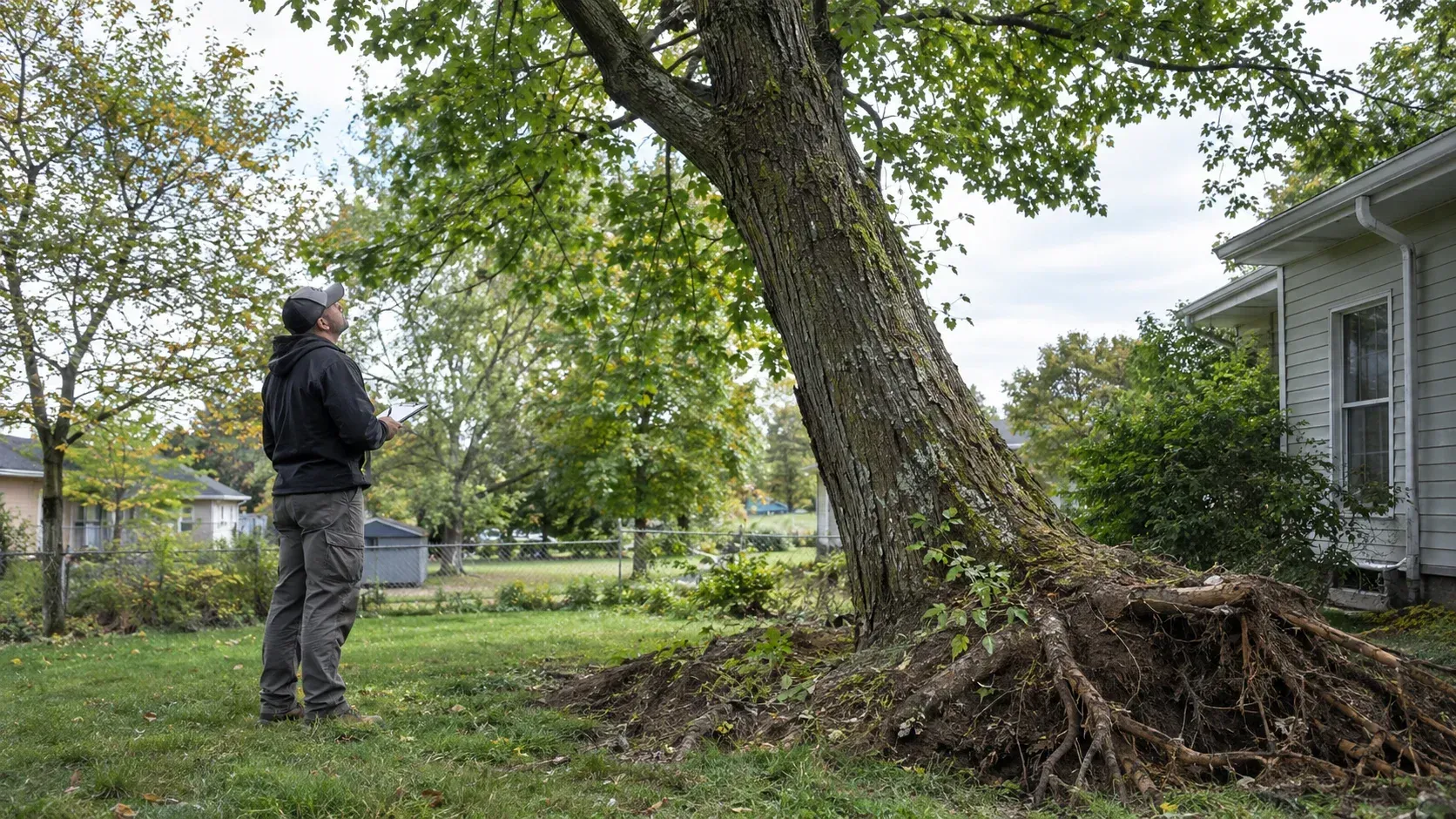
Dead trees introduce a safety variable that changes equipment requirements regardless of density elsewhere. Dead wood is unpredictable when cut - branches can be brittle and the tree's structural integrity may be compromised.
A lot with even a few large standing dead trees often benefits from equipment allowing greater control during felling, rather than relying entirely on manual chainsaw work.
Why Buckthorn Clearing Is Its Own Category
Buckthorn deserves separate discussion because it behaves differently than most other brush found on Minnesota lots. Common buckthorn and glossy buckthorn are invasive species that spread aggressively, form dense monoculture thickets, and develop extensive root systems even in relatively young plants.
Unlike native brush that might respond to simple cutting, buckthorn frequently resprouts vigorously from the stump and root system if not properly treated. A complete buckthorn clearing approach typically involves cutting the plants, treating or grinding the stumps, and often follow-up monitoring since buckthorn seeds remain viable in soil for years.
Attempting to clear a heavy buckthorn stand with only a brush cutter, without addressing the root system, often results in the thicket returning within one to two growing seasons, sometimes denser than before. For lots with buckthorn covering more than roughly a quarter acre in continuous stands, the combination of cutting volume and stump treatment generally makes equipment-assisted clearing more practical.
What Heavy Equipment Actually Solves
Land clearing heavy equipment, such as skid steers with mulching attachments, mini excavators, or forestry mulchers, addresses problems standard tools cannot solve efficiently.
Volume and speed represent the most obvious advantage. A forestry mulcher processes brush and small-to-medium trees at a rate that would take a crew with chainsaws many times longer to match. This matters when a lot has been neglected for years.
Stump and root management is another area where heavy equipment changes outcomes. Grinding stumps below grade prevents regrowth in species like buckthorn and eliminates obstacles for future landscaping. Hand tools cannot achieve this result.
Terrain access matters too. Tracked equipment distributes weight over a larger surface area, allowing operation on slopes, soft ground, or wet areas that would be unsafe for wheeled equipment or manual work.
A Practical Framework for Assessing Your Lot
Use this framework to get a general sense of where your property falls before requesting a professional opinion.
| Factor | Likely Standard Equipment | Likely Heavy Equipment |
|---|---|---|
| Brush/buckthorn coverage | Scattered patches, walkable | Continuous thickets, not walkable |
| Tree trunk diameter | Mostly under 6 inches | Regularly 8+ inches |
| Terrain | Flat to gently sloped, dry | Steep, wet, or uneven |
| Dead trees | Few or none, small | Multiple, or large diameter |
| Project timeline | Weekends over a season | Needs completion in days |
If your lot lands mostly in the right-hand column across two or more factors, standard equipment will likely be inefficient or unsafe for the full scope of work. A mixed result, or uncertainty about any factor, is a reasonable point to request a professional walkthrough rather than guessing.
Common Misconceptions About Lot Clearing
"If I can walk through it, standard equipment can handle it."
Walkability tells you about surface density, not root mass, trunk diameter, or terrain stability underneath. A lot can be walkable and still contain unstable slopes or root systems that make cutting difficult.
"Renting a bigger chainsaw solves density problems."
A larger saw cuts bigger trunks faster, but doesn't address stump regrowth, debris volume, or terrain access. Buckthorn-heavy lots regrow from untreated stumps regardless of what tool cut the original stems.
"Heavy equipment is only for large commercial projects."
Residential lots as small as a quarter acre can benefit from equipment-assisted clearing if buckthorn density, tree count, or terrain conditions warrant it. Project size in acres matters less than density and terrain.
What Typical Online Advice Overlooks
Generic lot-clearing guides often focus on tool selection without addressing the follow-up work that determines whether clearing actually succeeds long-term.
Stump treatment is frequently underemphasized. Cutting buckthorn or brush without grinding or treating the stump is a temporary solution in most cases, and regrowth often requires a second, more expensive intervention within a year or two.
Debris disposal volume is another overlooked factor. A heavily overgrown lot generates substantially more cut material than most property owners anticipate, and hauling or chipping that volume can take considerably longer than the cutting itself.
Soil conditions specific to Minnesota, particularly spring thaw softness and clay-heavy soils around Lakeville, aren't always factored into generic advice, but they meaningfully affect what equipment can operate safely at a given time of year.
Realistic Scenarios
A Half-Acre Lot With Scattered Brush
A homeowner has a half-acre lot with scattered brush and saplings under 5 inches in diameter, mostly on flat, dry ground. Standard equipment, including a brush cutter and chainsaw, can reasonably handle this project over a few weekends.
A Two-Acre Lot With Dense Buckthorn
A property owner purchased two acres vacant for eight years. Buckthorn covers roughly 60 percent of the lot in continuous thickets, plus a dozen larger volunteer trees. This density and the need for stump treatment typically points toward equipment-assisted clearing to complete the project and prevent regrowth.
A Sloped Lot With Standing Dead Trees
A lot has a moderate slope and several large standing dead ash trees, likely from emerald ash borer damage. Even with moderate overall brush density, the combination of terrain and hazard trees makes equipment-assisted felling safer than manual chainsaw work alone.
Conclusion
A lot generally exceeds standard clearing equipment capacity when buckthorn or brush forms continuous thickets, when trees regularly exceed 6-8 inches in diameter, or when terrain includes steep slopes, soft ground, or standing dead trees. Buckthorn in particular requires attention to stump and root treatment, not just stem cutting, which often shifts the calculation toward equipment-assisted clearing even on moderately sized lots.
Evaluating brush density, tree diameter, terrain, and hazard conditions against a practical framework gives property owners a realistic starting point. Since photos and general descriptions rarely capture these details accurately, an on-site walkthrough remains the most reliable way to determine what a specific lot actually needs.
Request a Free On-Site Lot Assessment
Every overgrown lot is different, and the right equipment depends on density, terrain, and what's actually growing on your property. Request a free on-site lot assessment to find out what equipment your property actually needs before you rent tools or start cutting.
Contact Arbor Barber Tree Service at (832) 703-0175 to schedule your assessment. We serve Lakeville and surrounding communities and can give you a clear picture of scope before work begins.
Frequently Asked Questions
How do I know if buckthorn on my property needs professional clearing?
If buckthorn forms continuous thickets rather than scattered plants, or covers more than roughly a quarter acre, professional clearing with stump treatment is usually more effective than manual cutting alone, which often allows regrowth.
Can I clear a small overgrown lot myself with a chainsaw and brush cutter?
Yes, for lots with scattered brush, saplings under 6 inches in diameter, and flat, dry terrain. Standard tools become inefficient once density, trunk size, or terrain conditions increase significantly.
What size trees require heavy equipment instead of a chainsaw?
Trees over roughly 8-10 inches in diameter, especially in groups, generally take considerably longer to process with hand tools. Heavy equipment handles volume and larger diameter material more efficiently.
Does heavy equipment damage the lot or surrounding landscaping?
Tracked equipment is designed to distribute weight and minimize ground disturbance compared to repeated foot traffic and dragging with hand tools. Experienced operators also plan access routes to protect features you want preserved.
How long does clearing an overgrown lot typically take?
Timeline depends heavily on density, acreage, and terrain. A lot assessment provides a realistic estimate, since generalized timelines rarely account for buckthorn density or debris volume specific to a property.
Recent Posts