What Happens If a Storm-Damaged Tree Is Left Standing Through a Minnesota Winter?
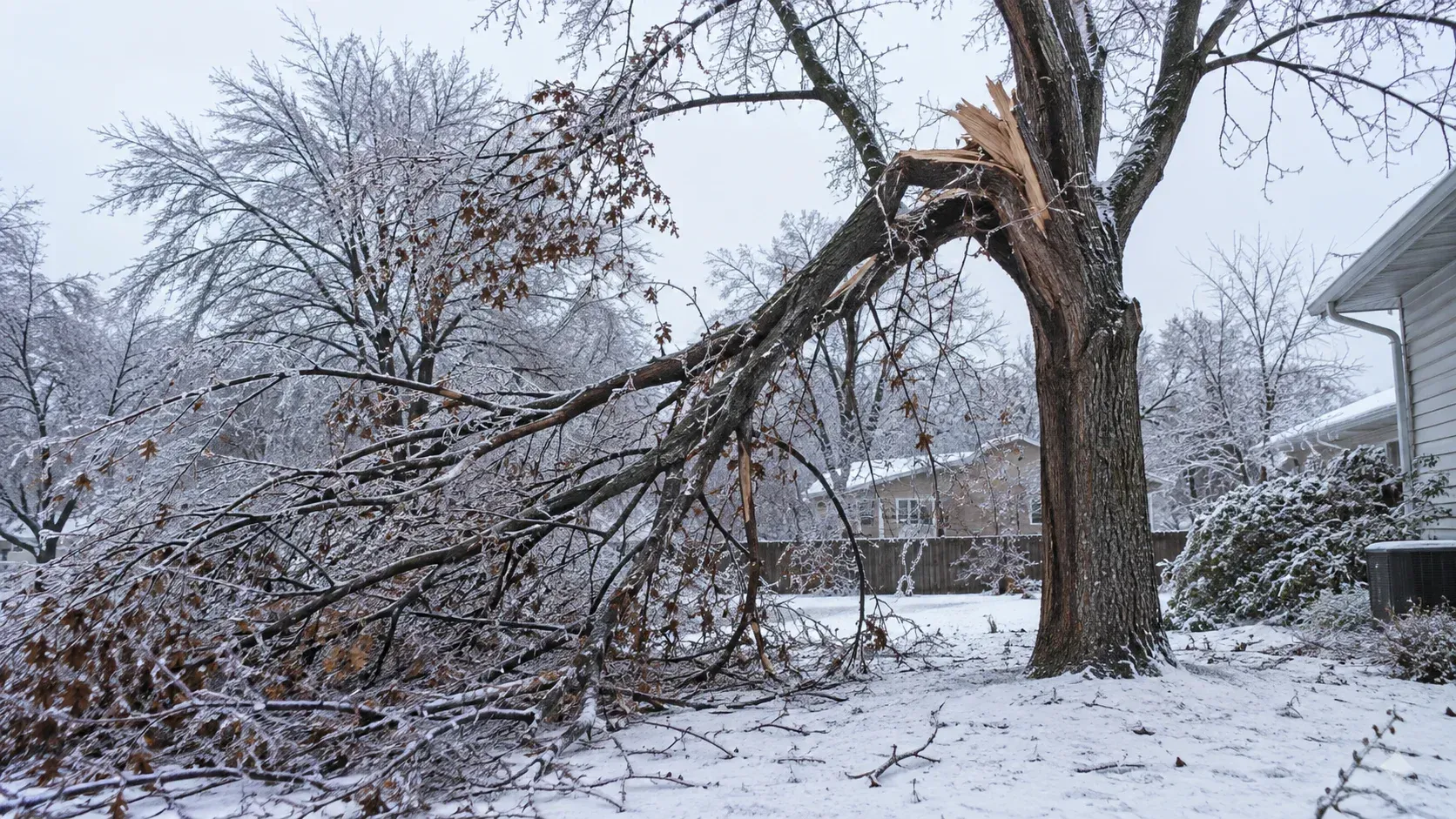
Table of Contents
- Introduction
- Why Storm Damage Tree Removal Should Not Wait for Spring
- How Freeze Thaw Tree Cracks Get Worse Over One Winter
- Winter Tree Damage Risk Compounds on an Already Weakened Tree
- What Happens to an Open Wound Over Winter
- The Hanging Limb Problem
- Why Delayed Storm Cleanup Costs More Than It Saves
- What Can Reasonably Wait, and What Cannot
- Getting Tree Removal After a Storm Scheduled Before the Weather Turns
- Conclusion
- Schedule Storm Cleanup Before Winter Loads the Damage
- Frequently Asked Questions
Key Takeaways
- A storm-damaged tree does not stabilize over winter. Freeze and thaw cycling drives water into existing cracks, expands it, and widens them.
- The next snow or ice event loads a tree that has already spent its structural margin, which is why second failures are less predictable than the first.
- Torn wounds are open doors for decay fungi, and a wound left ragged through a season closes far worse than one cleaned up promptly.
- Hanging limbs are the urgent item. They are unstable, usually out of safe reach, and they come down on their own schedule.
- Waiting turns a planned job into an emergency one, and emergency work after a storm is slower, harder and more expensive than scheduled work before it.
Introduction
A storm-damaged tree left standing through a Minnesota winter typically gets worse rather than better. Freeze and thaw cycling widens the cracks the storm opened, torn limb wounds stay open to decay instead of closing, and every subsequent snow or ice load lands on a tree that has already used up its structural margin. The second failure is usually less predictable than the first, because the damage is no longer confined to where you can see it.
We get a run of these calls each spring: a tree that took visible damage in October, left alone because it was still standing, now with a split running further down the trunk than it did. Clearing that damage in November is a straightforward job. The same tree in April is frequently a removal.
Here is what actually happens to a damaged tree over a winter here, and which parts of it genuinely cannot wait.
Why Storm Damage Tree Removal Should Not Wait for Spring
The instinct to wait is reasonable. The tree is still up, the weather is turning, nobody wants to spend money in November, and it seems sensible to look at it again when things thaw.
The problem is that winter is not a pause. It is the most demanding season the tree will face, and the damaged tree enters it with less capacity than it had in September. Three things run in parallel from the first freeze:
- Mechanical. Existing cracks propagate under freeze and thaw and under load.
- Biological. Open wounds admit decay organisms, and the tree cannot compartmentalize effectively while dormant.
- Cumulative loading. Every snow and ice event tests what is left.
None of those reverse in spring. What you look at in April is the result of all three, and it is always further along than what you decided to leave in October.
How Freeze Thaw Tree Cracks Get Worse Over One Winter
This is the mechanism that does the most damage and the one people find least intuitive.
Wood holds water. A crack in a trunk or a torn branch union collects it, from rain, from melting snow, from the tree's own moisture. When that water freezes it expands, and it pushes outward on the crack from the inside.
Then it thaws and more water gets in, further along the crack than before. Then it freezes again. Minnesota does not do this once a winter, it does it repeatedly, and each cycle advances the split a little.
Two things make this worse on a storm-damaged tree specifically. A fresh crack is an ideal water entry point, unlike an old closed wound. And a crack that is already under load from the weight of the remaining canopy is being pulled open mechanically at the same time it is being wedged open by ice.
The result is a split that is measurably longer in April than in November, frequently running further into the trunk than the original damage. That progression is what turns a repairable tree into a removal.
Winter Tree Damage Risk Compounds on an Already Weakened Tree
The second mechanism is loading, and the key word is compounding.
A healthy tree has margin. It can carry a snow load, flex under wind, and absorb an ice event because its structure is intact and its capacity exceeds the demand. A storm-damaged tree has spent part of that margin already.
Then winter applies the same tests it applies to every tree on the street. Snow load, ice load, wind, and the combination of all three. The undamaged trees absorb it. The damaged one is working from a reduced starting point.
What makes the second failure harder to predict than the first:
- The load path has changed. Losing a major limb redistributes weight through the remaining structure in ways that were never designed for.
- The canopy is often unbalanced, which means wind and snow load it asymmetrically.
- The remaining branches may have been stressed in the same event without showing it.
- Cracks are advancing where you cannot see them.
- Roots may have been affected if the tree moved at all, which is invisible from above.
So the tree that survived the first storm is not thereby proven. It frequently has a narrower margin than it had before, which is the opposite of what surviving usually implies.
What Happens to an Open Wound Over Winter
Trees do not heal wounds the way people do. They compartmentalize, walling off damaged tissue to stop decay spreading, and then they grow new wood over the outside. Both processes need the tree to be actively growing.
A limb torn off in an autumn storm leaves a ragged wound going into dormancy, which means:
- No closure happens over winter. The wound sits open for months.
- Decay fungi get an entry point and time to establish.
- Torn tissue is worse than a clean cut. A ragged tear has more surface area, crushed tissue at the edges, and often a strip of bark pulled down the trunk below the wound.
- Water sits in the wound and freezes, which is the crack mechanism again.
- The compartmentalization response is delayed until growth resumes, by which point the decay has a head start.
This is why cleaning up storm damage promptly matters beyond tidiness. A torn stub cut back properly to the branch collar gives the tree a wound it can actually close. The same tear left through winter gives it a much larger problem to deal with in a much worse condition.
The Hanging Limb Problem
Of everything in this article, this is the part to act on first.
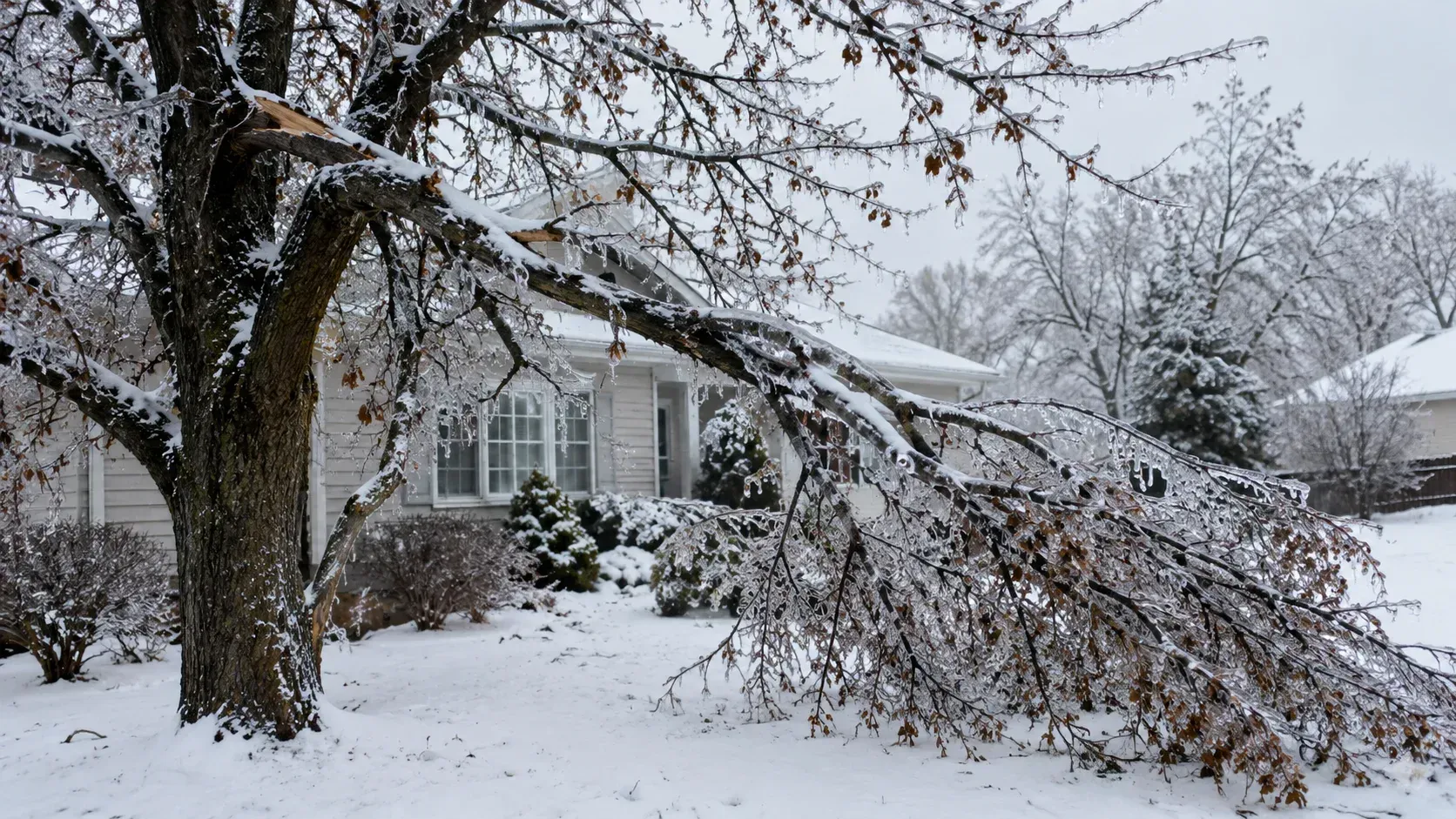
A branch that broke but did not fall, lodged in the canopy or hanging by a strip of bark, is not stable and it is not going to become stable. It is held by friction and by whatever tissue did not tear, and both of those degrade.
What makes them dangerous:
- They come down without warning, frequently in conditions that seem harmless
- They are usually well out of safe reach from the ground
- Wind, ice load and the thaw all dislodge them
- They take other branches with them on the way down
- They are hard to see once snow is on the canopy, which is exactly when people stop looking
If you have a hanging limb over a driveway, a walkway, a play area or anywhere people go, that is not a spring job. It is the one item on this list that justifies a call now regardless of what you decide about the rest of the tree.
Why Delayed Storm Cleanup Costs More Than It Saves
The economics run the opposite way to the instinct, and it is worth being plain about it.
Scheduled work is cheaper than emergency work. A damaged tree dealt with on a planned visit, in reasonable weather, with normal access, is a straightforward job. The same tree after it has come down across a fence in February is an emergency call, in bad conditions, with frozen ground and snow in the way, and often with something underneath it that now also needs fixing.
There is also the scope question. A tree that could have been saved with proper cuts and some crown work in November may not be salvageable in April, because the crack ran and the decay established. That is the difference between a pruning bill and a removal bill.
And the failure may not confine itself to the tree. A limb through a roof, a fence, a vehicle or a power line converts a tree expense into a property repair, an insurance claim, or both.
None of that means every damaged tree needs immediate attention. It means the assessment should happen now and the decision should be informed, rather than deferred by default.
What Can Reasonably Wait, and What Cannot
We would rather be straight than alarming, so here is the honest split.
Deal with it now:
- Hanging or lodged branches, anywhere
- Cracks running into the trunk or into a major union
- Any tree leaning that was not leaning before
- Damage over a house, driveway, walkway, power line or anywhere people gather
- A tree that lost a large share of its canopy
- Split or partially torn major limbs still attached
- Anything that has moved at the base, or disturbed soil around the trunk
Can usually wait for a scheduled visit:
- Small broken branches within reach and away from targets
- Minor twig and small-limb litter
- Cosmetic damage on a structurally sound tree
- Deadwood that was already there and is not over anything
Get assessed either way:
- Any tree where you cannot tell which list it belongs on
That last line is not a sales pitch. The distinction between the first two lists is frequently not visible from the ground, which is the whole reason assessments exist.
Getting Tree Removal After a Storm Scheduled Before the Weather Turns
Practical sequencing, if you are working out what to do:
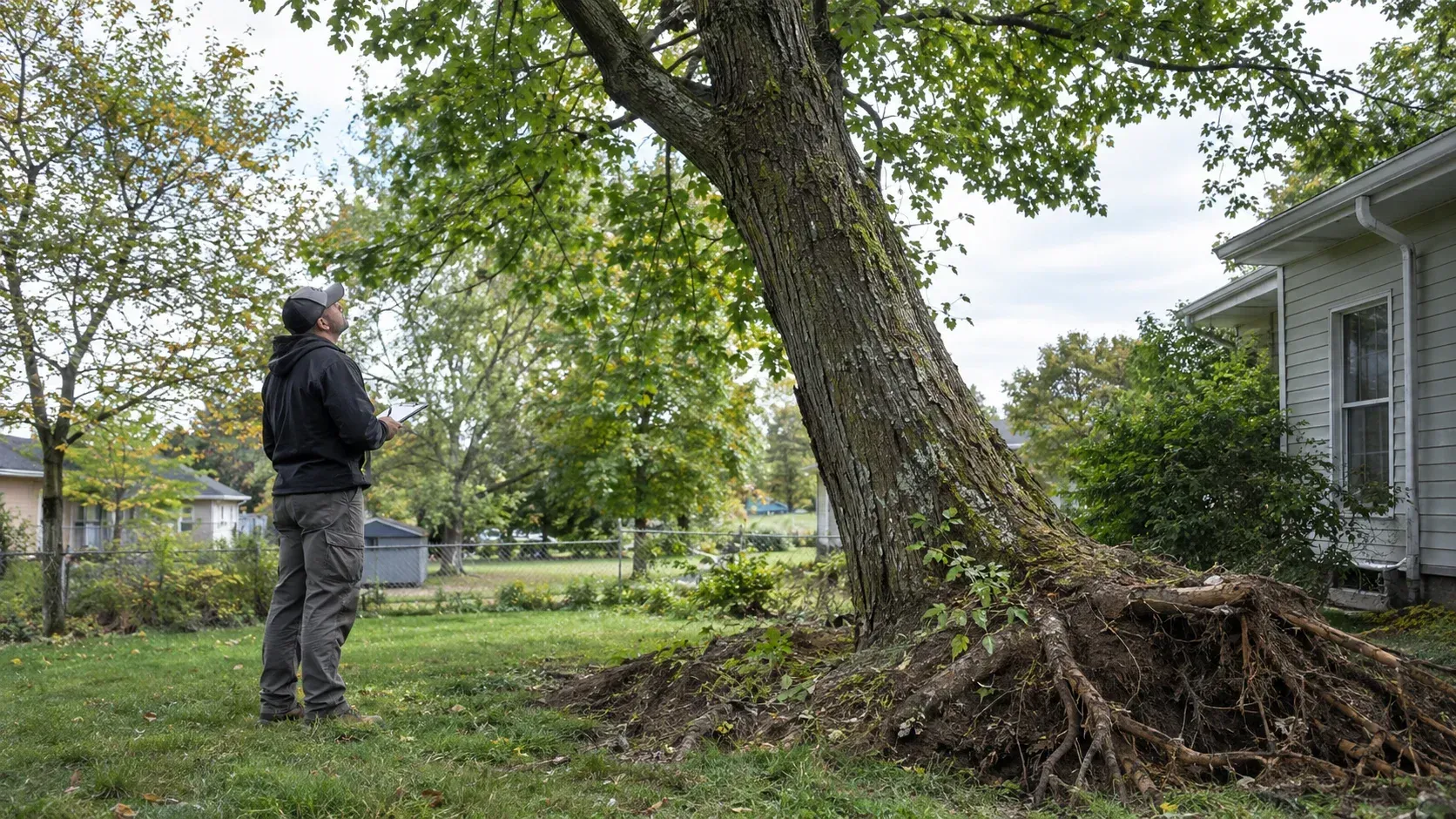
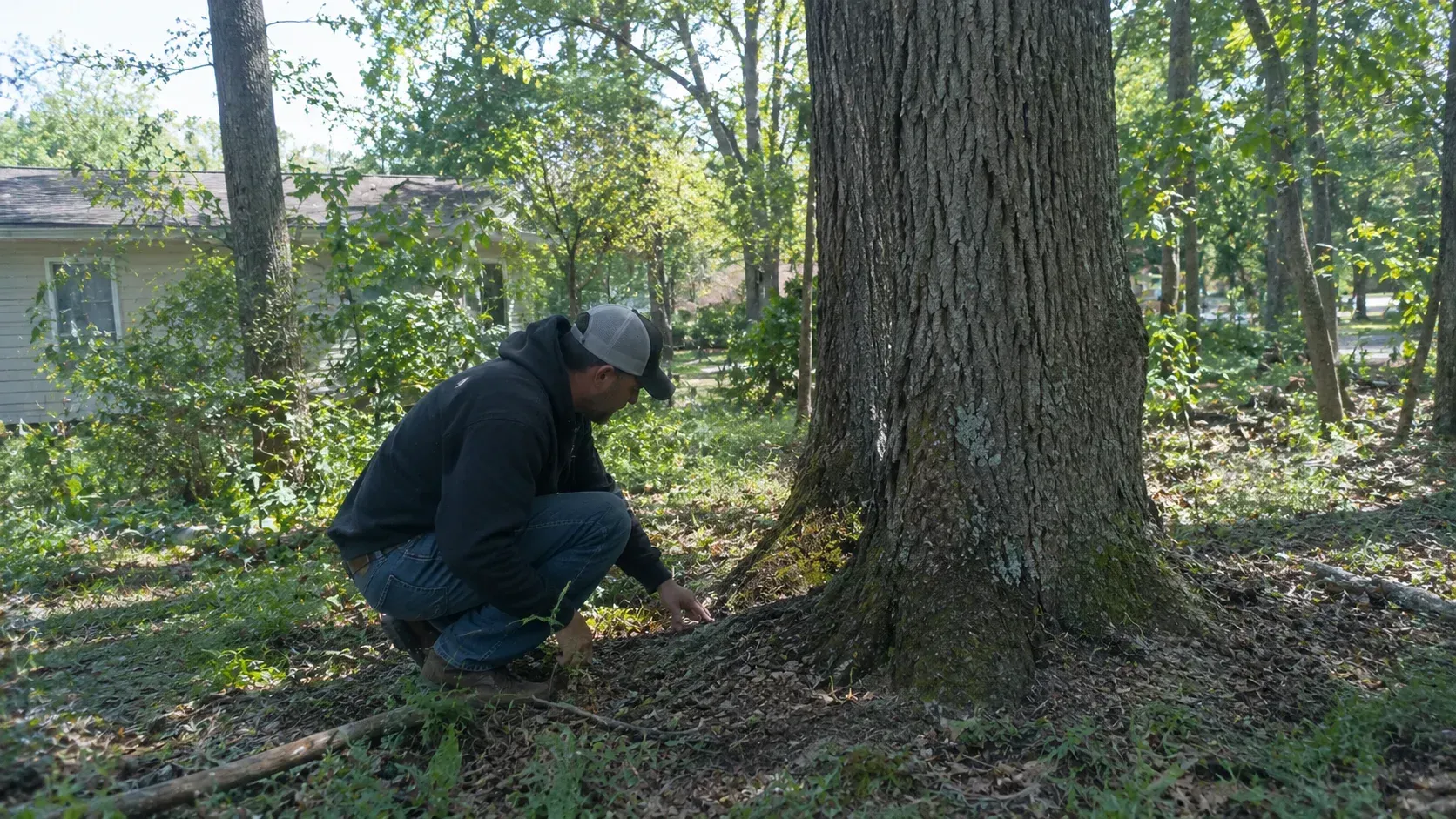
- Walk the property after the storm and look up, not just at what is on the ground.
- Photograph what you find, dated, which also helps if an insurance claim follows.
- Keep people and vehicles out from under anything damaged.
- Prioritize hanging limbs and anything over a target.
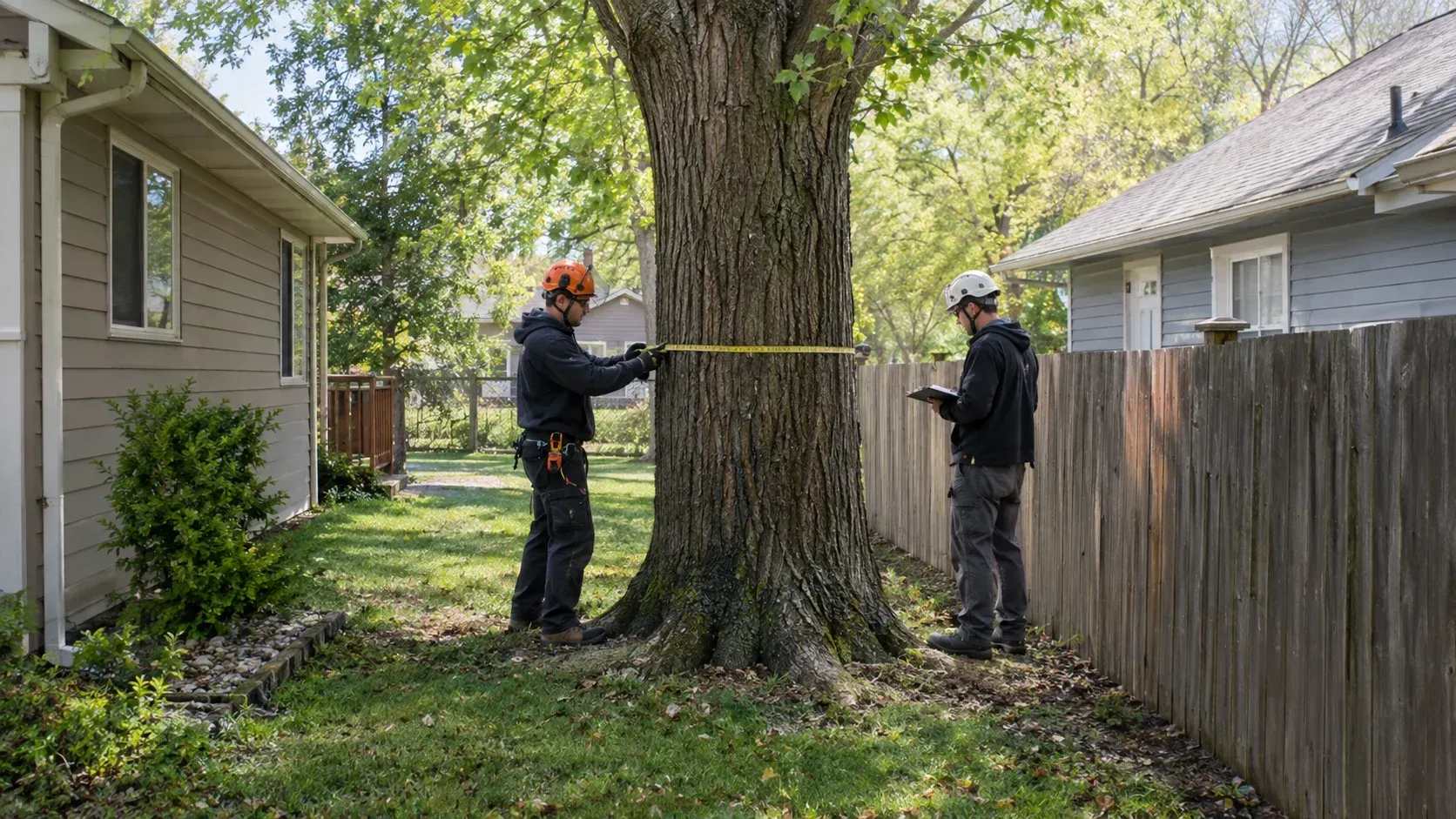
- Get an assessment rather than deciding from the driveway, since cracks and unions are hard to judge from below.
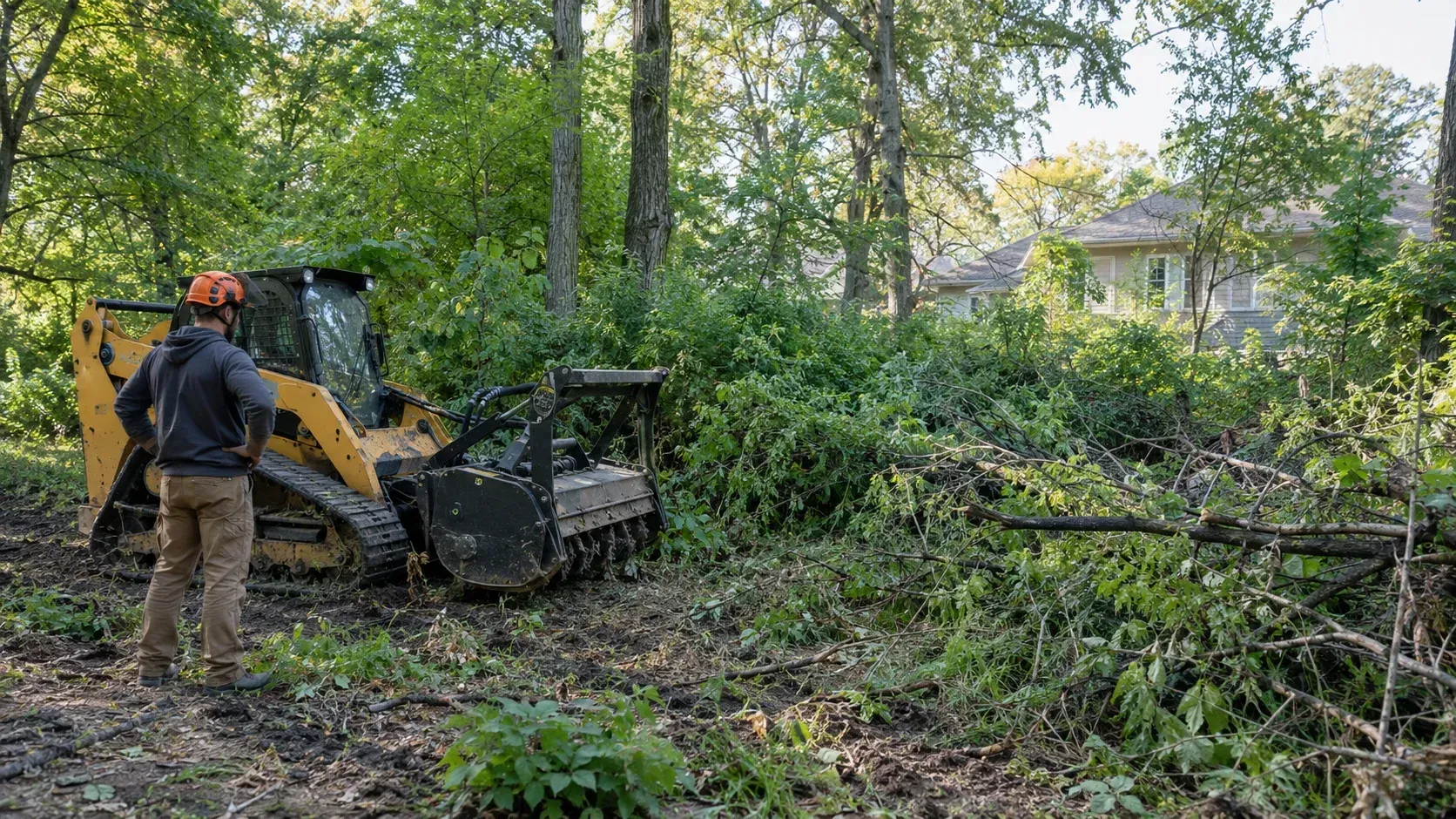
- Deal with the urgent items before the ground freezes hard, since access and equipment options narrow in deep winter.
- Ask what can wait. A good answer includes items that can.
On the insurance side, document before anything is cleared, and check your own policy about what it covers and what it requires. Coverage for storm-felled trees, removal costs and resulting property damage are often treated differently from each other, and that is a conversation with your carrier rather than with us.
Conclusion
A storm-damaged tree does not recover over a Minnesota winter. Cracks lengthen under freeze and thaw, wounds stay open to decay while the tree is dormant, and each snow and ice event tests a structure that has already lost some of its margin.
The urgent item is anything hanging. After that, the useful move is an assessment now rather than a decision in April, because by April the tree has made the decision for you and it is usually the more expensive one.
Schedule Storm Cleanup Before Winter Loads the Damage
If a storm has left damage in your trees, getting it dealt with before the snow and ice arrive is both safer and cheaper than waiting for spring. We assess storm-related damage, remove debris and damaged trees safely, and leave the area cleaned and secured.
Arbor Barber Tree Service is locally owned and operated in Lakeville, with certified arborists and over 20 years of experience, safety-focused and fully insured. Where a damaged tree is past saving, taking it down is handled with the same crew rather than passed to somebody else.
We are open 24/7 and we serve Lakeville, Apple Valley, Burnsville, Farmington and Rosemount. Call (612) 703-0175, or
send us the details and a photograph.
Frequently Asked Questions
Will a cracked tree heal itself over winter?
No. Trees compartmentalize wounds rather than healing them, and that process requires active growth. Over winter the tree is dormant while freeze and thaw cycling drives water into the crack and widens it, so the damage advances rather than resolving.
Is it safe to leave a broken branch hanging until spring?
No. Hanging limbs are held by friction and torn tissue, both of which degrade. They come down without warning, often during a thaw or a light wind, and they are usually out of safe reach from the ground.
Can storm-damaged trees be saved, or do they always need removal?
Many can be saved, particularly when the trunk and main structure are sound and the damage is confined to branches. Prompt proper cuts improve the odds considerably. Waiting reduces them, which is the argument for assessing early.
Does snow load matter more on a damaged tree?
Yes, because the tree has already spent part of its structural margin and the load path has changed after losing a limb. The same snowfall that other trees absorb can produce a second failure, and it is harder to predict where.
Should I photograph storm damage before cleanup?
Yes, dated, from several angles, before anything is moved. It helps any insurance conversation and it gives whoever assesses the tree a record of the original damage. Check your own policy for what it requires.
Recent Posts