Which Pruning Cut Actually Causes More Long-Term Damage: A Flush Cut or One Made Beyond the Branch Collar?
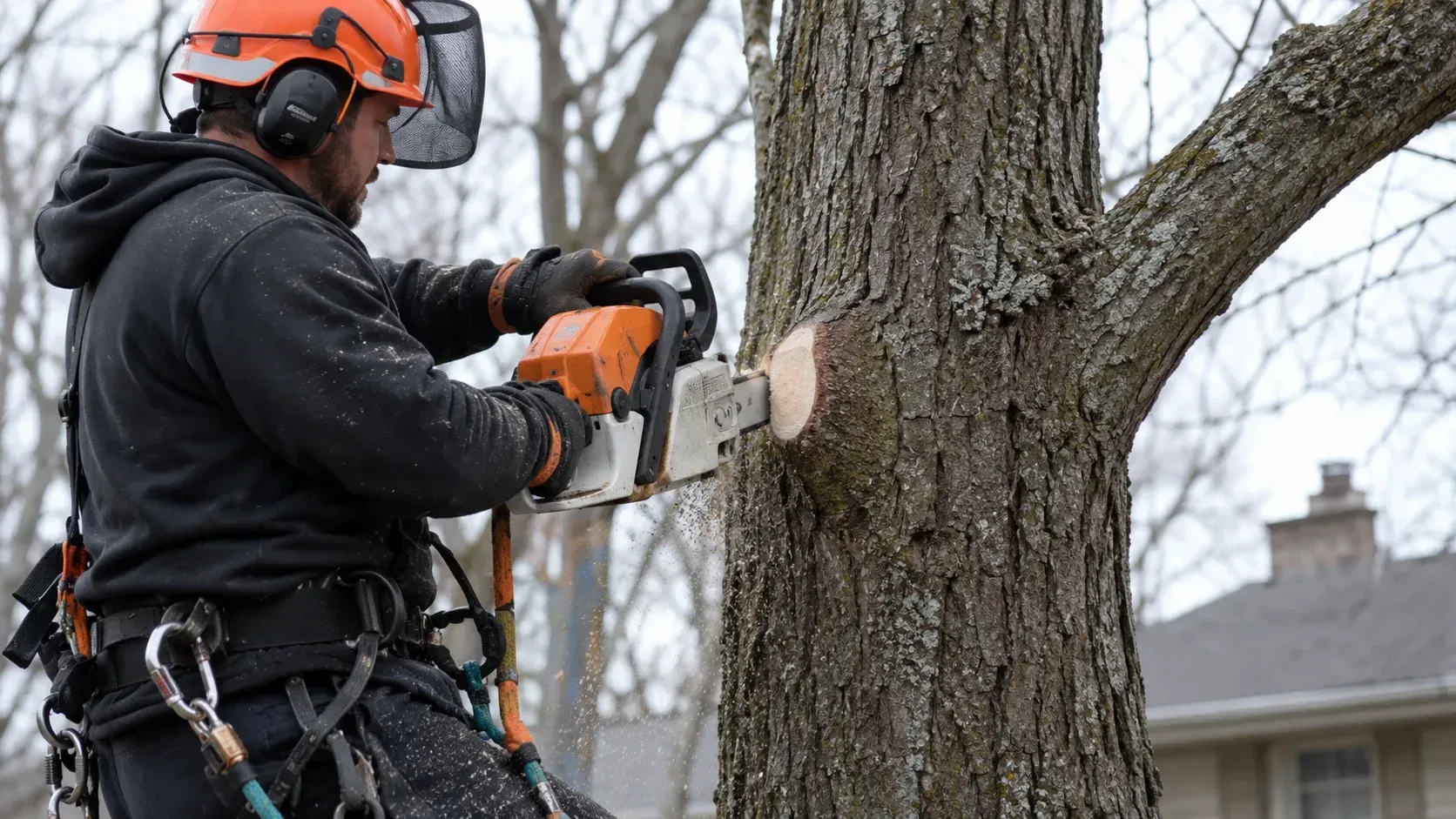
Table of Contents
- Introduction
- Flush Cut vs Branch Collar Cut: Which One Does More Damage
- What the Branch Collar Actually Does
- Why a Flush Cut Is the More Serious Mistake
- What Goes Wrong With a Stub Cut
- Proper Pruning Cut Placement, in Plain Terms
- How Tree Wound Closure Actually Works
- Why Large Branches Need Three Cuts, Not One
- What a Bad Cut Looks Like Years Later
- Conclusion
- Have Pruning Done With Proper Collar Cuts
- Frequently Asked Questions
Key Takeaways
- The flush cut does more long-term damage. It removes the branch collar, which is the tissue the tree uses to seal the wound, and that tissue does not grow back.
- A stub cut is also wrong, but its damage is usually more contained. The stub dies and decays, then the tree has to deal with it from behind.
- The correct cut is neither. It goes just outside the collar, leaving the collar intact and the wound as small as it can be.
- Trees do not heal. They compartmentalize, walling off damage, and then grow new wood over the outside. A flush cut breaches the wall before it exists.
- Wound dressings and pruning paint do not help. Leave the cut open.
Introduction
A flush cut causes more long-term damage than a cut left slightly too far out. Cutting tight against the trunk removes the branch collar, the swollen ring of tissue at the base of the branch, and that collar is exactly what the tree needs to seal the wound and wall off decay. Remove it and you have made a larger opening directly into the trunk, one that closes far more slowly and admits decay into the stem itself.
That said, the honest answer to the question is that both cuts are wrong, and most of the pruning we do is about the third option: the cut just outside the collar that neither removes it nor leaves a stub. But if you are forced to choose which mistake to make, leave the stub. A stub is a problem the tree can partly manage. A missing collar is not.
Here is why the collar matters that much.
Flush Cut vs Branch Collar Cut: Which One Does More Damage
Put the two side by side.
The flush cut. Made tight against the trunk, slicing through or removing the collar entirely. It looks tidy, which is exactly why people make it. The wound is larger than it needed to be, it cuts into trunk tissue rather than branch tissue, and it destroys the structure that would have closed it.
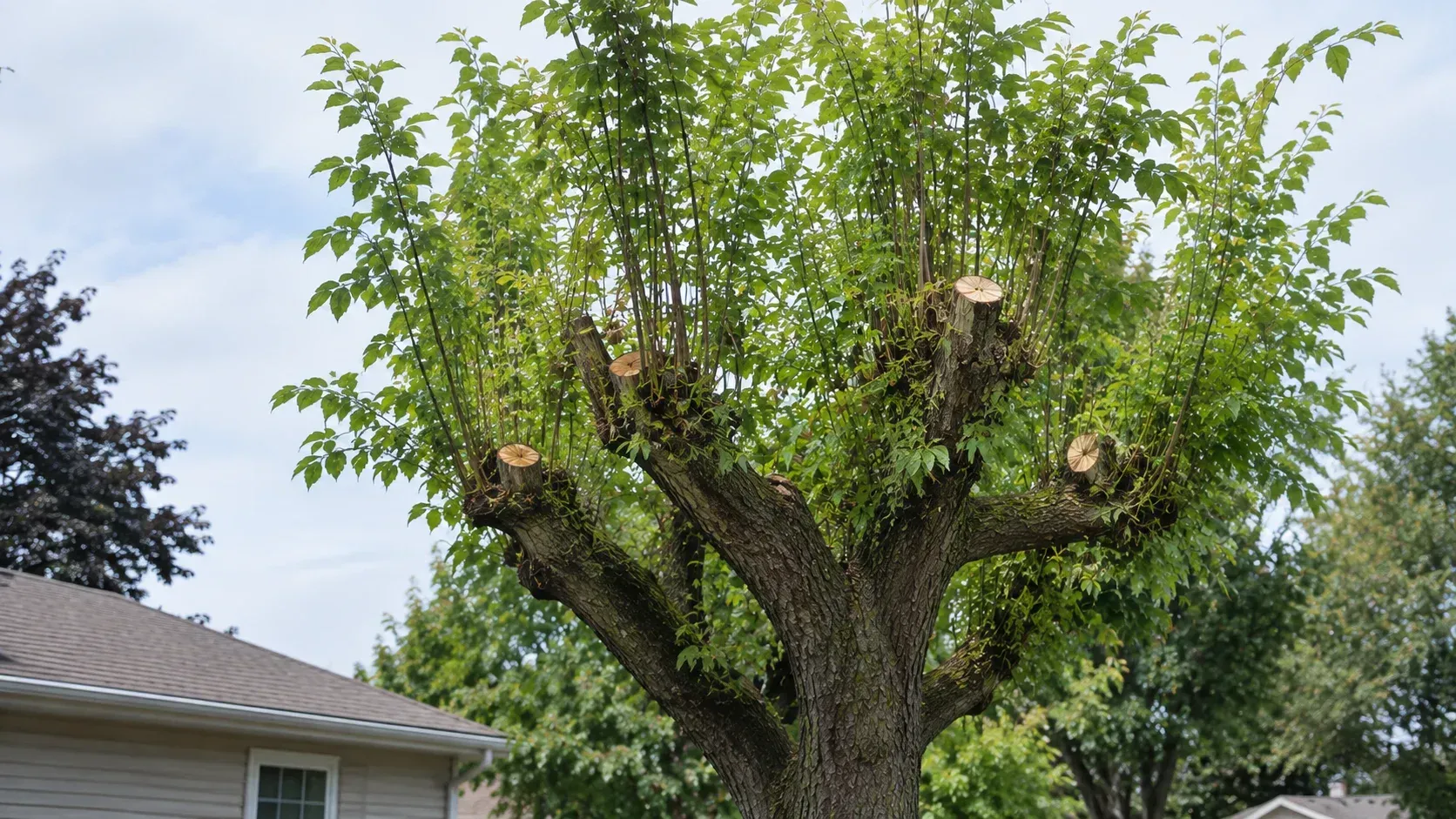
The stub cut. Made too far out, leaving several inches of branch protruding. It looks unfinished, which is why people avoid it. The stub has no way to sustain itself, so it dies, and the dead wood decays back toward the trunk.
Both produce decay. The difference is where.
With a stub, the tree's collar is intact, so the boundary that walls off decay is still in place. The stub rots, and in many cases the tree seals behind it and the decay stays largely in the dead stub. It is untidy and it delays closure, but the trunk's defense is functioning.
With a flush cut, that boundary has been removed. Decay entering the wound is entering the trunk directly, with the tree's best defense already cut away. The wound is also larger, and it frequently produces a distinctive vertical crack or dieback strip running down the trunk below the cut.
That is why, between two errors, the flush cut is the worse one.
What the Branch Collar Actually Does
Worth understanding, because everything else follows from it.
Where a branch meets the trunk there is usually a visible swelling, a raised ring or shoulder of tissue. On some species it is obvious; on others you have to look. That collar is not part of the branch. It is trunk tissue that grows around the base of the branch.
It does two jobs.
First, it is the structural connection. The trunk and branch tissues are interlocked there, which is what makes the union strong.
Second, and this is the part that matters for pruning, it contains a chemical and physical boundary zone. When a branch dies or is removed, the collar is where the tree forms its protective barrier against decay moving into the trunk. It is the tree's built-in defense, positioned precisely at the point of greatest risk.
Cut outside the collar and you leave that defense intact. Cut through it and you have removed it, permanently, because a tree cannot regrow a collar it no longer has.
There is a related landmark worth knowing. On the upper side of the branch, where it meets the trunk, there is often a line or wrinkle of bark called the branch bark ridge. Those two features together, the ridge above and the collar below, are what tell you where the cut goes.
Why a Flush Cut Is the More Serious Mistake
Specifically, what goes wrong:
- The protective boundary is gone. The tissue that would have compartmentalized the wound has been removed with it.
- The wound is bigger than necessary. Cutting flush means cutting through the widest part of the junction rather than the narrower point just outside it.
- It cuts trunk tissue, not branch tissue. You have wounded the stem itself, not just removed a branch.
- Closure is far slower. Callus tissue grows in from the edges of a wound, and a flush cut has removed the tissue best positioned to do that.
- Decay goes into the stem. With the boundary removed, decay that enters is in the trunk's structural wood.
- It often produces dieback below the cut, a strip of dead bark and cambium running down the trunk, which becomes its own long-term wound.
- Multiple flush cuts compound. Several on one trunk can seriously compromise a stem over years.
The tidiness is genuinely deceptive. A flush cut looks like a better job the day it is made and is worse in every way that matters five years later.
What Goes Wrong With a Stub Cut
Stubs are not fine, and this article should not leave that impression.
A stub has no foliage and no way to feed itself, so it dies. Dead wood decays. That decay works back toward the trunk, and while an intact collar can often wall it off, that is not guaranteed, particularly on a large stub or a tree already under stress.
Meanwhile the wound cannot close, because closure grows from the collar outward and the stub is in the way. So you get an open wound held open for years by a piece of dead wood.
Stubs also sprout. On many species the tree responds by pushing weak shoots from around the cut, which are poorly attached and create their own future problems.
So the ranking is: correct cut, then stub, then flush. Not correct cut, then stub, then fine.
Proper Pruning Cut Placement, in Plain Terms
Here is how to place the cut without needing to measure anything:
- Find the branch bark ridge on the upper side, where the branch meets the trunk. It usually appears as a raised line of bark.
- Find the collar on the underside, the swelling at the branch base.
- Cut just outside the collar, angling away from the trunk. The cut starts just outside the branch bark ridge and finishes just outside the collar.
- Do not cut into the swelling, and do not leave a length of branch beyond it.
- If the collar is hard to see, err slightly outward. A small stub is recoverable. A removed collar is not.
- Match the angle to the branch, rather than cutting straight down against the trunk.
The result should be a cut face that is roughly oval, clean, and sitting just proud of the trunk without protruding. The tree closes it from the edges inward over subsequent seasons.
One thing not to do: do not paint or seal it. Wound dressings were standard advice for a long time and are no longer recommended, because they do not prevent decay and can trap moisture against the wound. Leave the cut open to the air.
How Tree Wound Closure Actually Works
The vocabulary here matters, because "healing" leads people to the wrong conclusions.
A tree does not repair damaged tissue. It cannot replace wood that has been cut, and it cannot restore a damaged area to its previous state. What it does instead is wall the damage off, forming boundaries that resist the spread of decay into healthy wood, and then grow new wood over the outside of the wound.
Two consequences follow, and they explain most of what this article recommends.
Wound size matters enormously. Closure grows in from the edges at a limited rate, so the time to close scales with the size of the opening. A small wound closes in a season or two. A large one may take many years, or never close at all, and every year it is open is a year decay can enter.
The boundary is set at the moment of the cut. The tree's ability to wall off that wound depends on the tissue that is still there. This is the entire argument for the collar.
Which is also why pruning small is better than pruning late. A branch removed when it is finger-thick leaves a wound the tree closes quickly. The same branch removed in fifteen years leaves one that may never close.
Why Large Branches Need Three Cuts, Not One
A practical point that prevents a specific and common injury to the tree.
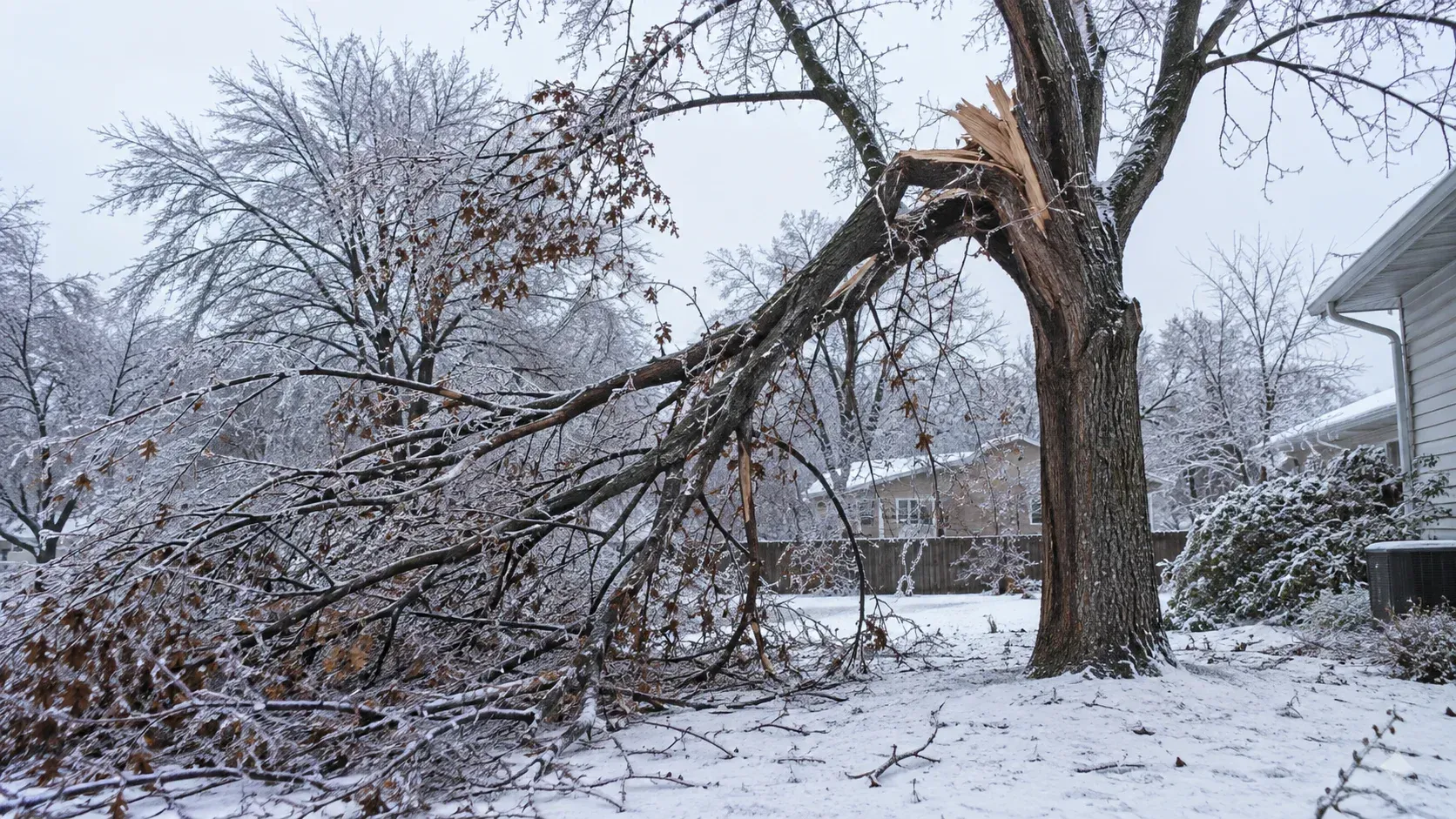
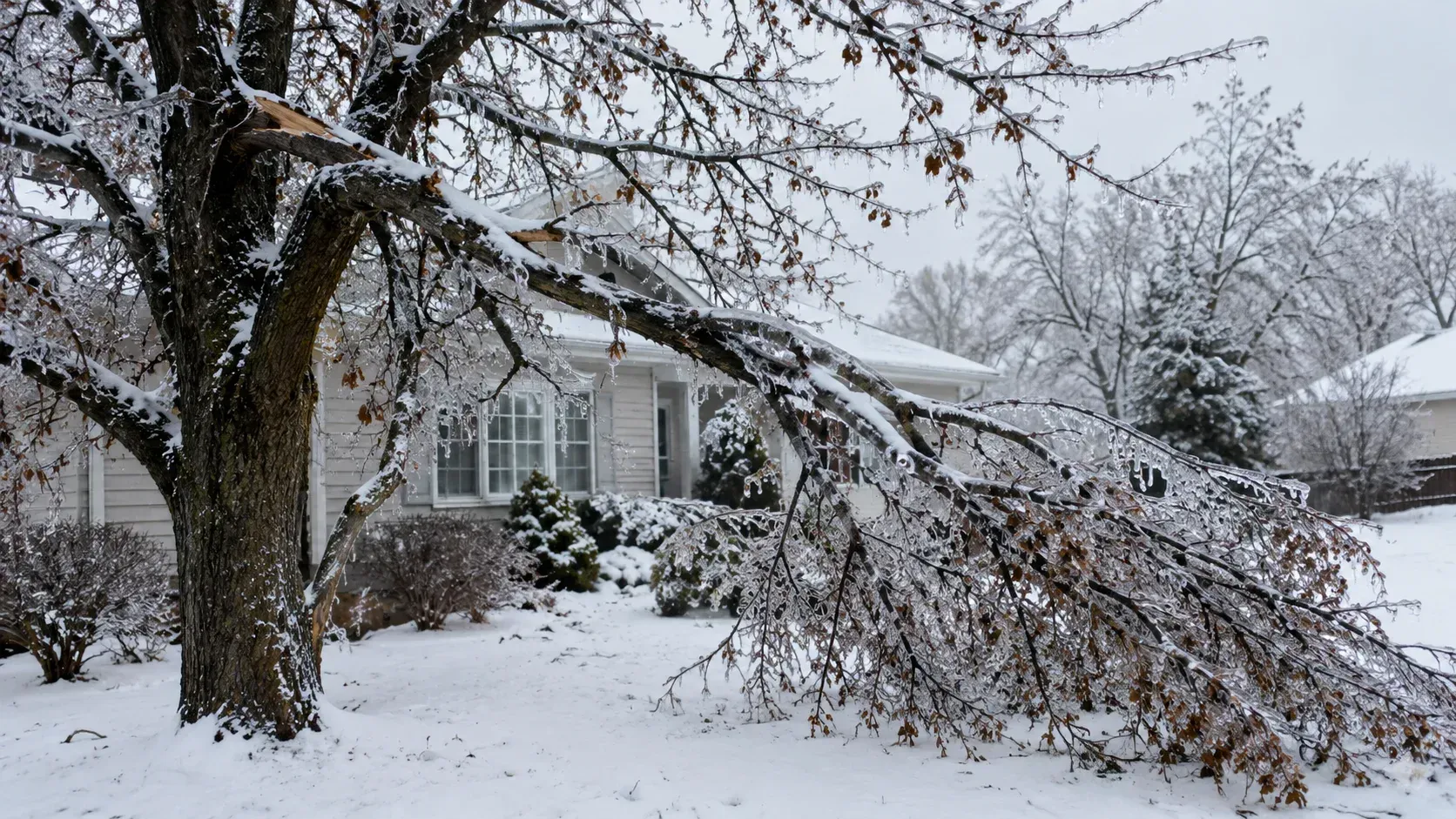
Cut a heavy branch in one pass from above and it will break before the cut is finished, and when it goes it tears a strip of bark down the trunk below. That tear is often far worse than the pruning wound itself, and it is entirely avoidable.
The standard method removes the weight first:
- First cut, on the underside of the branch, some distance out from the trunk, going partway up. This is the undercut and it stops the bark tearing.
- Second cut, from above, slightly further out than the first. The branch falls here, and because of the undercut it breaks cleanly rather than stripping bark.
- Third cut, the final one, removes the remaining stub at the correct position just outside the collar, with no weight left on it.
The third cut is the one this article has been about. The first two exist so that you can make the third one properly.
What a Bad Cut Looks Like Years Later
If you want to check work that has already been done, look for:
- A sunken or discoloured patch on the trunk where a branch was removed, rather than a raised closing ring
- A vertical strip of dead bark running down from the cut, which usually indicates a flush cut
- A cavity at an old pruning point
- Fungal fruiting bodies at or near old cuts
- A dead stub still protruding, often with decay visible
- A cluster of weak shoots around an old cut point
- Closure tissue that has stalled, forming a ring that stopped growing partway
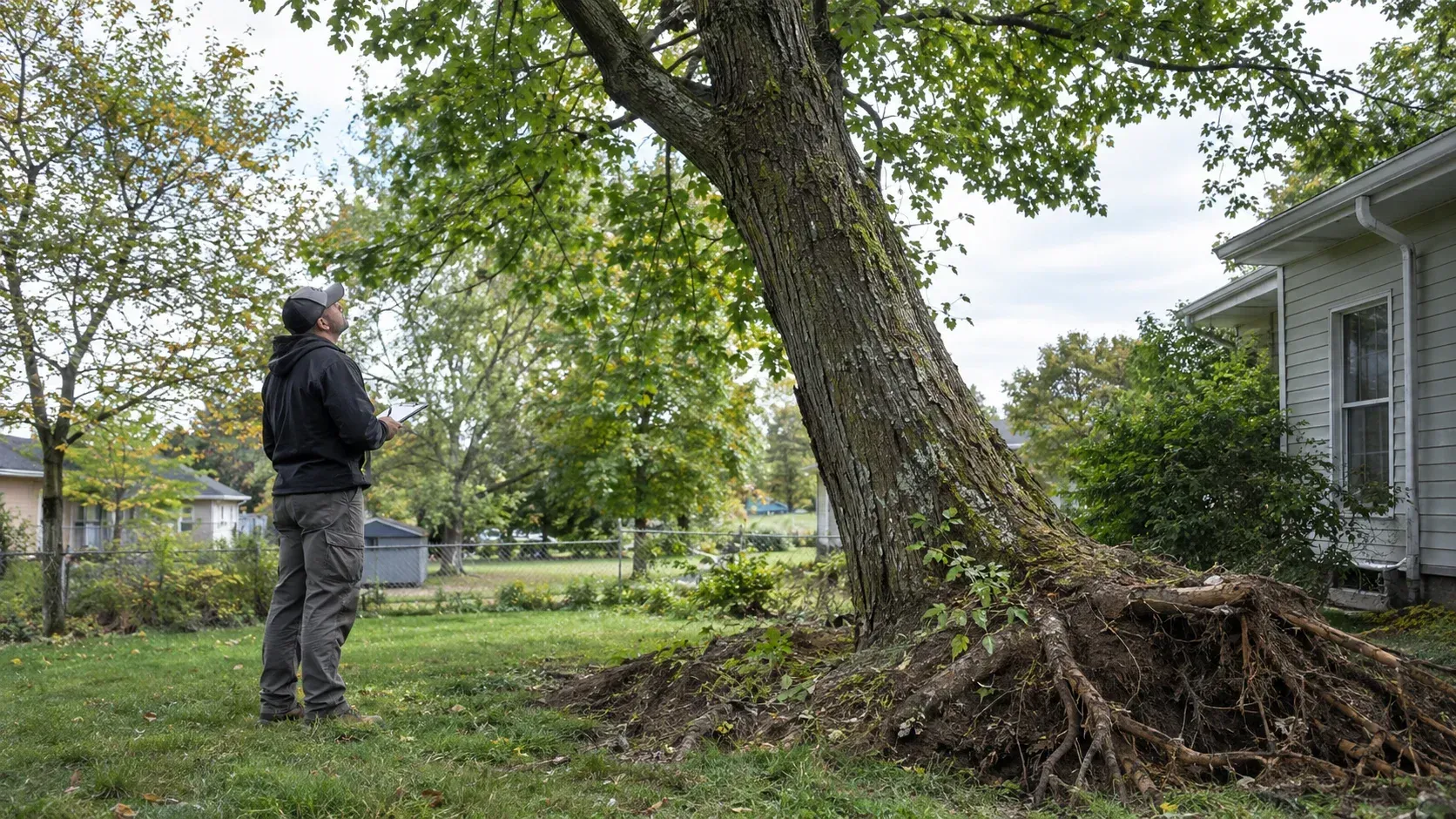
Old bad cuts are not fixable in the sense of undoing them. What they do tell you is the condition of the tree and where its vulnerabilities are, which matters for any decision about it now.
Conclusion
Between the two mistakes, the flush cut is the more damaging, because it removes the collar the tree needs to wall the wound off and turns a branch wound into a trunk wound. The stub is untidy and it delays closure, but it usually leaves the tree's defenses intact.
The real answer is the cut that does neither: just outside the collar, angled with the branch, small as the situation allows, and left unpainted. As the trimming page on this site puts it, improper trimming can damage trees permanently, and the difference between permanent damage and a wound that closes in two seasons is frequently an inch of placement.
Have Pruning Done With Proper Collar Cuts
If you have pruning to do, or you have inherited a tree that was badly cut in the past, it is worth having someone look at it who knows where the cuts belong. We inspect the tree's condition and growth pattern before trimming, prune selectively to strengthen structure and balance, and work to maintain the tree's natural shape.
Arbor Barber Tree Service is locally owned and operated in Lakeville, with certified arborists and over 20 years of experience, safety-focused and fully insured. Where pruning turns into a broader health question, looking at what the wood behind the cut is doing is part of the same visit.
We serve Lakeville, Apple Valley, Burnsville, Farmington and Rosemount. Call (612) 703-0175.
Frequently Asked Questions
What is a branch collar and how do I find it?
It is the swollen ring of trunk tissue at the base of a branch, visible as a shoulder where the branch meets the stem. Paired with the branch bark ridge on the upper side, it marks exactly where a pruning cut should sit.
Is a flush cut ever correct?
No. Cutting flush to the trunk removes the collar, enlarges the wound and cuts into stem tissue rather than branch tissue. It looks neater immediately and is worse in every respect afterward, because the tree cannot regrow the collar.
Should I seal a pruning cut with wound paint?
No. Wound dressings are no longer recommended, since they do not prevent decay and can hold moisture against the wound. A properly placed cut left open to the air closes better than a sealed one.
How big a branch can be removed without hurting the tree?
Smaller is always better, because closure grows in from the wound edges at a limited rate. A small wound closes in a season or two, while a large one may take many years or never close, which is the argument for pruning early rather than late.
Can a tree recover from old flush cuts?
It cannot undo them, since the collar does not grow back. What it can do is wall off and close what it is able to. Old flush cuts are worth having assessed, because they indicate where decay may have entered the trunk.
Recent Posts