Introduction
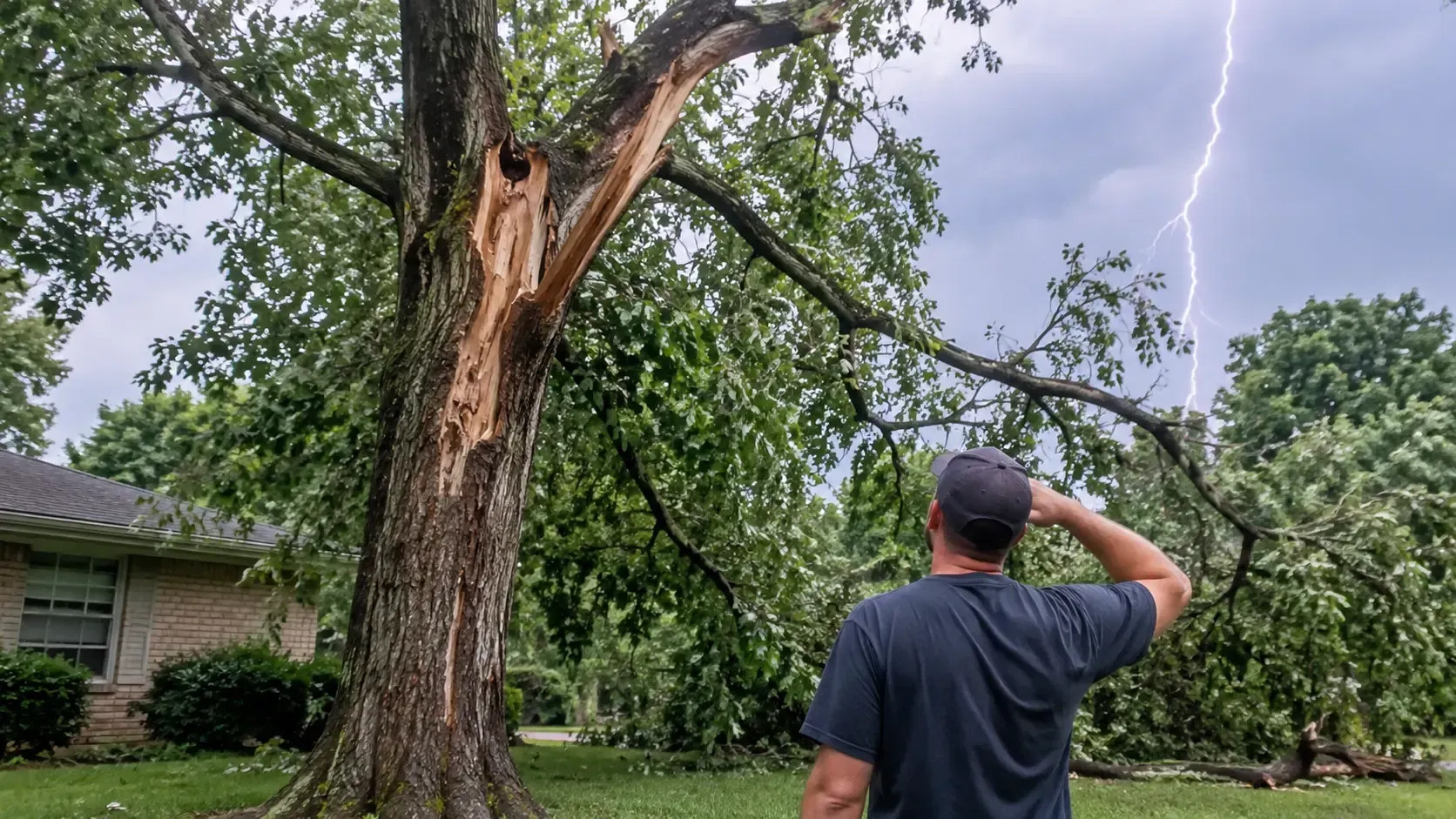
A lightning-struck tree has to come down when the trunk is split open, when a bark seam runs most of its height, or when limbs have been loosened enough to fall on their own, because a yard
around Lakeville with a cracked oak over the driveway is a hazard this week whether or not the tree is alive next year.
Those are structural problems, not health problems, and that distinction is the whole article. Most people ask us whether the tree will survive. The more useful question is whether anything is now loose above your head.
What a Lightning Strike Does Inside the Tree
It follows the water, and the water is just under the bark.
A tree is not a solid conductor. The wettest, most conductive part of it is the thin living layer between the bark and the wood, which carries sap. When a strike hits, most of the current runs through that layer on its way to the ground.
The water in those cells turns to steam almost instantly. Steam needs far more room than water does, and the only direction it can go is out.
That is why bark blows off a struck tree, sometimes in strips, sometimes in slabs thrown surprising distances across a yard.
So the damage is not a burned hole through the middle. It is a destroyed strip of living tissue running down the outside of the trunk, and how wide that strip is decides nearly everything that happens next.
The Visible Signs Right After the Strike
Go look in daylight, from a safe distance, and do not touch the tree.
What tends to show up immediately:
- A vertical seam of missing or blown-off bark, often running from high in the canopy toward the base, sometimes with a spiral twist to it
- Bark fragments and wood splinters on the ground in a scatter around the trunk
- A split or crack in the trunk itself, which is a different and more serious finding than missing bark
- Scorching or charring along the seam or at branch unions
- Blown-apart limb attachments, where a branch has been loosened at the union without falling yet
- Soil disturbed or lifted near the base, where the current exited into the ground
One safety note before anything else. A strike can damage overhead service lines and anything the tree is touching.
If the tree is near power lines, or a limb is resting on a line, nobody approaches it. That is a call to the utility first and a tree crew second.
Why Some Lightning-Struck Trees Live and Others Die
Because the strike usually damages one side, and the surviving side decides the outcome.
The living layer that moves water and sugar wraps the whole trunk. A strike that destroys a narrow strip of it leaves the rest of the circumference intact, and the tree keeps running on what is left. That is the tree you see standing twenty years later with an old scar up one side.
A strike that destroys a wide band, or that runs down two or three sides, cuts the connection between the roots and the canopy badly enough that the tree starves slowly over the following seasons.
Nobody can read the width of that damage reliably on day one, and we are not going to pretend otherwise.
Anyone who tells you with certainty on the first afternoon that a struck tree is doomed, or that it is fine, is guessing. Species matters, size matters, the tree's condition before the strike matters, and so does whether it was already dealing with
internal decay checks worth of problems before the storm arrived.
The Damage You Cannot See From the Ground
Three kinds, and they are the reason a struck tree gets looked at properly rather than judged from a kitchen window.
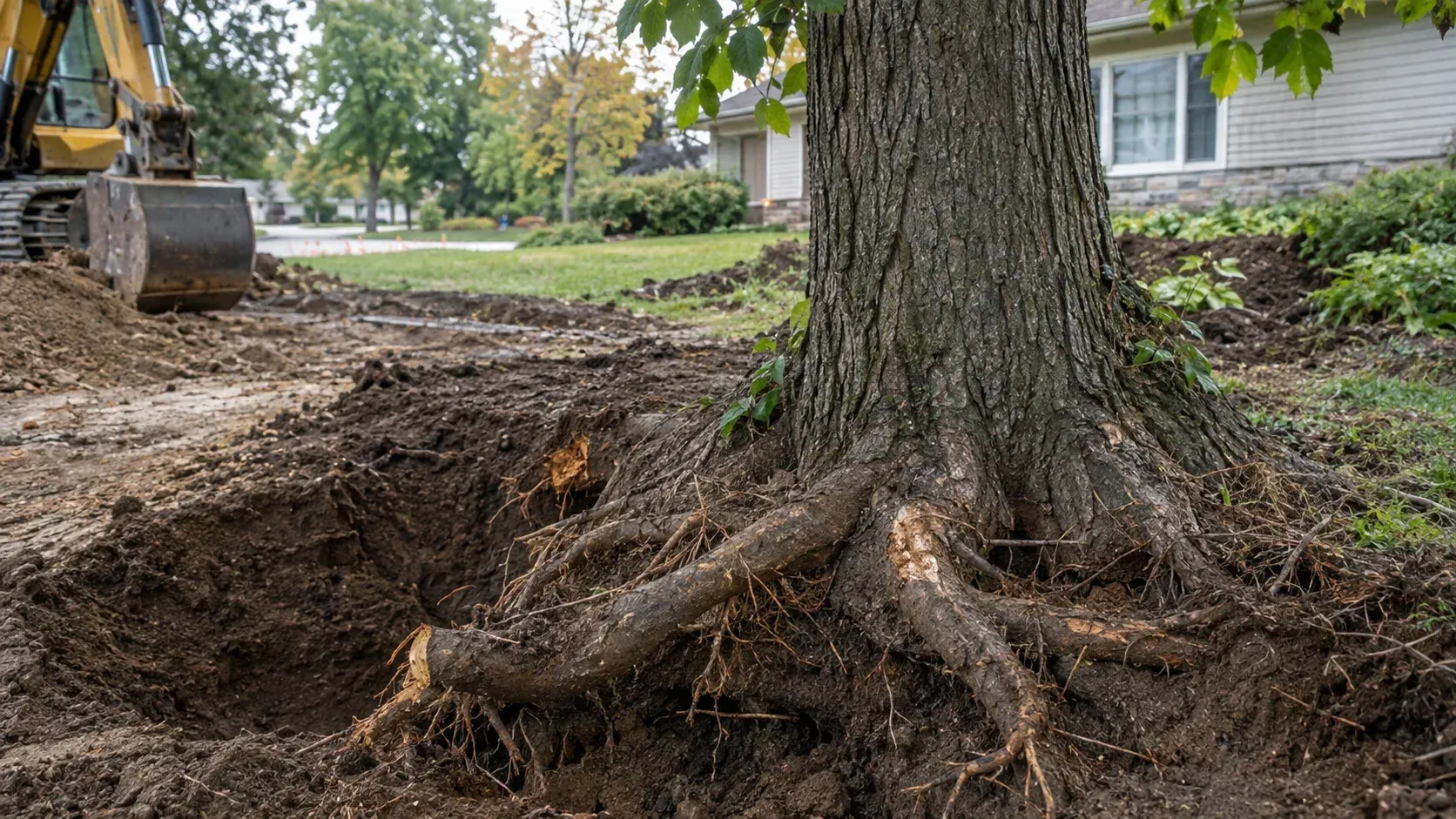
- Root damage where the current exited. The current has to go somewhere, and it goes into the soil through the roots. Damage down there is invisible and it affects both stability and the tree's ability to recover.
- Internal cracking. The same steam pressure that blows bark off can split wood inside the trunk and major limbs without opening a gap you can see. A limb can look attached and be holding by very little.
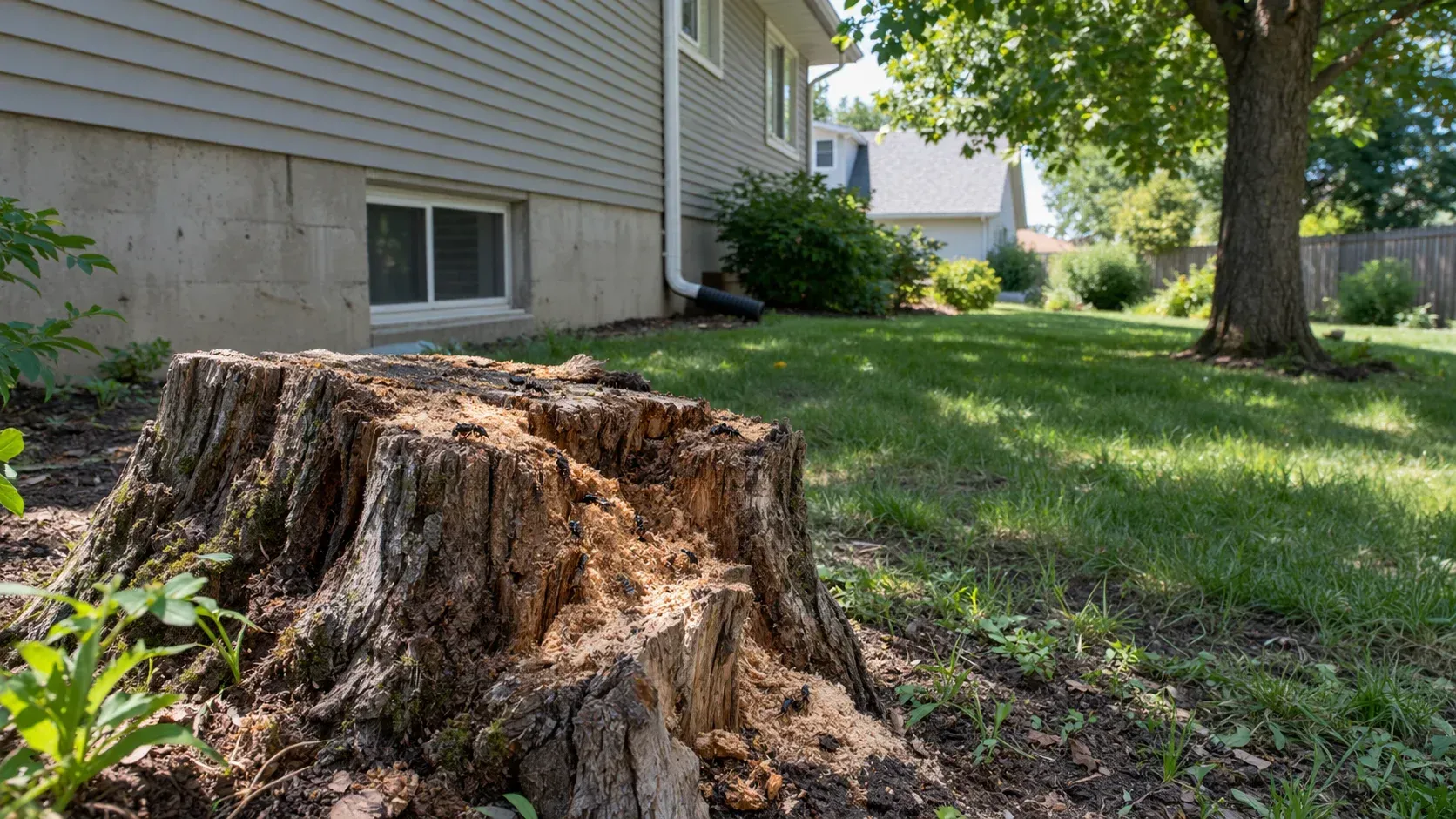
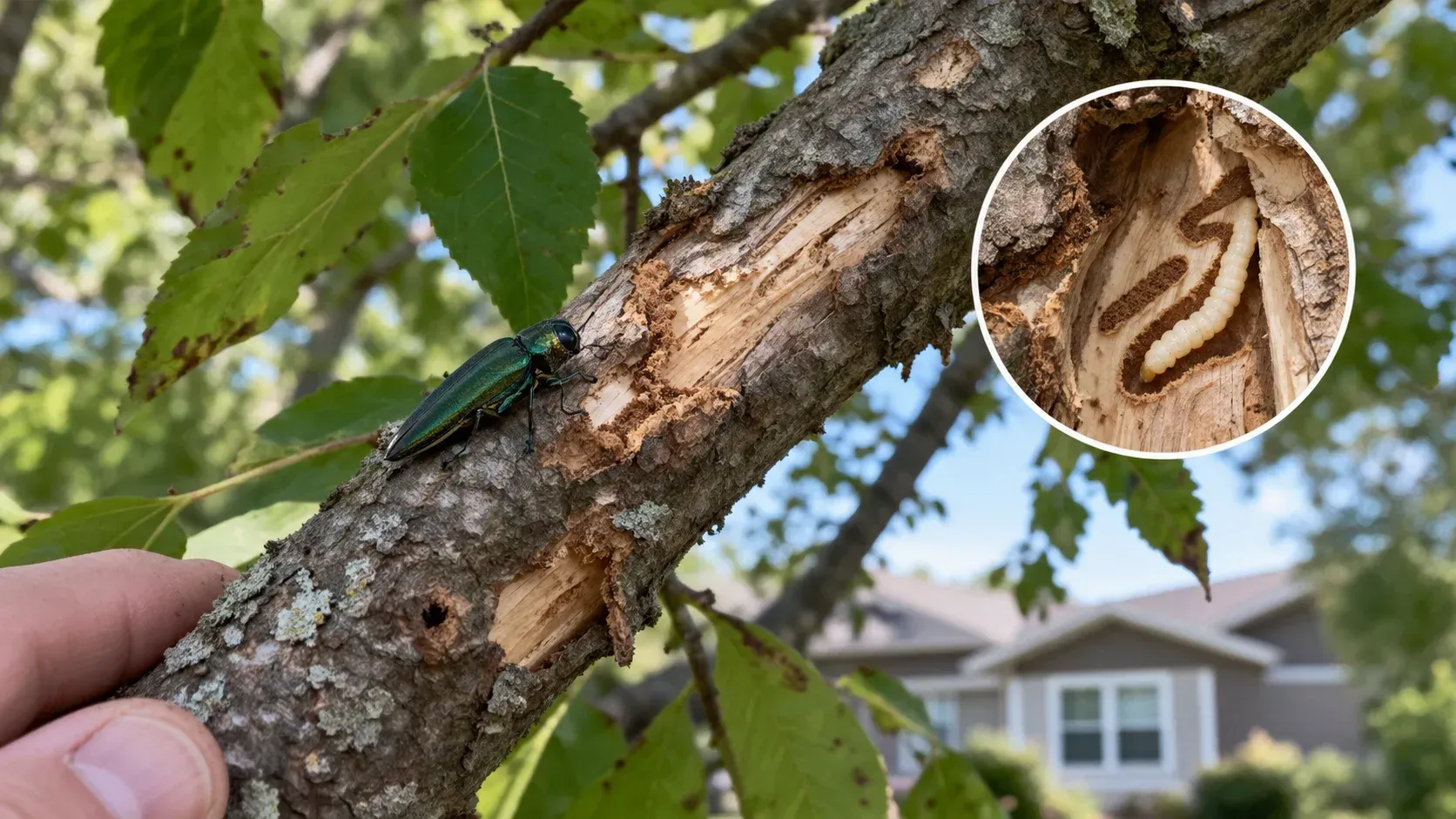
- An open wound the size of the seam. Everything that normally cannot get past intact bark now has a doorway: decay fungi, boring insects, water. That is a slow process, not an emergency, but it is why a struck tree deserves a look again next season.
On the last one, a word about the thing people reach for.
Do not paint, seal or tar the wound. Wound dressings do not help a tree compartmentalize damage and they can hold moisture against injured tissue. Leave it open.
What to Watch For in the Weeks After a Strike
The tree will tell you more over a month than it will on the first day.
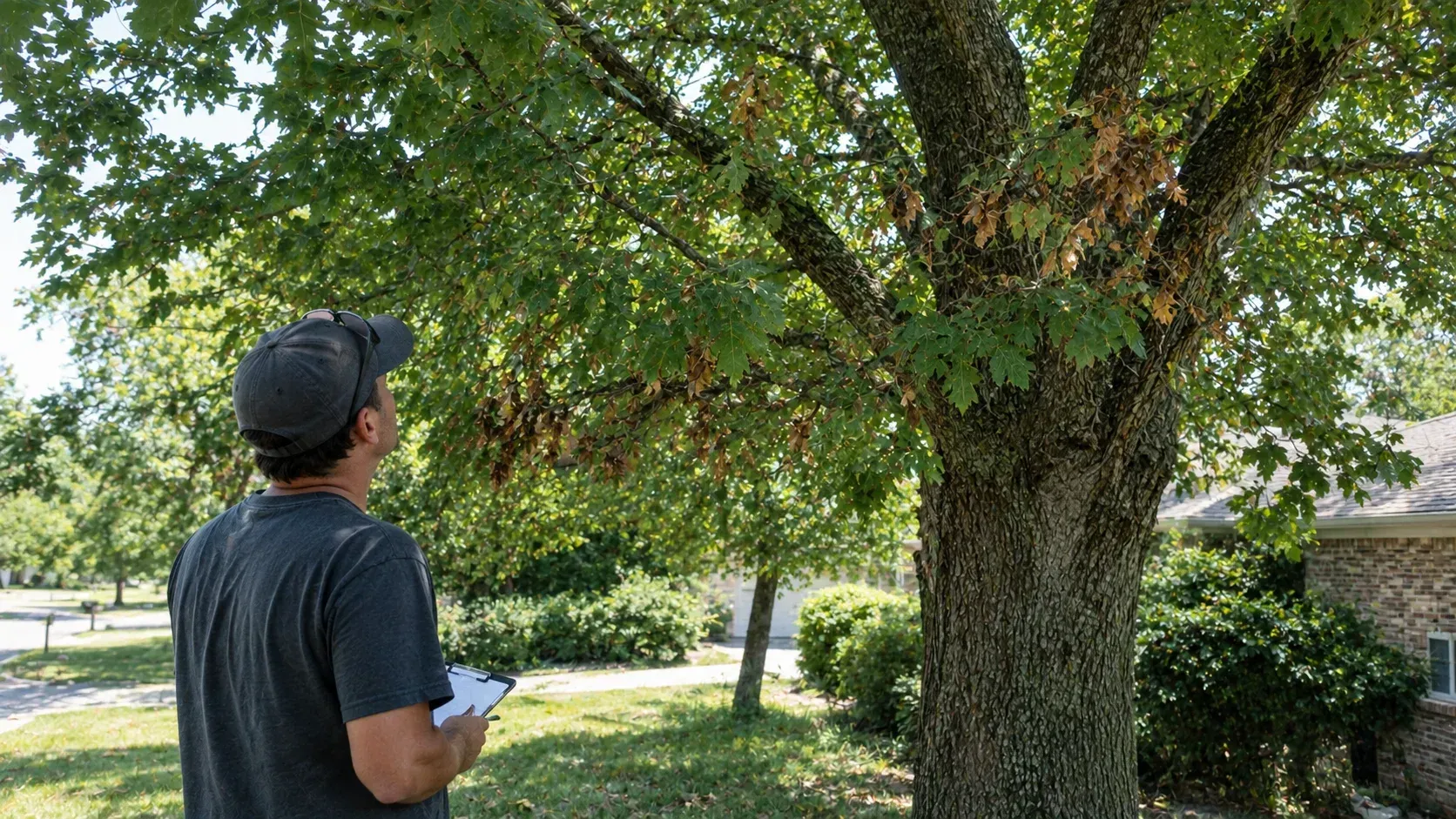
- Sudden wilting or leaf scorch, especially on one side or in one section of the canopy
- Leaves browning and holding on rather than dropping cleanly
- Dieback starting at the branch tips and working inward
- New bark cracking or peeling along the edges of the original seam as damaged tissue dries
- Limbs shifting position, which is the one to act on immediately rather than monitor
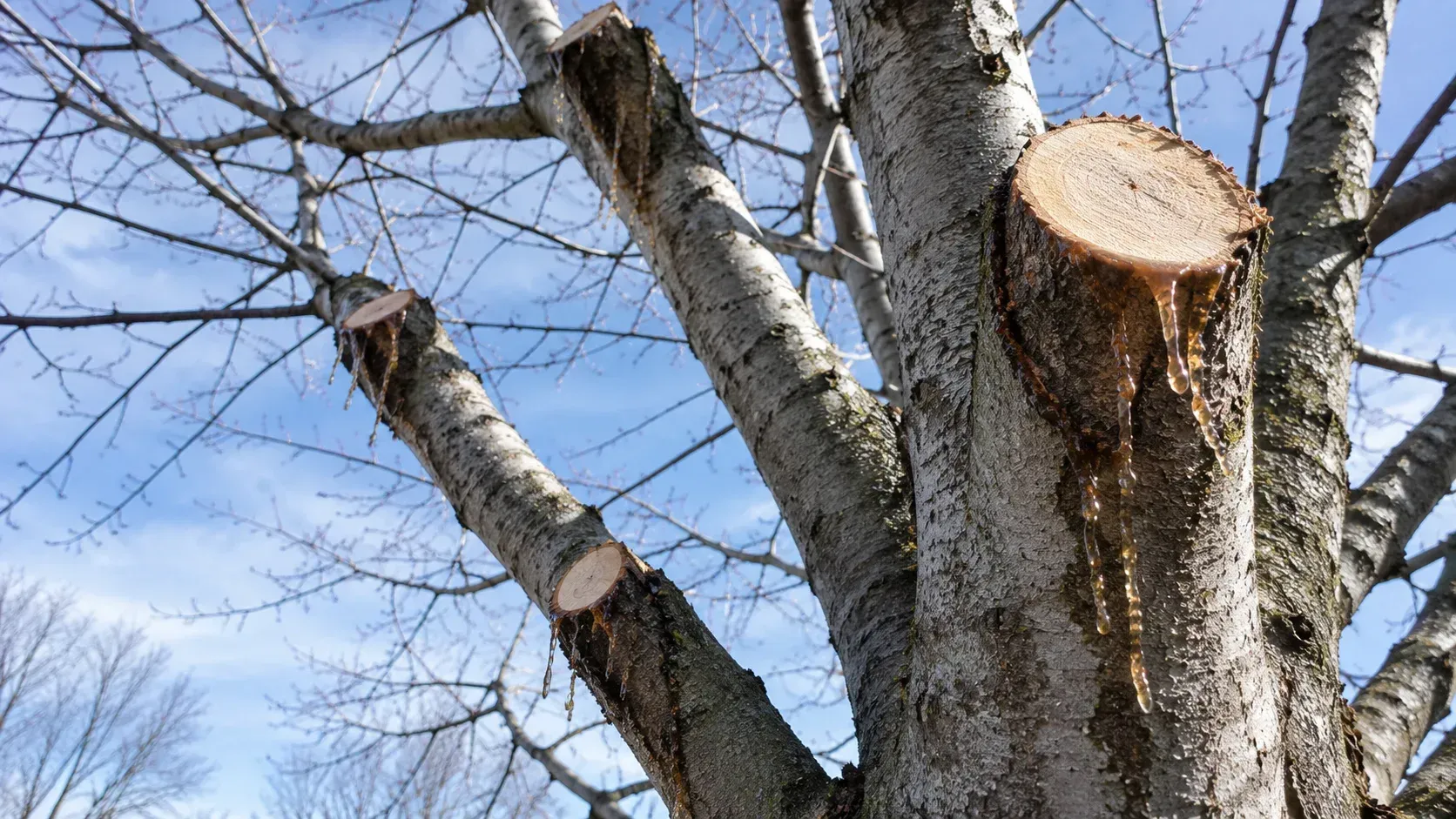
- Sap bleeding or insect activity concentrated at the wound
A lightning-struck tree that leafs out normally the following spring and holds a full canopy through summer has told you something real. One that comes back thin, late, or only on part of the crown has told you something too, and that is usually when the removal conversation genuinely starts.
When a Lightning-Struck Tree Has to Come Down
Six findings, and the first three are not about whether the tree is alive.
- The trunk is split. A trunk cracked through is a structural failure already in progress, not a wound that heals.
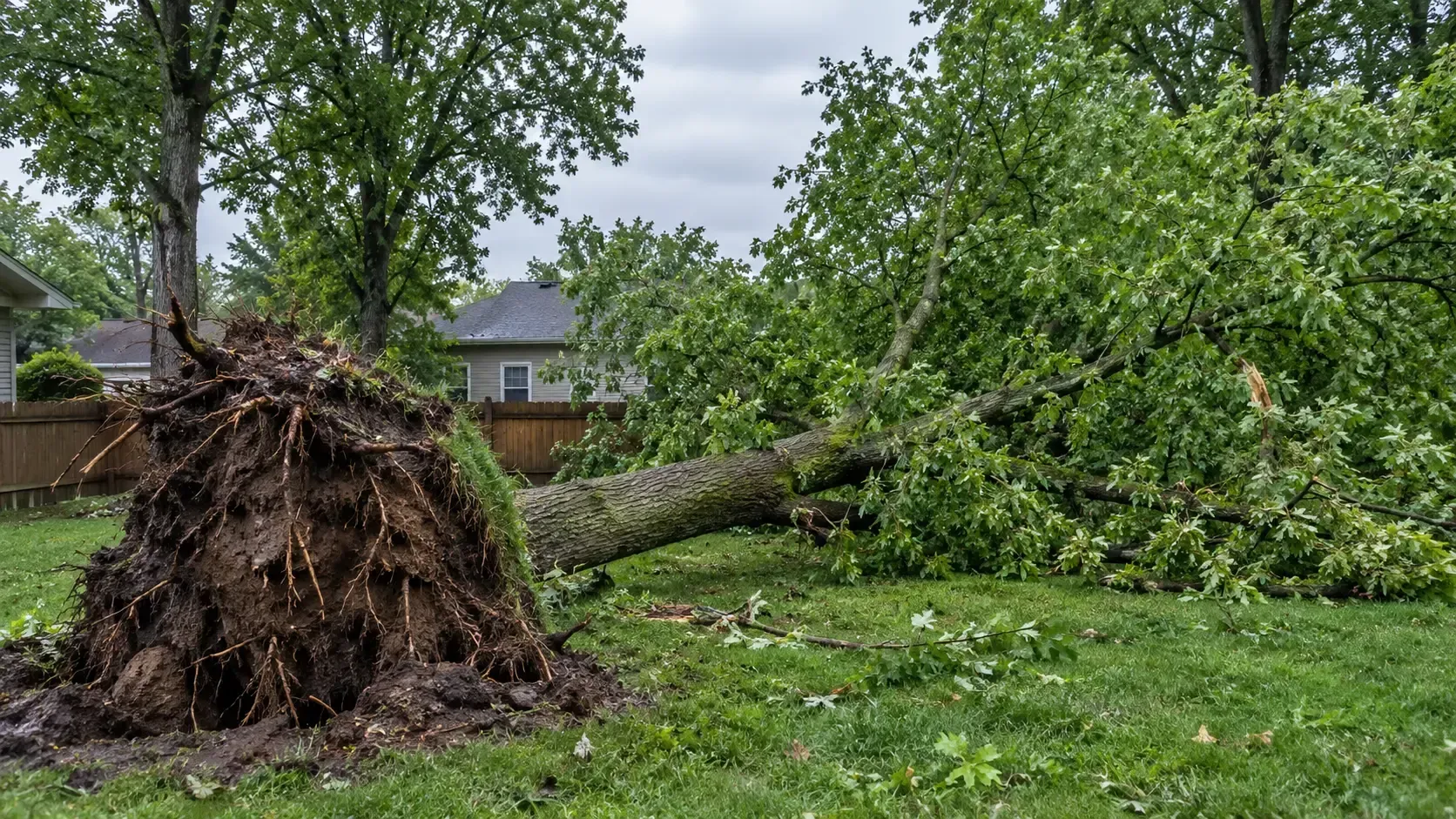
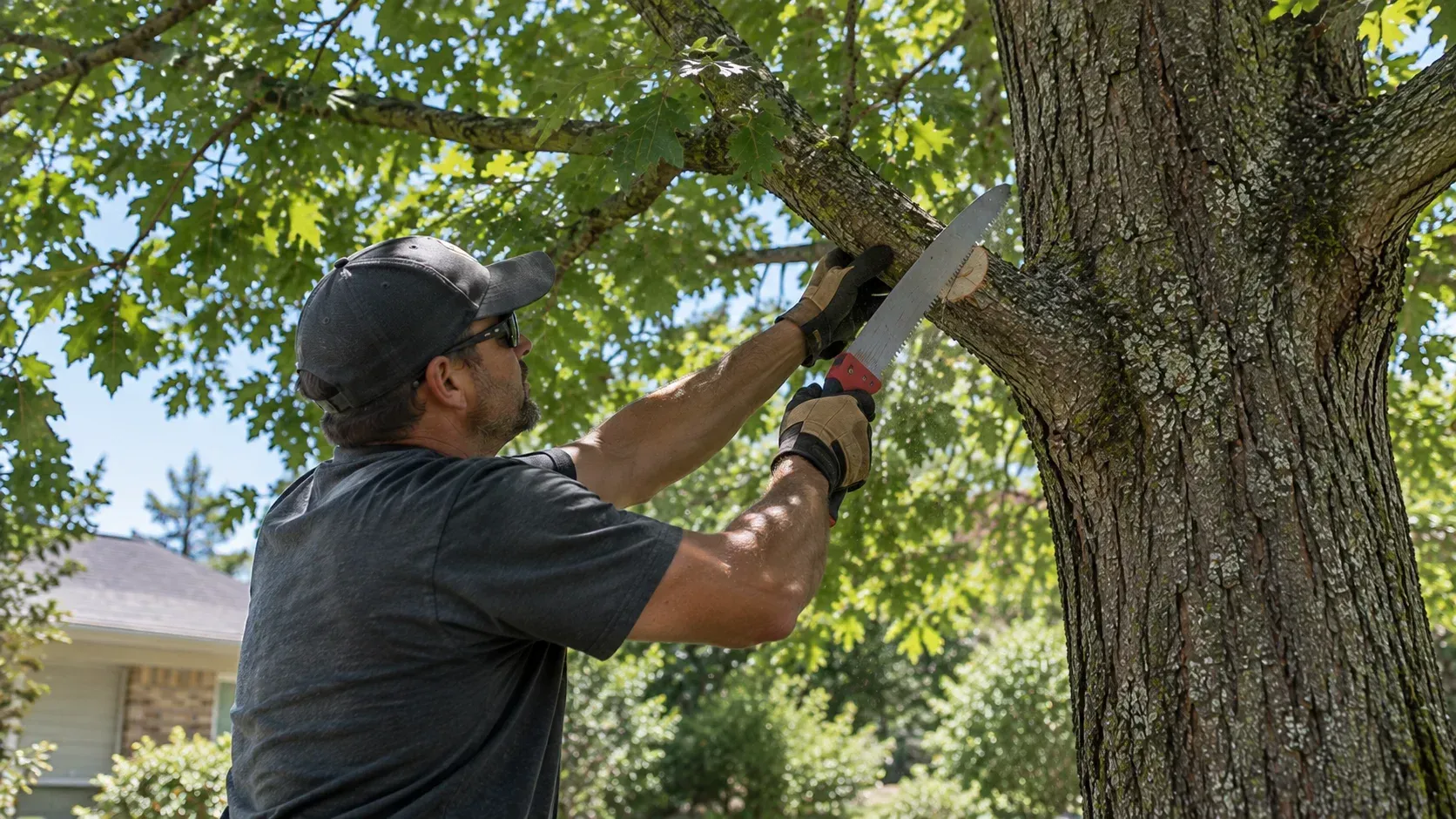
- Limbs are loose, hanging or shifted at their attachments. This is the most common reason a struck tree is an emergency, and it has nothing to do with the tree's health. The same logic applies to
limbs left hanging after any storm.
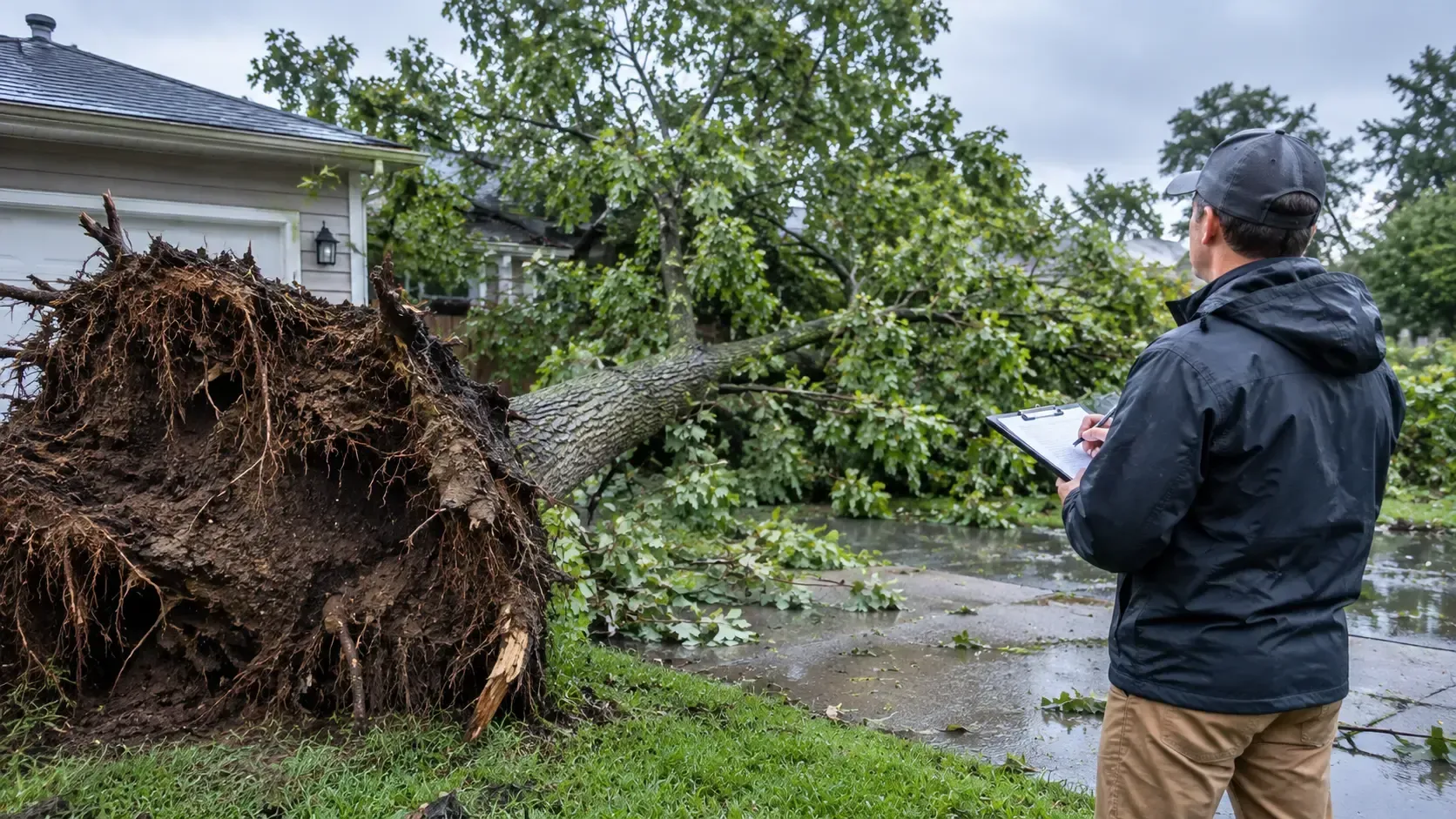
- The tree is leaning differently than it was, or the soil at the base has lifted, which points to root-plate damage.
- The bark seam runs most of the height on a wide band, or on more than one side.
- The canopy fails to leaf out properly the next spring, or dies back progressively over a season.
- The tree stands over something that matters, which changes the acceptable amount of uncertainty rather than the tree's condition.
Any of the first three is a reason for
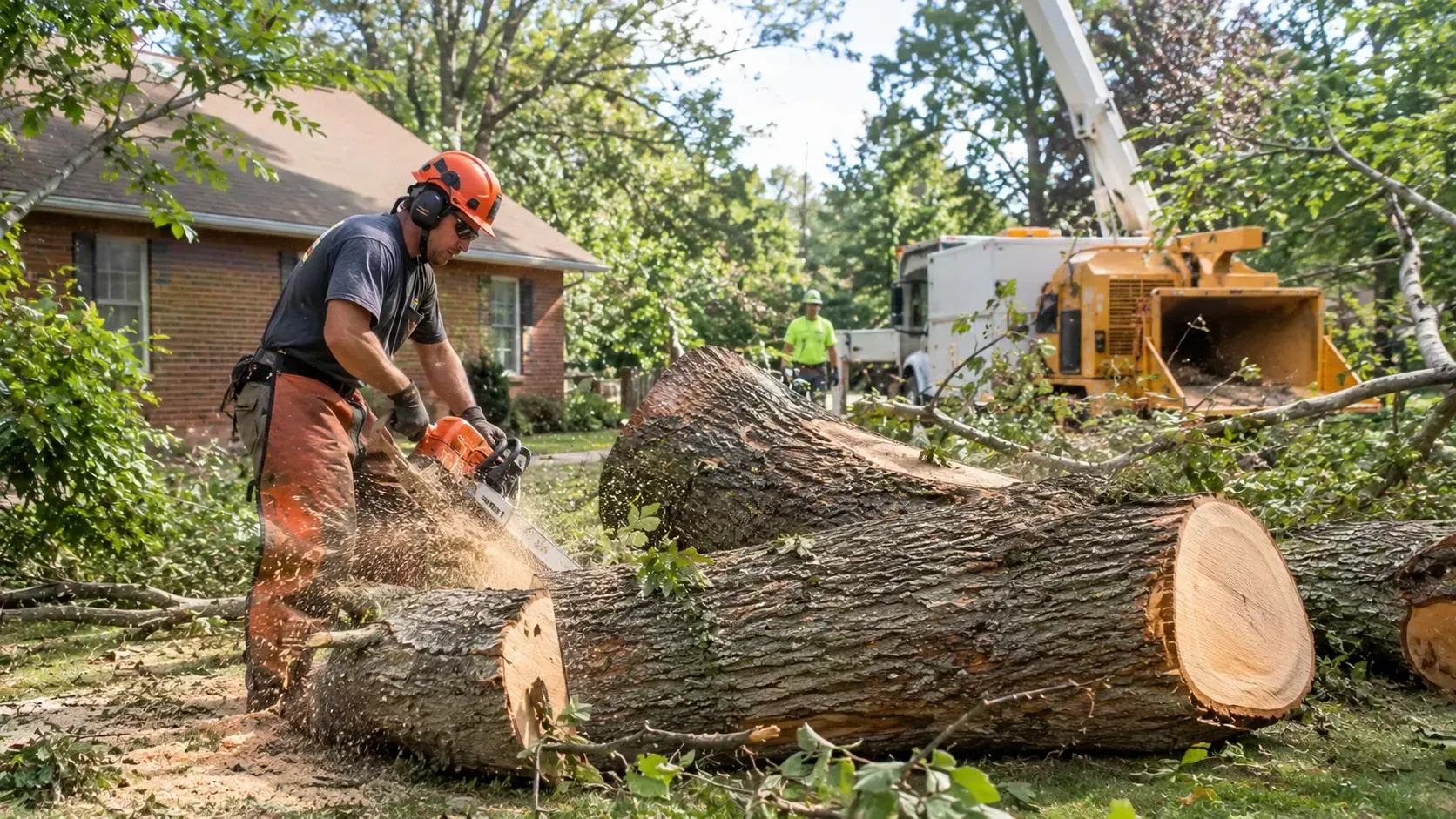
a controlled takedown soon. The last three are reasons to watch, document and reassess, which is cheaper for you and more honest from us.
Conclusion
Walk the yard the morning after a storm and look up before you look at the trunk, because a loose limb will hurt you long before a dying tree will. If the bark is blown off one side and everything above is solid, give the tree a season to answer the question itself. If the trunk is cracked or anything overhead has moved, that is not a wait-and-see situation, and it does not become one by being ignored for a month.
Get a Hazard Assessment After a Strike
A lightning strike leaves two separate problems, and only one of them is urgent. We will look at what is loose overhead, check the trunk and the base, and tell you plainly whether this is a removal now, a watch-and-reassess, or a tree that is going to be fine. Arbor Barber Tree Service has over 20 years of experience, certified arborists, and is safety-focused and fully insured, with 24/7 availability for a
hazard assessment when something is already down or threatening to come down. Call (612) 703-0175 or
reach our team. We serve Lakeville, Apple Valley, Burnsville, Farmington, Rosemount, Eagan, Savage, Prior Lake, Shakopee, Inver Grove Heights, Mendota Heights and Empire Township.