Introduction
A large tree is taken down in pieces from the top, not felled in one go, which is why a removal
in Apple Valley takes a crew most of a day on a tree that a single cut at the base would theoretically drop in two seconds.
Most homeowners have only ever seen a tree fall in a video. The real version is slower, quieter and much more about rope than about chainsaws.
Why Big Trees Come Down in Pieces
Because there is usually nowhere for a full-height tree to land.
Felling a tree whole needs a clear zone roughly as long as the tree is tall, plus margin, in a direction the tree is willing to go. On open acreage that sometimes exists. In a yard with a house on one side, a fence on another, a garage behind and a neighbor's shed just past that, it does not.
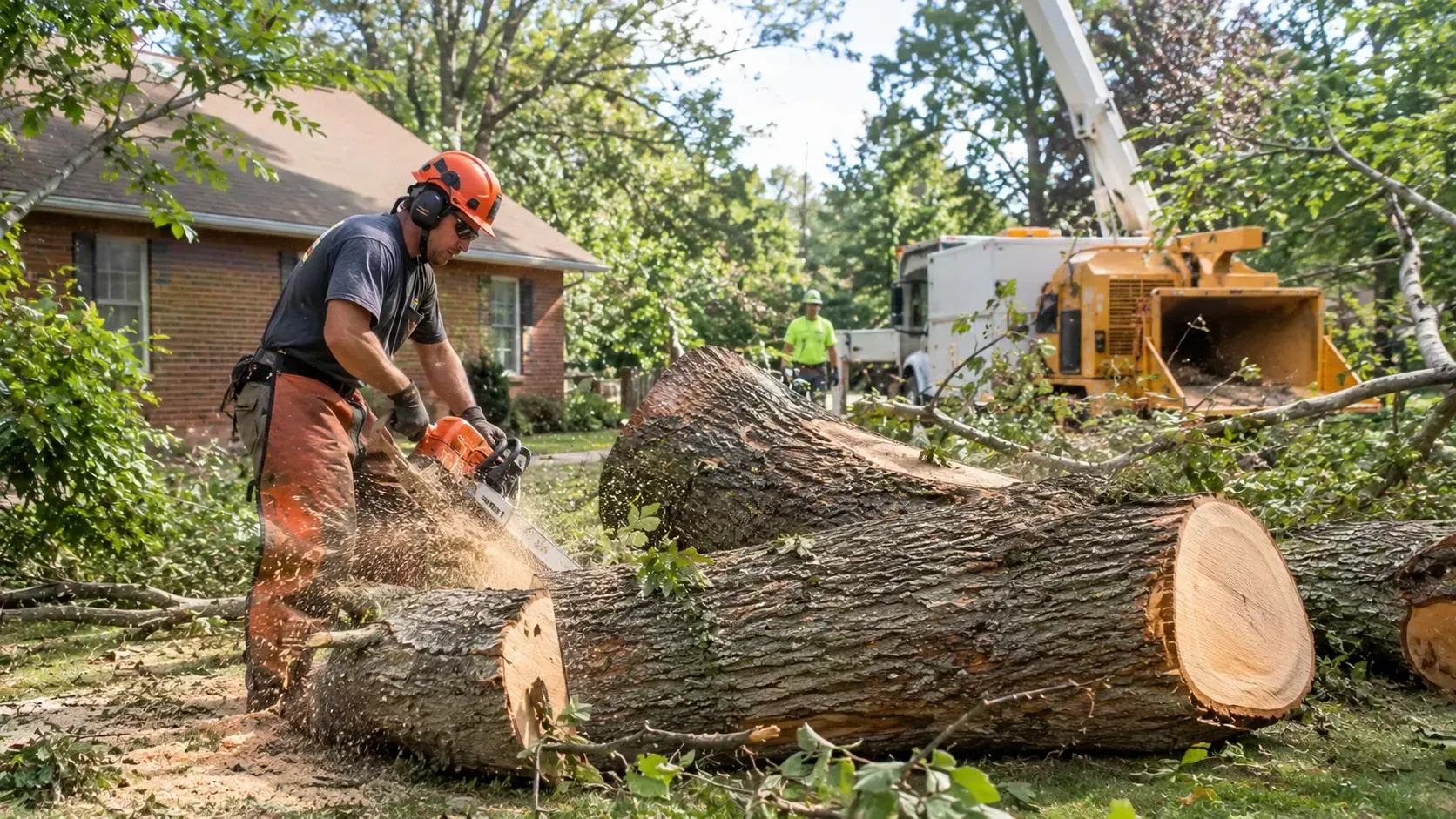
So the tree is reduced instead. Limbs come off, then the top, then the trunk in sections, each piece small enough to be controlled on the way down.
Nothing is allowed to simply fall. Either it drops into a cleared zone directly below, or it is tied off and lowered.
That is the part worth understanding before you compare quotes for a large tree removal. A price difference between two crews is often a difference in method, and a method that needs less time usually needs more room than your yard has.
Before the First Cut
This is the longest part of the job and nobody takes a photo of it.
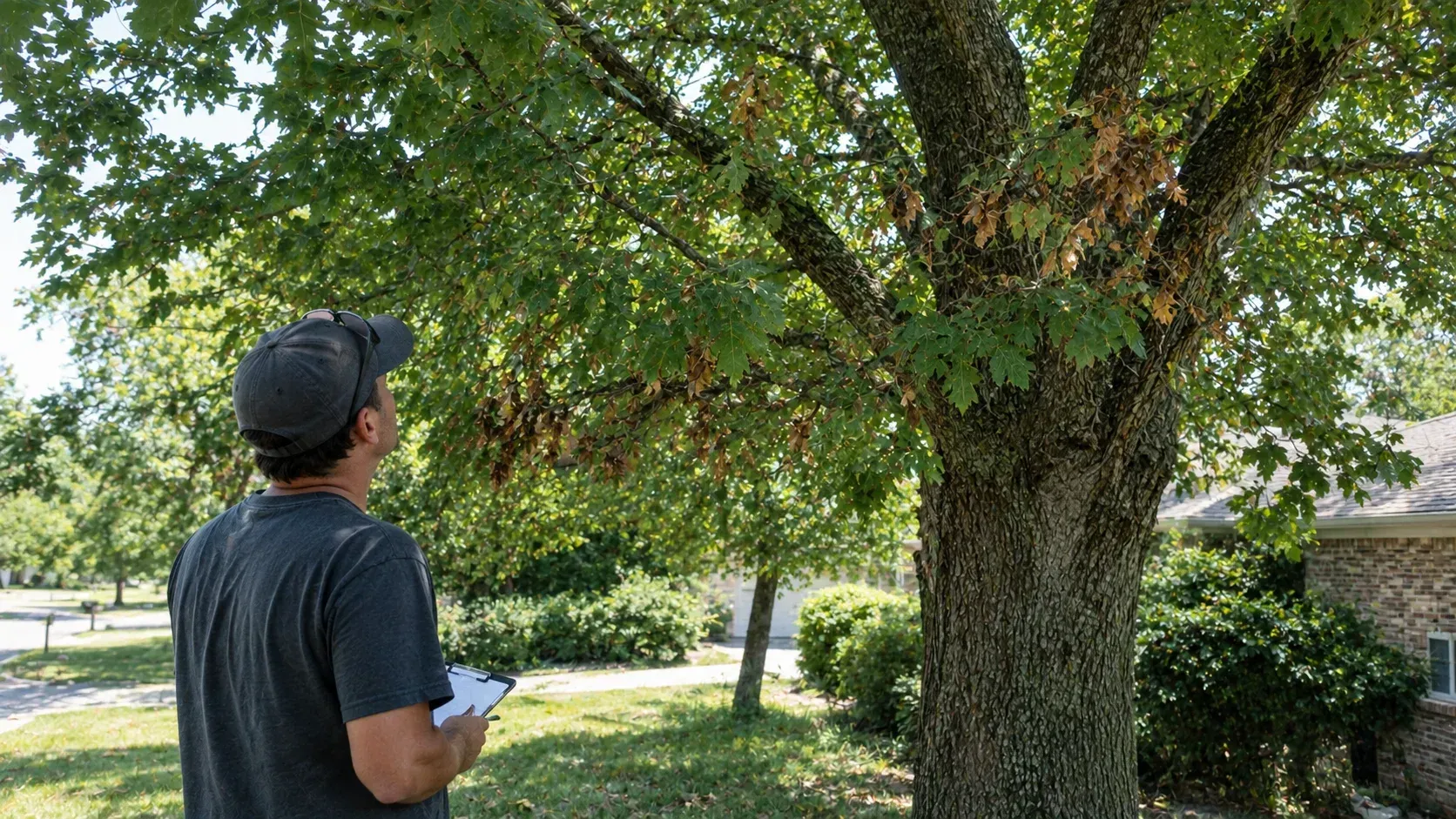
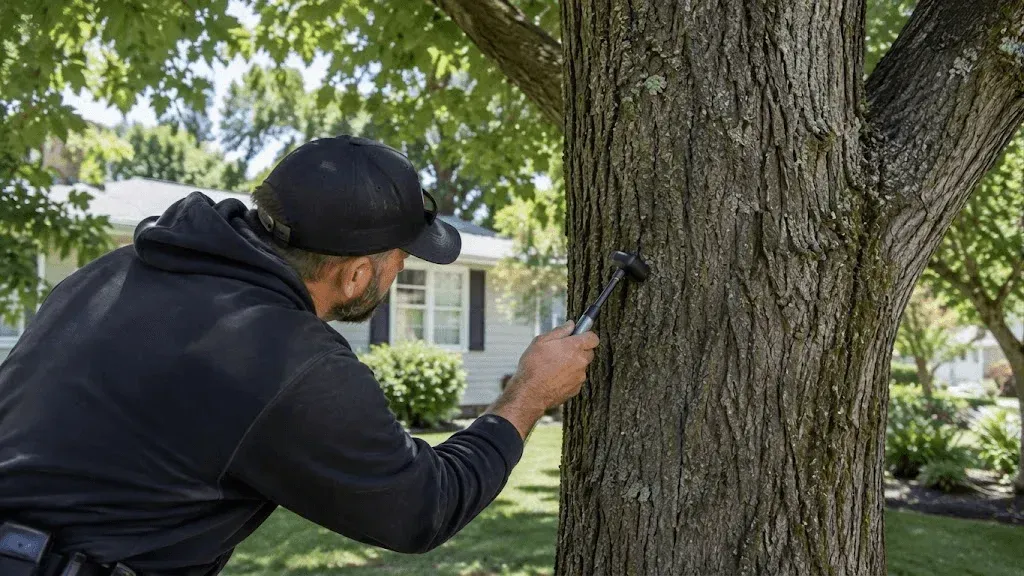
Our own process starts by assessing the tree and the surrounding area to determine the safest removal approach, and in practice that means working through:
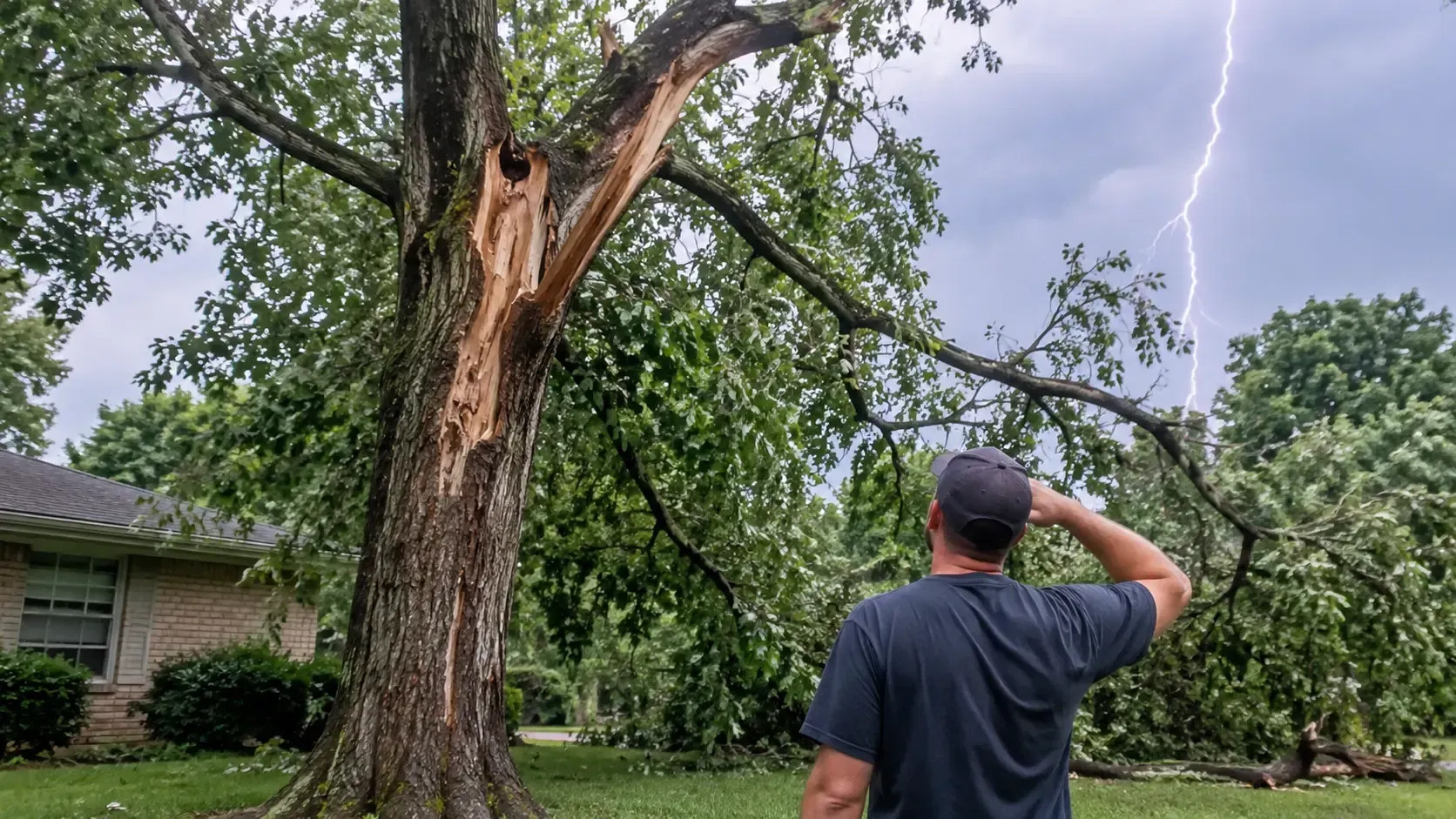
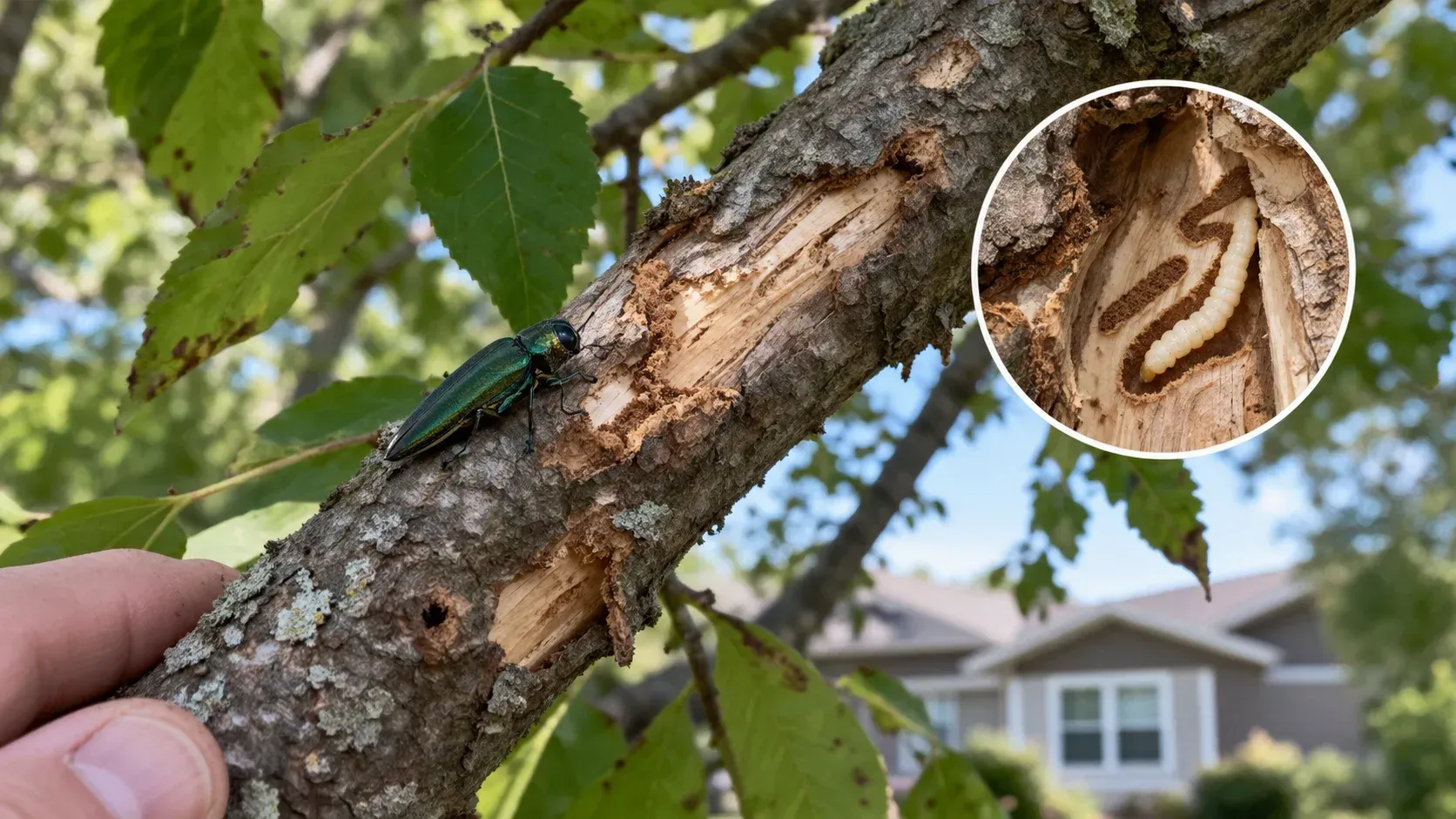
- The tree's condition. Dead wood, decay and cracks change what is safe to climb, what will hold a rope, and whether anyone goes up the tree at all.
- What is overhead. Power lines, service drops and anything else the tree is near. This is checked before the first cut, every time, with no exceptions.
- What is underneath. Fence lines, sheds, septic, irrigation, the driveway, the neighbor's landscaping, and where equipment can safely sit.
- The drop zone. Where pieces can land without damaging anything, and how big that area actually is.
- The escape routes. Where everyone on the ground stands, and where they go if something moves unexpectedly.
- Access and egress for the wood. Getting a tree down is half the job. Getting it off the property is the other half.
Decisions about whether a tree should come down at all happen earlier than this, and that is a separate conversation. If you are still at the stage of
deciding to remove or keep a tree, the assessment is where that gets settled rather than on the morning the crew arrives.
Taking the Canopy Apart
Top down, outside in, smallest pieces first.
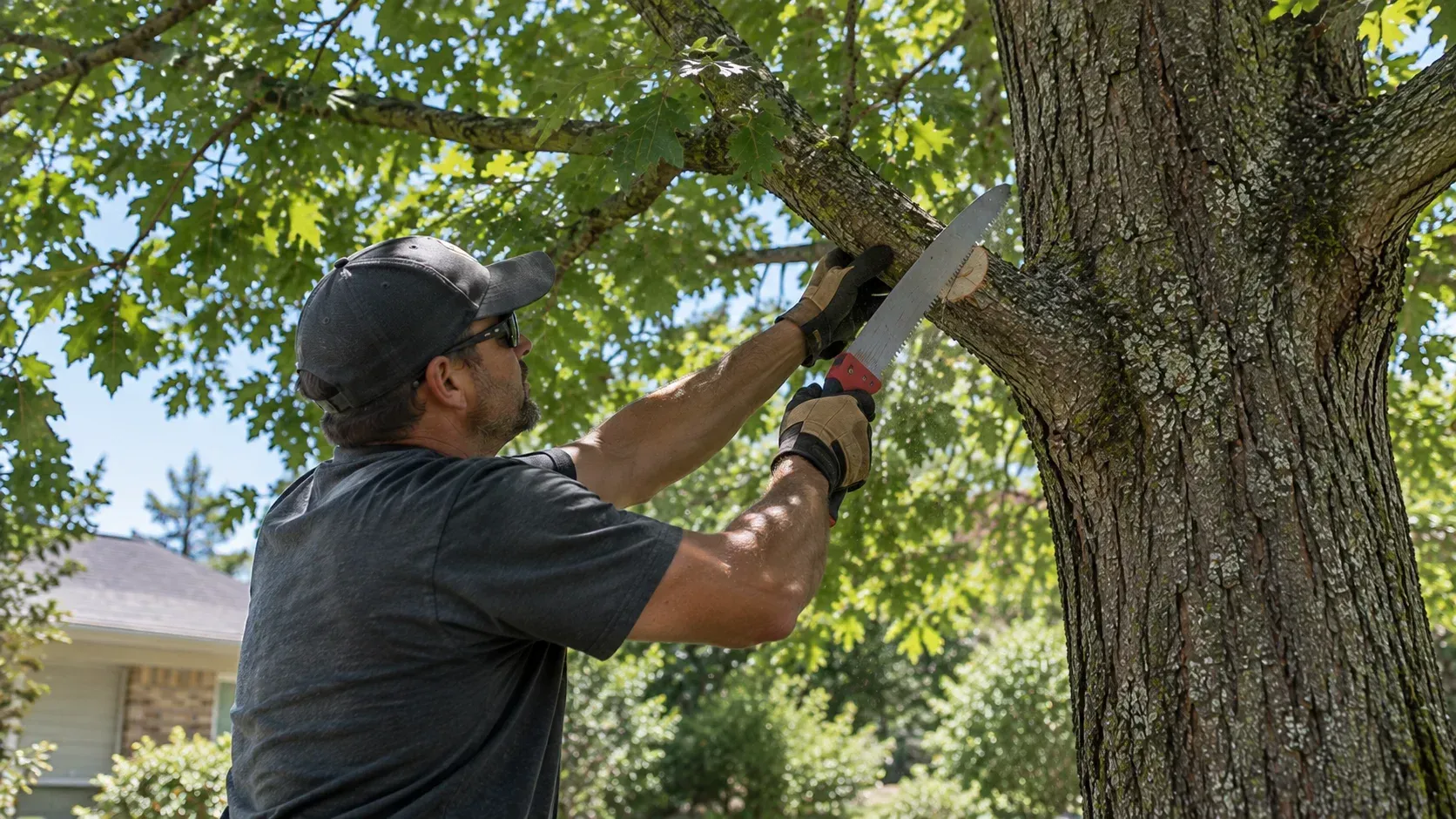
Someone gets into the tree, either by climbing it with rope and saddle or by being lifted to it, depending on access and on whether the tree is sound enough to climb. From there the canopy comes off in an order that keeps the tree balanced as it shrinks.
Two things are happening with every single cut:
- Rigging. A rope is attached above the cut and run through a friction device at the base, so that when the piece comes free it is lowered under control instead of dropping. This is why there is so much rope on the ground at a removal and why a ground crew matters as much as the climber.
- Sequencing. Limbs come off in an order that prevents the tree from becoming lopsided. Take too much off one side and you have changed the loading on a trunk that is still standing.
Over a lawn with nothing underneath, pieces are often just dropped into the clear zone, which is faster and perfectly safe. Over a patio or a fence, everything gets lowered. Most jobs are a mix, and that mix is decided during the assessment, not improvised.
The Trunk, Section by Section
Once the canopy is gone, what remains is a pole, and a pole is predictable. This is the straightforward half of a large tree removal.
The trunk is cut down in sections, working from the top, with each piece either dropped or lowered depending on what is below. As the stem gets shorter the pieces get heavier, because trunk wood is dense and a two-foot round of green hardwood is a great deal heavier than it looks.
When the remaining stem is short enough and the ground below is clear, the last section gets felled conventionally, with a notch cut on the falling side and a back cut behind it. That is the one moment in a large tree removal that looks like what people expect a tree removal to look like, and it is usually the final five minutes of a long day.
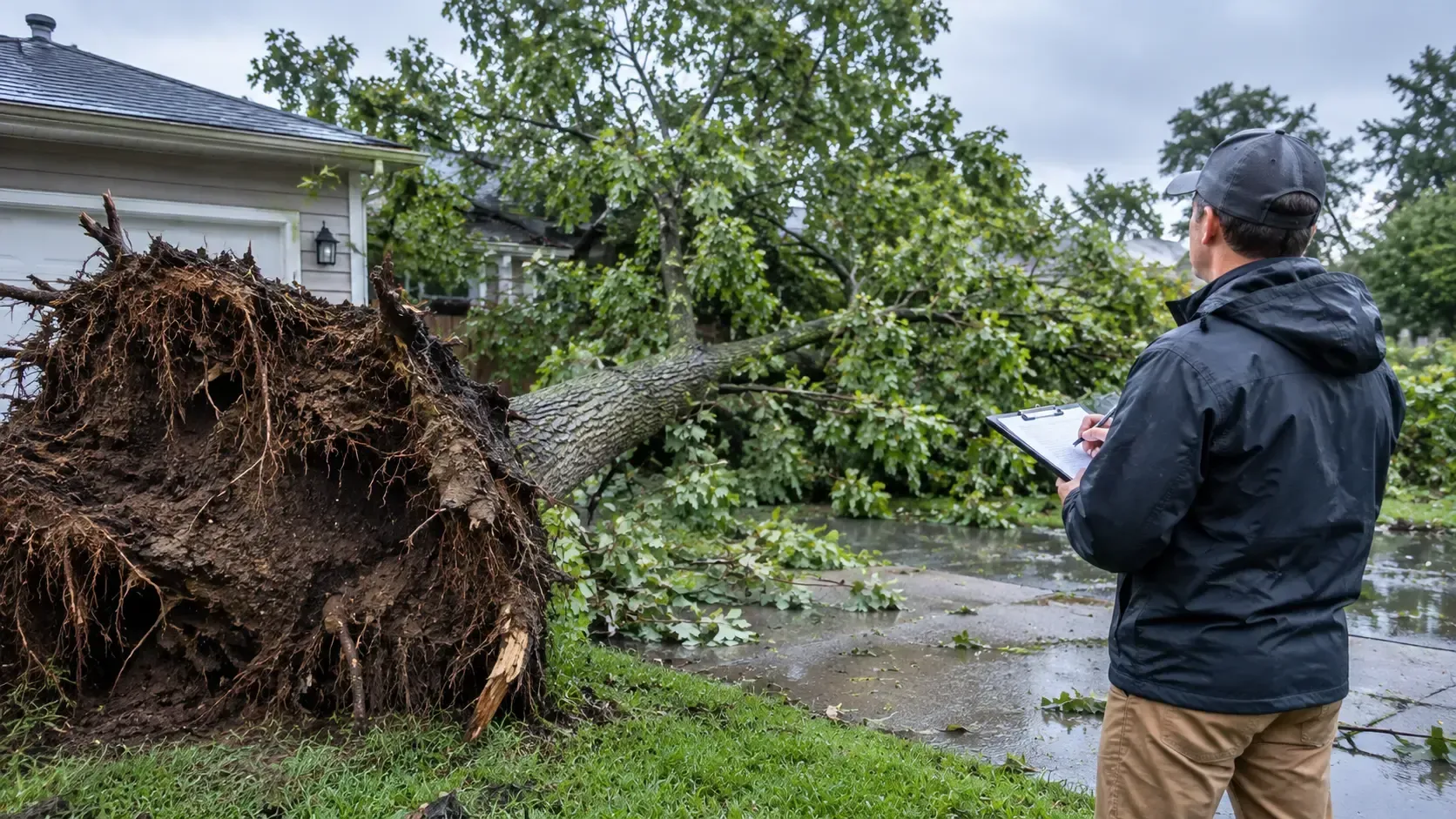
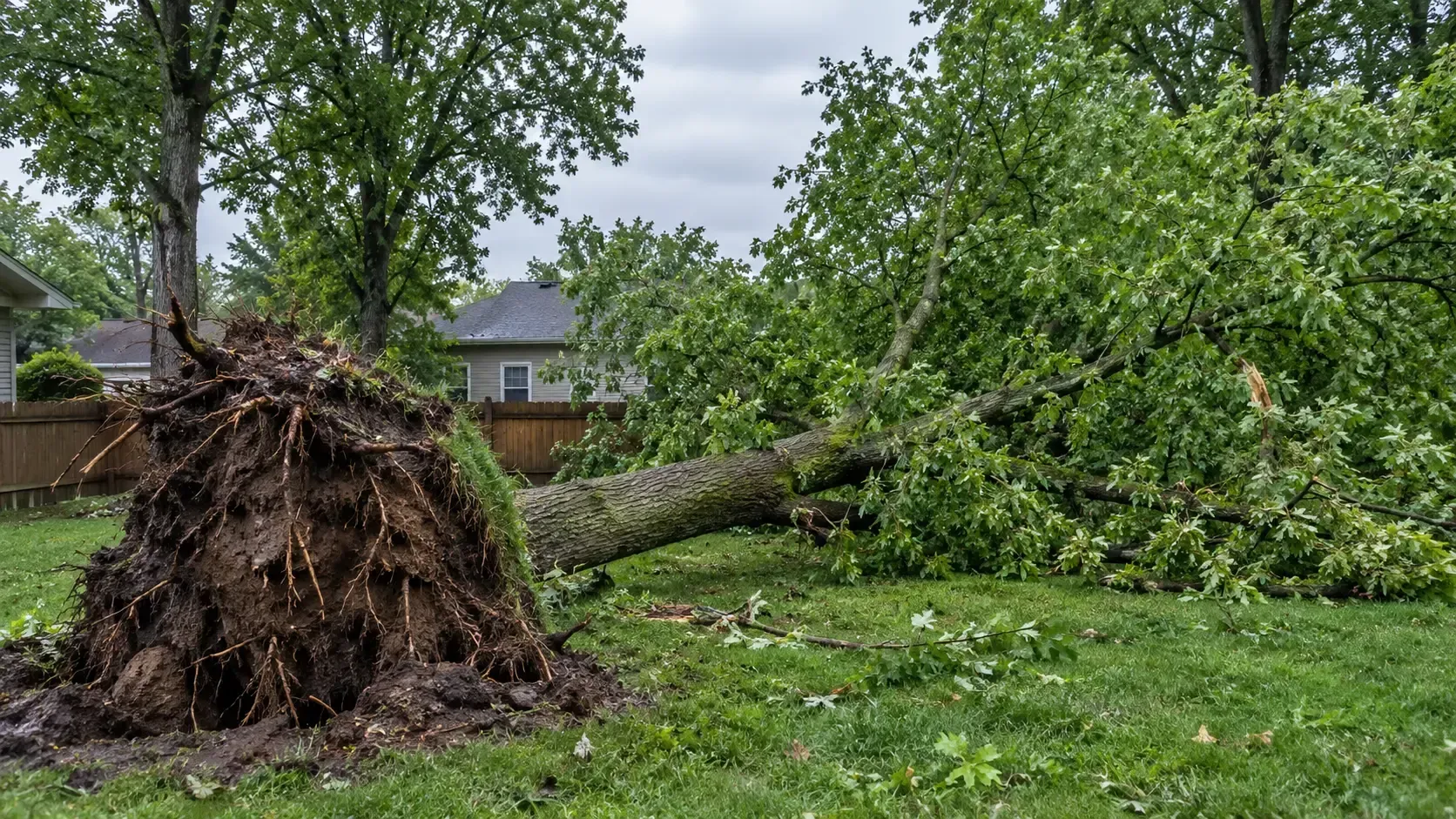
If the tree came down on its own in a storm, the sequence runs differently and more carefully, because a fallen or partly fallen tree is full of stored tension. That is
an emergency takedown rather than a planned one, and the cutting order is dictated by where the load is bound up.
What Cleanup Actually Includes
All debris cleared, property left clean. That is our standard and it is worth saying what it covers.
- Brush and limbs are chipped or loaded out.
- Trunk wood is cut into manageable rounds and removed, or left stacked if you want the firewood. Say so in advance, because it is a different plan for the day.
- The ground is raked and the site is cleared of the chips, sawdust and small debris that a removal scatters.
- Ruts and lawn impact are minimized by planning equipment placement during the assessment, which is the real reason that step takes so long.
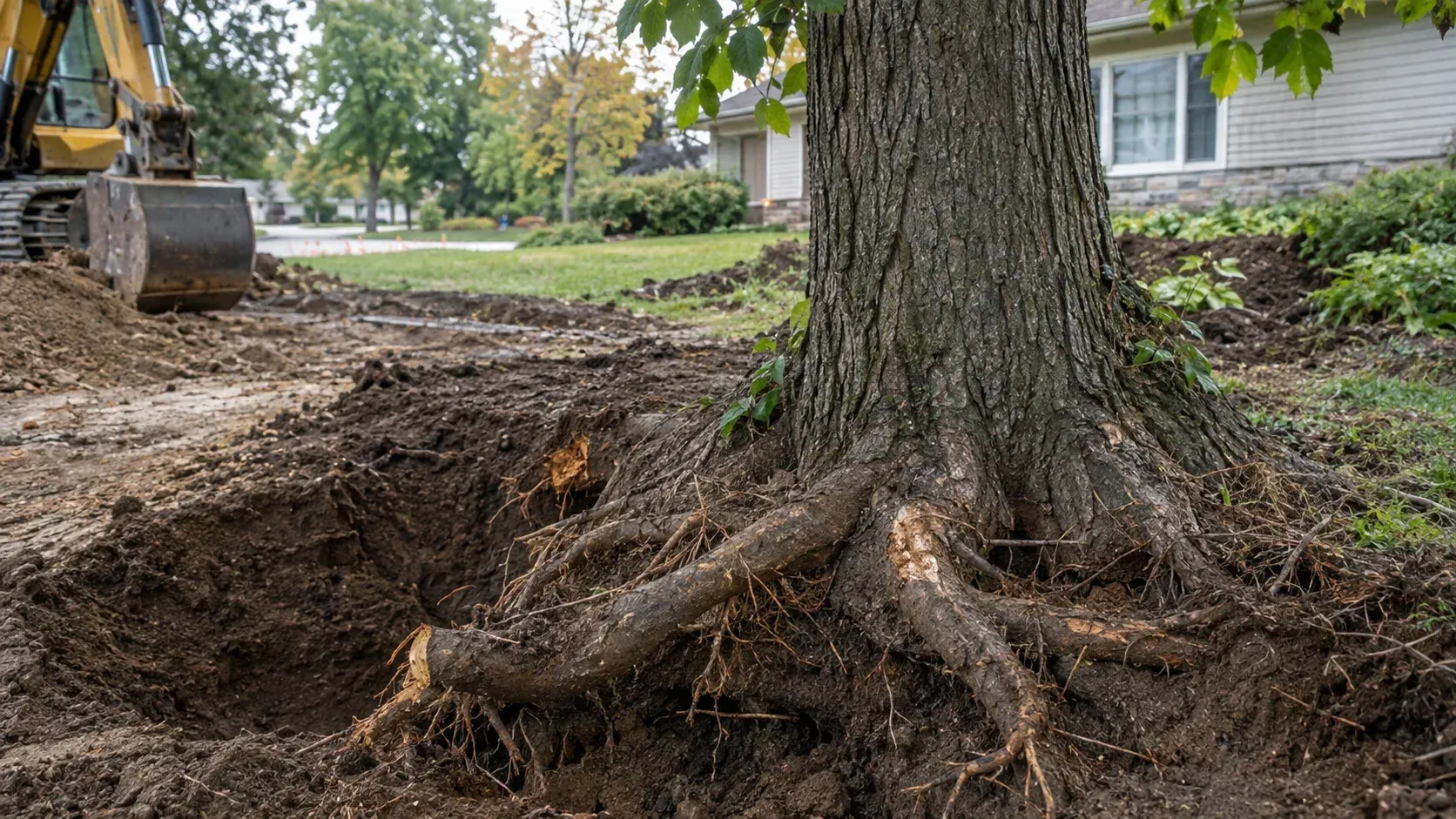
What cleanup does not include by default is anything below ground. The hole a root system leaves, the grading, the reseeding: those are separate questions and they depend on what you plan to do with the space.
The Stump Is Still There When We Leave
This is the single most common surprise, so here it is plainly.
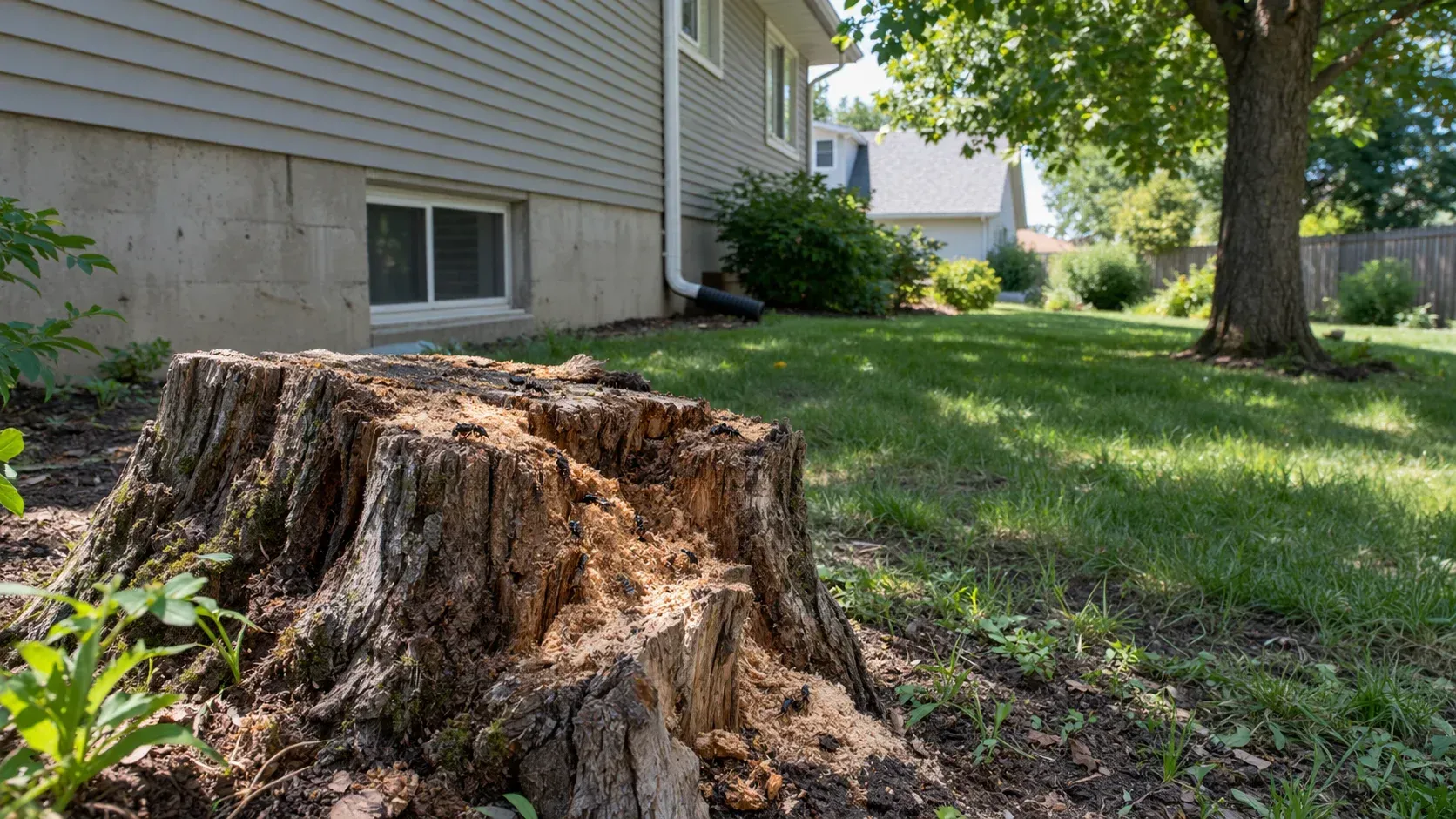
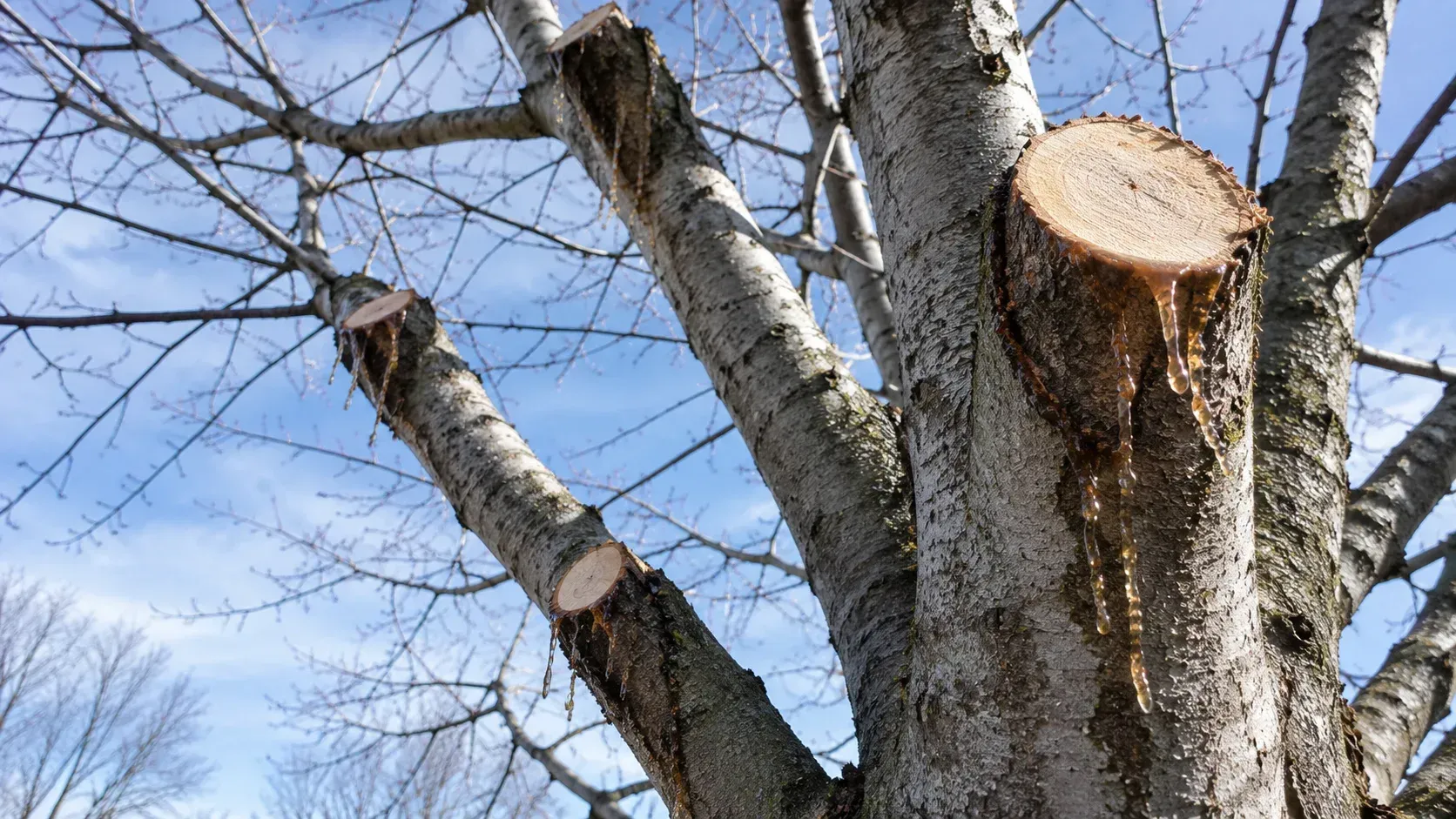
Removal leaves the stump. Taking a tree down and grinding the stump are two different jobs with two different machines, and the second one is priced and scheduled separately. A crew that has just spent a day dismantling a large tree does not automatically have a grinder on site.
If you want it gone, say so when you book, not when we are packing up.
Grinding the stump below the soil line on the same visit is usually easy to arrange and almost always cheaper than bringing equipment back a second time.
And if you are happy to leave it, that is a legitimate choice too. A stump in a back corner of a lot is not an emergency and it is not going to attract anything dramatic. It will just sit there and slowly rot, which takes years.
Conclusion
Ask any crew you are considering to walk you through their plan for your specific tree before you sign anything, because the answer tells you almost everything. Someone who describes the rigging, the drop zone and where the wood is going has thought about your yard. Someone who says they will just drop it has not looked up yet. The quote is the last thing to compare, not the first.
Book a Large Tree Removal
If you have a tree that needs to come down and you are not sure what it involves, we will walk the site with you, explain the approach for that specific tree, and tell you what the day will look like before anything starts. Arbor Barber Tree Service handles
a large removal with over 20 years of experience, certified arborists, and a safety-focused, fully insured crew, with 24/7 availability when a tree is already down. Call (612) 703-0175 or
talk it through with us. We serve Lakeville, Apple Valley, Burnsville, Farmington, Rosemount, Eagan, Savage, Prior Lake, Shakopee, Inver Grove Heights, Mendota Heights and Empire Township.